Looking back to the last time Milwaukee hosted the General Assembly
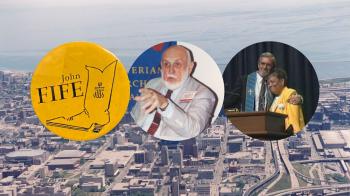
In 1992, commissioners elected the Rev. John Fife as Moderator of the 204th General Assembly
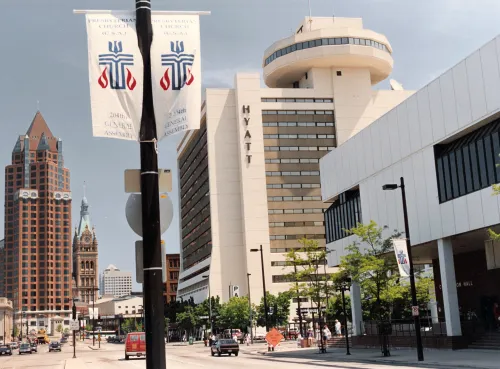
On Saturday, the in-person gathering of the 227th General Assembly of the Presbyterian Church (U.S.A.) will officially begin. Many of those traveling to Milwaukee for the in-person gathering will arrive on Friday, in time to visit the Town Square. Plenary sessions will then take place in Milwaukee from Sunday through Thursday, July 2.
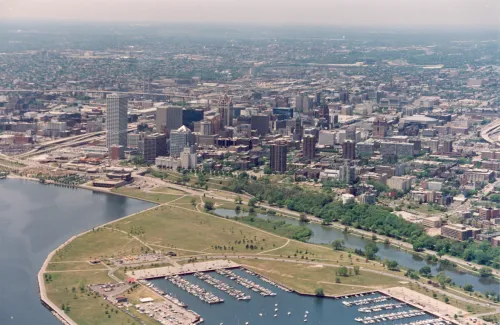
It has been 34 years since the General Assembly last met in Milwaukee. The Presbyterian Historical Society looks back to 1992 to explore the decisions made, the leaders elected, and the key takeaways from the last GA held in Milwaukee.
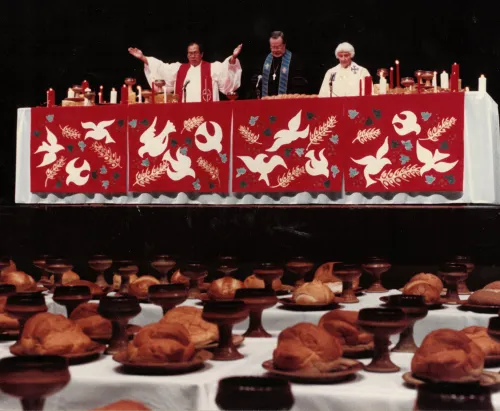
The meeting opened with worship and communion led by outgoing Moderator Herb Valentine. Worshipers served one another, passing cups and plates made especially for the event by a Wisconsin craftsperson.
The Rev. John Fife, a pastor in Tucson, Arizona, and co-founder of the national Sanctuary movement, was elected as Valentine’s successor. A human rights activist who served for 35 years at Southside Presbyterian Church, Fife helped launch a movement that eventually provided sanctuary to thousands of Central Americans in more than 500 churches and synagogues nationwide. In 1981, his congregation was the first to offer sanctuary to undocumented workers and immigrants from El Salvador.
Fife’s biggest opponent in the race for Moderator was the Reverend W. Frank Harrington, an evangelist and leader in the New Church movement and the pastor of the denomination’s largest church in Georgia.
“The day is long gone when a Moderator or the leader of any church or any organization can in a kind of singular, charismatic way say 'follow me.' Instead, leadership is best exercised in this church, and I think throughout our society, by those who understand shared vision, a kind of unifying spirit, and God’s service to one another,” Fife said in his acceptance speech. “I will try to be in God’s service with you as we seek Christ in our midst so that we might be in God’s service to the whole church and to the world.” He concluded his speech with a wide smile, and the urging of: “Let’s get on with it now.”
It was time for the committee reports to begin — and begin they did, in earnest. Seventeen committees with more than 700 items of business were present at the 1992 GA, with topics ranging from the nomination of stated clerks to “problem pregnancies.” It’s reported that these commissioners were at it for 12 hours a day, thanks to the agenda being the “most issue-heavy agenda since reunion.” When they weren’t in committees, commissioners visited the exhibition area, attended Bible study, and chatted with friends and colleagues.
One week after arriving in Milwaukee, with only two and a half days until adjournment, the assembly tackled the major issues of the day. The Special Committee on Problem Pregnancies and Abortions had spent the last three years listening, studying, and discussing the topic — and the majority report of the committee affirmed a woman’s basic right to have an abortion, while reflecting a diversity of opinions. This report also modeled a method for deciding controversial issues. Floor debates centered on precise wording, implications, personal convictions, and biblical interpretations. An amended report was approved by two-thirds majority, affirming a woman’s ability to make choices, and recognizing “circumstances in a sinful world that may make abortion the least objectionable of difficult options.”
Following this, the election of the stated clerk took center stage — and a minor drama ensued.
Two men were nominated from the floor — the Rev. Charles Hammond, an executive within the Presbytery of Philadelphia, and the Rev. W. Clark Chamberlain, stated clerk for the Synod of the Sun. They ran against the incumbent, the Rev. James E. Andrews.
The first ballot came and went, with none of the men receiving majority vote. Two ballots later, the assembly’s will to elect new leadership became clear, as Chamberlain received 54% of the votes — the victory came as a total surprise to him. So much so that less than 24 hours later, Chamberlain offered his resignation from the position he had just been elected to.
This turn of events stunned the assembly and left it searching for legal alternatives. The opinion of the assembly was heavily divided, with one group urging the voting in of an interim clerk, another favoring another round of elections to determine a full-term Stated Clerk, and a third hoping that the council would make the decision themselves.
In the end, another vote was cast, with the incumbent Andrews winning the seat once again. One day after being defeated, Andrews accepted another term as Stated Clerk, remaining aware and fully cognizant of the church’s desire for change. Of this he spoke in his speech: “…the assembly and the church is weary of dissension in its leaders and its leading representative bodies … it expressed that by making its first choice a person that avoided any indication of animosity and partisanship, and I intend to follow that model,” he assured the assembly.
He then announced the formation of a new General Assembly committee that would “give it direction and which will pay its full attention to how you have indicated you want that office to be run.” In addition to the creation of this committee, additional decisions were made — for example, the GA rejected switching to biannual meetings at this time, though they did approve shorter meetings and new initiatives for peacemaking, evangelism, and global missions.
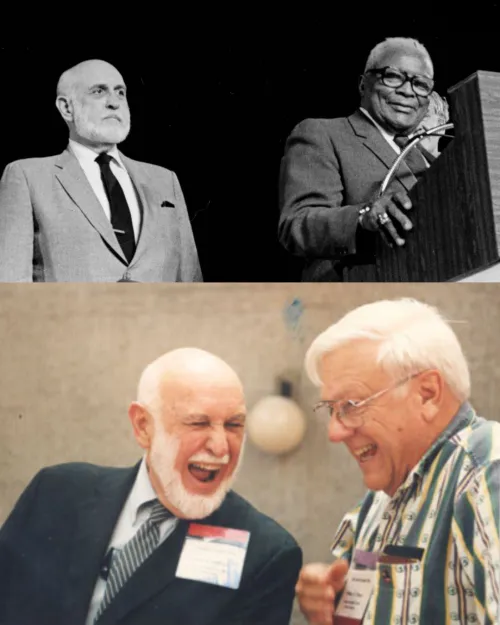
All in all, the Rev. James E. Andrews (1928-2006) served as stated clerk for a total of 23 years. His career began in 1973 when he was elected stated clerk of the former Presbyterian Church in the United States (PCUS). Following reunion in 1983, he served for one year as co-interim stated clerk with his UPCUSA counterpart, William P. Thompson; the next year, Andrews was elected stated clerk of the PCUSA, a position he held until he retired in 1996.
The rest of the assembly followed in form. The Rev. Dorothy McKinny Wright (1931-2020), a missionary to Nigeria, leader within the church, and interim pastor with the National Capital Presbytery, was elected as Vice Moderator. Updates in mission work were shared and celebrated, including the sending off of 68 missionaries to fields around the world and the receiving of 76 missionaries to the U.S. from other countries. It was announced that 39 new churches were organized the year before.
And, just like that, the 204th meeting of the General Assembly of the PC(USA) had ended. It closed as it had begun — with voices raised together in worship. The Rev. John Buchanan presided over the service and offered the closing statements.
Wish to reminisce a bit longer? Head over to Pearl Digital Collections to watch “Highlights of the 204th General Assembly, 1992” in full. Also available for viewing in Pearl is a 24-minute video of Moderator John Fife’s nomination and acceptance speeches.
Enjoy this glimpse into the last GA gathering in Milwaukee? Donate to the PHS Annual Fund, which supports the efforts of the Presbyterian Historical Society to collect, preserve, and share the past in order to transform your current perspective on church history.
You may freely reuse and distribute this article in its entirety for non-commercial purposes in any medium. Please include author attribution, photography credits, and a link to the original article. This work is licensed under a Creative Commons Attribution-NonCommercial-NoDeratives 4.0 International License.