Promoting ‘positive peace’ in Lebanon
Partner of Presbyterian Disaster Assistance promotes harmony and provides humanitarian aid during fragile time for the region
LOUISVILLE — A Lebanese non-governmental organization that has been serving as a peacebuilder and lifeline to people in the Middle East for decades is continuing its work with the help of Presbyterian Disaster Assistance and the accompaniment of Global Ecumenical Partnerships
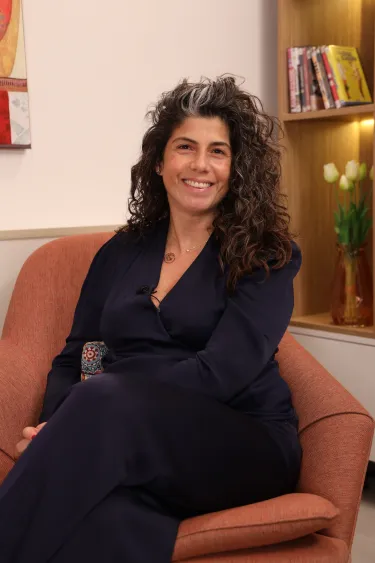
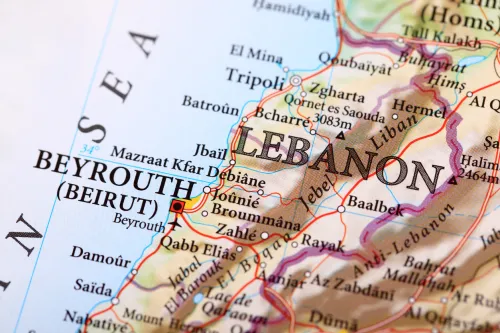
The Beirut-based Forum for Development, Culture and Dialogue (FDCD) was founded 22 years ago and is dedicated to contributing to “positive peace” in the region, said Mireille El Hamouche, FDCD’s deputy director and director of programs.
“We do not understand peace as only the absence of conflict, but we understand it as the existence of structures, institutions and relationships that make peace in everyday life possible,” Hamouche said.
With that in mind the organization creates opportunities for people from varied backgrounds to hear each other’s stories and find common ground.
“We strive to create spaces where people can actually come together, feel safe enough to share their own narrative, to share their own story, and to listen to each other,” Hamouche said. “So that's why dialogue is also a key tool that we use in all of our programs, whether the peace building or the humanitarian or any other type of activity that we come up with and implement.”
The humanitarian aid is where PDA, an FDCD partner, comes in. A few weeks ago, the organization reached out to representatives of PDA and Global Ecumenical Partnerships for grant assistance to help stabilize displaced families affected by an escalation of hostilities in the region, where the United States, Israel, Iran and the militant group Hezbollah have been engaged in violence.
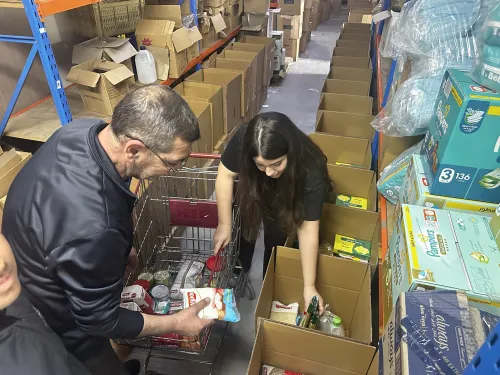
The grant request focused on Lebanon. PDA was able to provide funding for FDCD to work with partners to offer essentials, such as ready-to-eat meals, basic medical assistance and other support for people in emergency shelters. Grant funds also were requested for psychosocial support for affected children and parents and for “social cohesion” activities.
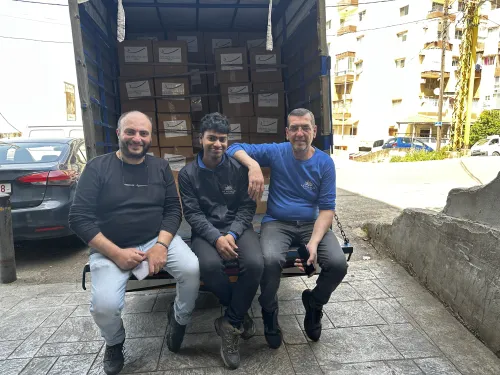
FDCD is a longtime partner of the Presbyterian Church (U.S.A.) in its international relationships, and PDA has drawn closer to the organization in recent years as FDCD has expanded its humanitarian work in the face of overwhelming and ongoing needs in the country during a lengthy period of conflict and economic collapse, said the Rev. Dr. Laurie Kraus, manager of International PDA in Partnerships Beyond the PC(USA), which is part of Presbyterian Life & Witness.
Lebanon has been impacted by multiple wars, including the current conflict between Israel and Hezbollah, a Lebanese Shia Islamist political party. On May 15, the U.S. announced a 45-day extension of a mid-April ceasefire between Lebanon and Israel, but attacks by Israel and Hezbollah have continued to erupt during the ceasefire periods, affecting civilians and medical personnel.
PDA is honored that FDCD and other partners in the region continue to do vital work, “even though some of them are displaced, even though some of them have lost family members in one of these conflicts,” Kraus said. “Their ability to continue to do the work to which they have been called is a sign of hope, and … the honor of being able to accompany them in whatever way is a real gift to the PC(USA).”
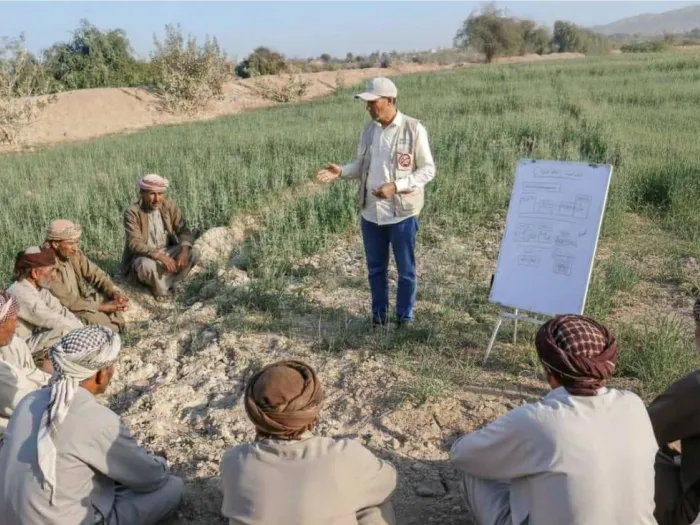
In addition to providing emergency interventions, such as food and hygiene aids, the organization enjoys bringing people together to have dialogue. The safe spaces take different shapes, from formal conferences to hikes.
“We usually have different approaches because we work with very different target groups,” Hamouche said. “Activities that bring together religious leaders are different from activities that are targeting youth, young men and women or other groups, so it can be a traditional conference setup where it's more formal,” or there might be a “residential workshop over four or five days where people are invited, for example, to address an issue of common interest.”
The work is important because Lebanon is in a region where its rich diversity often fuels conflict and fear that can persist from generation to generation.
“We very often grow up in our region hating each other and fearing the other that is different from us, so whether the religiously different ‘other,’ the other that comes from a different geographic area, the other that comes from a different ethnicity. … We believe the secret to break this cycle of fear and dehumanization is actually the human exchange.”
She went on to say, “Human stories are a very strong tool to break fear,” and “at the end of the day, no matter on which side of the conflict you stand, you definitely had a brother who was killed or a father who was injured or a son who was abducted, so the stories are the same everywhere and this is what brings people together.”
Jana, a Sunni who participated in one of FDCD’s dialogues, said it not only had a positive impact on her, but her parents as well.
“When I first arrived, I kept my distance, feeling anxious and unwilling to engage,” said Jana, who had been warned by her parents that people from the Shiite community might harm her, according to an FDCD testimonial. But through conversation and shared jokes, she found kindness and reported that to her parents.
“It opened my parents’ minds — to the point where they have begun to see the world through my eyes — and it even led me to find my best friend at university, who is from the Shiite community,” Jana stated in the testimonial.
Another participant recounted how participating in an FDCD “Politics and Values” workshop gave him the motivation to run for public office. “Although I didn’t win a seat, 1,887 citizens believed in me enough to leave their homes and vote despite the intimidation they faced,” he said in an FDCD testimonial.
Positive feedback also has been received from individuals who’ve appreciated FDCD’s humanitarian services.
Because of an escalation in March, there was a big need for hot meals, and FDCD also helped to provide food parcels containing nutritious staples and some hygiene items, Hamouche said.
“Lately, we made sure to send the food parcels, the medication to the villages in the south because there were so many villages and so many people who refused actually to leave their village, and particularly Christian villages, and at some point, because Israel bombarded all of the bridges, it was almost impossible for them to receive merchandise, goods, etc., so we coordinated with the Red Cross, with the army, to secure some routes and to send them assistance,” Hamouche said.
Others who have received FDCD food parcels include a construction worker in North Lebanon whose pelvis was shattered in a fall that hurt his ability to provide for his family, according to the organization. The family’s income is so thin that skipping lunch or dinner is common to make sure there’s enough left for medicine and other expenses.
"The food baskets are a true lifeline," said the man, who is referred to as Osama in an FDCD testimonial. "They save us nearly $25 a month and sustain us for like 15 days. The dry goods and essentials, especially the rice, are good options because we only have four hours of electricity a day and no generator; we can’t keep fresh food in a fridge for a long period of time.”

Generating discussion about societal issues through podcasts is another aspect of FDCD’s work.
“We trained youth from our network on how to host podcasts … and they chose the topics themselves,” Hamouche said. “So there was a podcast on education, there was a podcast on political activism without belonging to a political party. There was a podcast about leadership, so there were interesting topics that they chose themselves.”
The podcasts allow FDCD to address topics that tend not to be focused on by traditional media. The organization also does educational campaigns, such as one discouraging hate speech.
“Today, anyone who is displaced or anyone who belongs to the Shia community is seen by the other communities as Hezbollah,” Hamouche said. “ so people have lost this capacity to discern, and this is creating a lot of tensions between the displaced and the host communities.”
FDCD’s humanitarian work in Lebanon was recently highlighted by Luciano Kovacs, PC(USA)’s Global Ecumenical Liaison for the Middle East and Europe, in a webinar called "War with Iran: Faith, History, and the Human Cost."
Read more about partners in Lebanon and Syria here and here.
You may freely reuse and distribute this article in its entirety for non-commercial purposes in any medium. Please include author attribution, photography credits, and a link to the original article. This work is licensed under a Creative Commons Attribution-NonCommercial-NoDeratives 4.0 International License.