PILLARS community is updated on the work of the Presbyterian Hunger Program
Webinar targets the PC(USA)’s recurring givers

LOUISVILLE — A Thursday webinar designed for donors to the PILLARS community focused on the multifaceted work of the Presbyterian Hunger Program.

PILLARS is the recurring giving community for the Presbyterian Church (U.S.A.). It allows members and friends to set up automated weekly, monthly or quarterly financial gifts to sustain ongoing church ministries year-round. The Presbyterian Hunger Program works to alleviate hunger and eliminate its root causes.
To open the webinar, which can be viewed here, PHP’s manager, the Rev. Rebecca Barnes, quoted the Book of Confessions: “Enslaving poverty in a world of abundance is an intolerable violation of God’s good creation.”
The Hunger Program has three main areas of work:
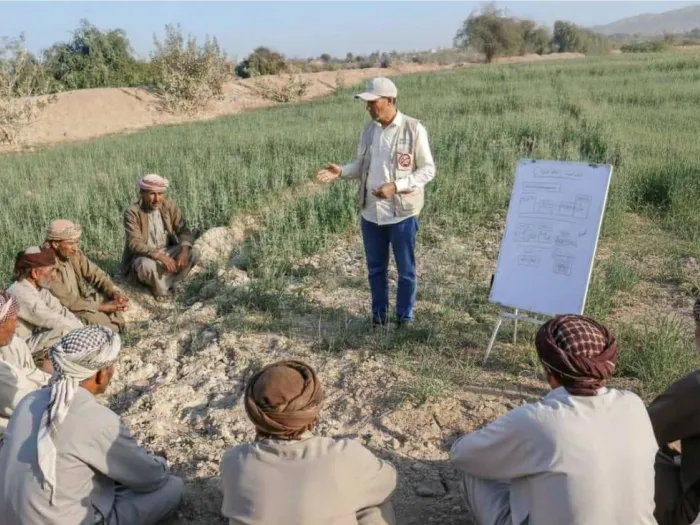
- International hunger concerns, through such programs as the Joining Hands networks. “It’s not just about feeding people, although that’s crucially important,” Barnes explained. “We are trying to work toward long-term change so people can feed themselves and find solutions,” such as grain banks, where farmers can store their crops while awaiting a favorable price. Another example is paralegal training for Ugandan women, which Barnes said “is maybe not the first thing that comes to mind thinking about hunger ministry.” Women may not have the deed to their land upon the death of their husband or father. Paralegal training can help them be aware of their rights so they can farm their land.
- National hunger concerns include the PC(USA)’s longstanding partnership with the Coalition of Immokalee Workers, who “supply a lot of our food,” Barnes noted. “How can we help them as they organize?” Nationally, PHP works in four areas: food justice, climate justice, worker justice and affordable housing, which includes congregation-based community organizing. Hunger Action Congregations in the PC(USA) are active in at least one of six areas: hunger alleviation, development assistance, hunger education, lifestyle integrity, corporate and public policy witness, and worship.
- Sustainable living and Earth care concerns. “We were at the forefront of helping congregations sell fairly traded coffee to get wages to the right people,” Barnes said. “People have caught on that this is a great way to use our consumer power.” Eco-Palms are sustainable greenery for congregational use on Palm Sunday. Nearly 400 PC(USA) congregations are Earth Care Congregations. One Kentucky congregation became certified after Vacation Bible School participants “just wouldn’t leave it alone,” Barnes said. Along with their teacher, students downloaded the Earth Care Congregation application, filled it out, and told the session, “we need to do this. It was hard for that session to say no to VBS,” Barnes said. Thirteen Hunger Action Advocates are at work in 14 presbyteries, supporting nearly 800 congregations.
According to PHP’s 2025 Impact Report, One Great Hour of Sharing gifts helped PHP award 94 grants last year totaling about $1.2 million to alleviate and address root causes of hunger in 27 counties, including the United States. In addition, five partners are implementing tree planting or other carbon sequestration projects. Giving by Presbyterians strengthens “real people in real communities,” Barnes said. “They are people whose lives are better because of Presbyterian generosity.”

Barnes noted that PHP works alongside Presbyterian Disaster Assistance and the Presbyterian Committee on the Self-Development of People, which are also funded in part by gifts to One Great Hour of Sharing. The work continues in Hawaii following wildfires on Maui, helping farmers in Bolivia and families in Cameroon.
Barnes told the PILLARS community she’s currently making her way through about 100 2026 grant applications. “It’s a lot of reading, but it’s joyful to me to read about good people working for good things in the world,” she said. “It’s not an easy time, but God is with us, and so is this cloud of witnesses. That’s why I appreciate working alongside you.”
After PHP’s presentation, Barnes received a thank-you from the Rev. Wilson Kennedy, Associate Director of Stewardship and Funds Development, “for the passion you bring.”
Kennedy also thanked the PILLARS community “for supporting the mission and ministry of the Presbyterian Hunger Program. Because of you, we can engage this work together and live it out every single day together. It’s who we are as Presbyterians.”
To close out the hour-long webinar, Wilson offered this prayer for World Food Day, which asks God to “gather us together so that we may remind each other of your intent for this Earth. Gather us so that we may pour out our lives in Christ’s name, as Christ does on behalf of those who hunger. For hope. For justice. For daily bread. So that it will be on Earth as it is in heaven. For now and for always. Amen.”
Additional webinars designed for the PILLARS community are planned for the coming weeks. Check here for Presbyterian News Service’s reporting on those upcoming webinars.
You may freely reuse and distribute this article in its entirety for non-commercial purposes in any medium. Please include author attribution, photography credits, and a link to the original article. This work is licensed under a Creative Commons Attribution-NonCommercial-NoDeratives 4.0 International License.