Fighting hunger one grant at a time
Presbyterian Hunger Program approves $1.2 million in funding for life-sustaining work

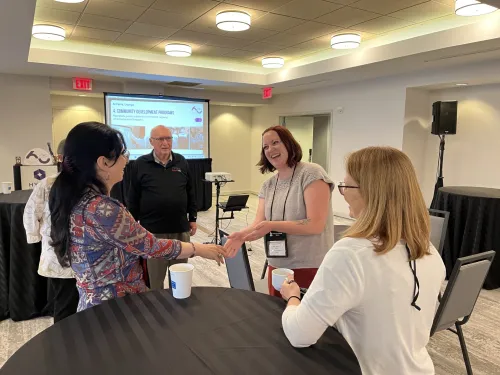
LOUISVILLE — While the Advisory Committee of the Presbyterian Hunger Program was poring over grant applications from various partner organizations, the Rev. Ann Elyse Hicks, was struck by the commonalities that she saw in some of the projects.
“I'm always amazed at the interconnected work,” said Hicks, a committee member who’s also Presbytery Leader and Stated Clerk for Abingdon Presbytery. For example, “a group in Alaska and a group in Hawai'i are both thinking about the prevalence of ultra-processed foods and the need to rebuild local food economies. There's a global push for long-term sustainability that's inspiring and gives me hope for a world where everyone has enough.”
Recently, the advisory committee voted to approve $1.2 million in grants to address hunger and its root causes in the United States and 25 other countries.
The 97 grants will assist organizations doing an array of work, including congregation-based community organizing, hunger action advocacy, environmental projects and international networking, according to PHP, which is part of Partnerships Beyond the Presbyterian Church (U.S.A.) and Presbyterian Life & Witness, an agency of the PC(USA).
“PHP grants reflect PC(USA)’s continued commitment to relational work in the U.S. and around the world, with both historical and new partners,” said the Rev. Rebecca Barnes, who manages PHP. “While global engagement models of PL&W are changing, the Presbyterian Hunger Program and PL&W continue to share Presbyterian generosity and solidarity with global, ecumenical, civil society and nonprofit organizations and networks.”
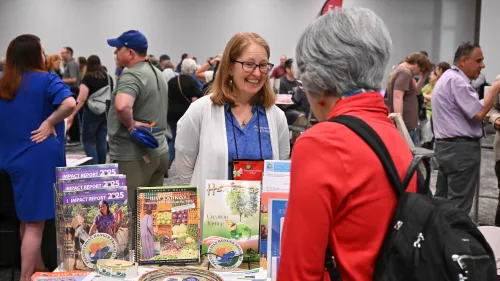
The advisory committee, whose members are selected through a General Assembly nominating process, met for multiple days to consider grant proposals, with support from PHP staff.
“We are grateful that we may steward funds given to the Hunger Program and through One Great Hour of Sharing to alleviate hunger and eliminate its root causes by supporting these inspiring, hopeful, passionate and dedicated partners,” Barnes said.
The committee's co-moderator, Gloria D. Lozada-De Jesús of the Primera Iglesia Presbiteriana en Bayamón, Puerto Rico, added, “It’s very inspiring for me to witness the dedication with which every staff member collaborates to make sure that selected partners not only meet the required criteria but that their work (will) make a positive impact in the communities they serve and contribute to make their livelihoods thrive.”
According to the findings of a recent United Nations report, global food security and nutrition improved modestly in 2025, but more work needs to be done. More than 2 billion of the Earth's 8.3 billion people experienced moderate or severe food insecurity, which means they sometimes had to compromise on quality or quantity of food consumed, according to a news release about the report.
“All the reports will tell you we're not even close to achieving zero hunger by 2030 as the UN Sustainable Development Goals want to do,” Valéry Nodem, PHP’s International Hunger Associate, told the PHP advisory committee.

Countries also are grappling with myriad other crises, from climate change, war and economic struggles to the rise of data centers and artificial intelligence.
“You've got this AI infrastructure, pulling on land, water, energy subsidies … and putting pressure on communities, reducing farmland access," PHP National Hunger Associate Andrew Kang Bartlett said in a presentation to the advisory committee. There's also "competition for energy and water, higher utility bills and then weaker rural economies as a result, and these all affect hunger through reduced local food production, the pressures on farms and on workers, greater poverty and food insecurity, and less community control.”
One of PHP’s grant partners, Creation Justice Ministries (CJM), plans to develop and distribute an ecumenical resource exploring the theological, ethical and justice-centered dimensions of AI and emerging technologies. Committee member Eileen Best said she is looking forward to the resource, which will help churches to engage faithfully and critically with the topic. “I'm so happy that we can support them,” Best said of CJM.
Another grant partner is the Black Farmer Fund. “This is an organization that works throughout the Northeast in a lot of different states,” Best said, assisting “Black farmers who historically have been denied capital.” The fund gives “them a lot of support in what they are doing. They work to bring fresh food to food deserts and to engage communities, and they provide coaching and skills development for the farmers.”

Others receiving PHP support include an organization in Yemen called Generations without Qat. Their approved project will help conflict-affected and vulnerable farming families improve food security and income by providing quality seeds and tools, climate-smart agricultural training and better access to markets, according to PHP.
Projects by partners in many other countries, including the Democratic Republic of Congo, Guatemala, India and Palestine, also were approved.
In addition to those, several grants were approved for groups that do congregation-based community organizing, “a grassroots, faith-rooted approach to social transformation that brings together diverse religious congregations to build collective power and address systemic injustices,” said Jennifer Evans, Associate for PHP Communications and National Partnerships.
CBCO partners receiving grants include Sarasota United for Responsibility and Equity (SURE) and Citizens of Louisville Organized and United Together (CLOUT), which both are pushing for affordable housing in their areas. Another CBCO, Asamblea de Derechos Civiles, is working on building community resilience and mental health, following the federal immigration crackdown in Minneapolis.
“These partners are addressing the root causes of instability,” Evans said. "Supporting and joining partners who engage in this kind of work is one of the most impactful ways we can fulfill our mission of ending hunger and poverty.”
The Rev. Phil Tom, a co-moderator of the advisory committee, cites Matthew 25 when explaining the importance of PHP grantmaking, noting that feeding the hungry is a calling from Jesus.
“As long as hunger exists in the world," Tom said, "PHP and the Presbyterian Church will continue to faithfully work with our congregations and national and international partners to address immediate needs and the systemic causes of hunger.”
You may freely reuse and distribute this article in its entirety for non-commercial purposes in any medium. Please include author attribution, photography credits, and a link to the original article. This work is licensed under a Creative Commons Attribution-NonCommercial-NoDeratives 4.0 International License.