Dear Lovers of Food and Justice,
I hope you are well!
This week, I’d like to start by talking about family.
In my case, I lucked out in the kin department. I love my sister, my two brothers, and my parents. My dad passed in 2017, but my mom is still around and spry for a 92-year-old! I get along with my extended family too, though I know who not to talk politics with.
This familial scene I consider pure luck (though some contend we choose the family we are born into). I call it luck and avoid saying “I’m blessed,” because it might sound as if I’m the recipient of God’s favor. I don’t think God favors one person over another. Do you?
I got thinking about family because it turns out plants can identify kin. Yes, they recognize kin and give them preferential treatment—just as I do with my own family.
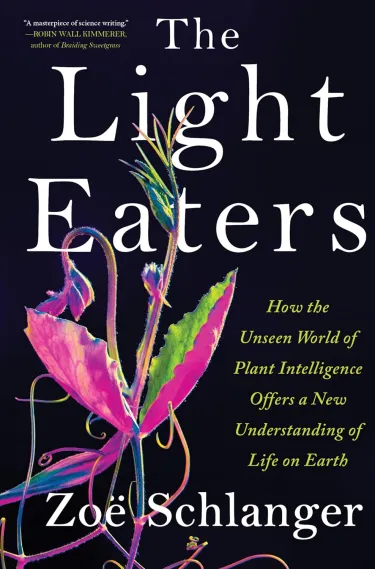
Zoë Schlanger wrote all about this and so much more in her book, The Light Eaters: How the Unseen World of Plant Intelligence Offers a New Understanding of Life on Earth.
In one section, Zoë tells a couple of stories to illustrate both the intelligence and the seeming altruism of certain plants.
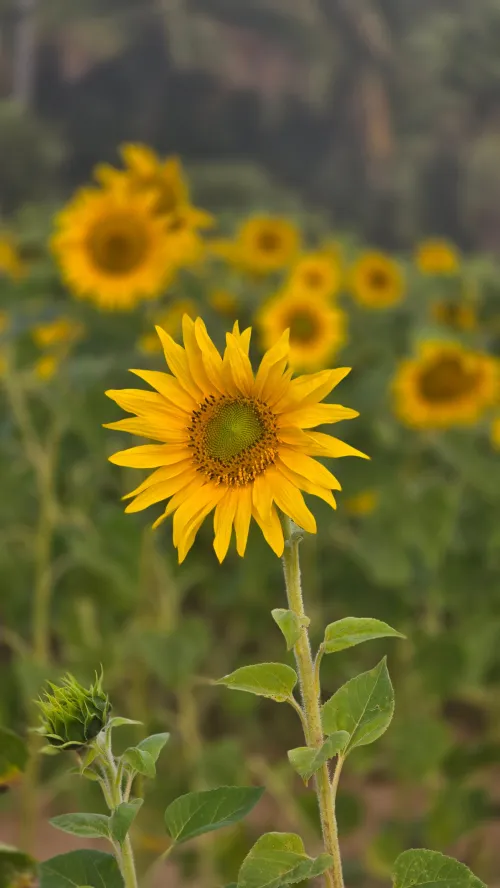
Nine years ago, a researcher in Argentina made a surprising discovery. Sunflower farmers could get up to 47% more oil from their crops simply by planting related sunflowers close together. Conventional wisdom said crowded sunflowers would compete fiercely underground for nutrients and water. Instead, the plants seemed to cooperate.
When packed tightly with their relatives, the sunflowers tilted their stalks at different angles so they wouldn't shade one another. Each flower received more sunlight, and oil production soared. There was no evidence that they were stealing nutrients from their non-kin neighbors, either.
Since then, scientists have found similar examples throughout the plant world. In California, researchers discovered that sagebrush plants warn their closest relatives first when insects attack. And like the sunflowers, Arabidopsis plants rearrange their leaves to avoid shading their siblings. In one study, a single leaf shifted position within just two days after sensing a sibling's leaf beneath it.
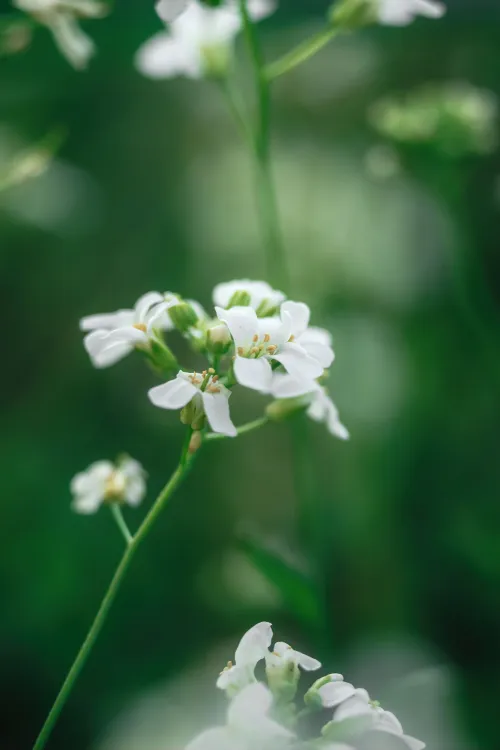
Plants can clearly recognize their kin, although scientists are still figuring out exactly how. Sometimes they detect chemicals released by roots underground. Other times, they seem to recognize subtle differences in reflected light. In Arabidopsis, sunlight passes through one leaf, bounces off a sibling's leaf below, and somehow carries enough information for the plant to recognize it as a close relative.
All of this points to something remarkable: plants appear to have a social life. They know who is around them and adjust their behavior accordingly. And kin recognition is only part of the story. Researchers have even found evidence that some carnivorous plants cooperate in ways that help them catch larger prey than they could manage alone. They hunt in packs!
If carnivorous plants can cooperate, there may yet be hope for the rest of us. Fortunately, examples of cooperation are all around us—including the Black Farmer Fund, which has become a lifeline for Black farmers across the Northeast.
The Black Farmer Fund
David Haughton is a farmer in New York, and he’s been cultivating his 35-acre farm since 1995, a journey that began after the tragic death of his son. Throughout the pandemic and its aftermath, Haughton relied heavily on the USDA’s Local Food Purchase Assistance (LFPA) Cooperative Agreement Program, which enabled him to sell fresh produce to communities experiencing food insecurity via hunger-relief organizations like The Campaign Against Hunger and GrowNYC.
But in March 2025, when the Trump administration canceled LFPA, Haughton lost 60 percent of his market. Some customers dropped out, others delayed payments, and some still owe him money. The sudden loss of cash flow put his farm and home at serious risk, and as a Black farmer, he found it difficult to secure traditional loans to bridge the gap.
Haughton’s crisis was met with support from the Black Farmer Fund (BFF), an organization founded by farmer activists in 2017 and one that the Presbyterian Hunger Program has had the honor of supporting for the past two years. BFF provides low-interest loans, grants, and technical assistance to Black farmers and food businesses. BFF used a portion of its $20 million integrated capital fund to help Haughton, who was able to save his farm and home as well as purchase new equipment and hire part-time workers. The funds gave Haughton the lifeline he needed to keep his land and continue his work as a farmer.
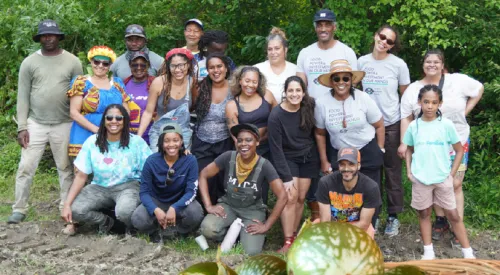
Last year, BFF’s Rapid Response Fund provided emergency funding to 23 Black food actors throughout the Northeast, including those facing losses due to federal funding freezes. Additionally, they hosted 10 virtual skillshares on a range of topics such as Climate Resilience for Urban Farmers, Bookkeeping 101, Demystifying the Credit Report, and more, with over 100 total participants.
The Black Farmer Fund demonstrates how cooperation and solidarity are essential approaches for weathering the storms of politics and systemic racism. Building an ecosystem of support is something in which we unwittingly participate at the most personal of levels – our physical body. It turns out that bacteria help create the cooperative, interdependent environment we depend on for our survival.
One Thing I Love: My Bacteria
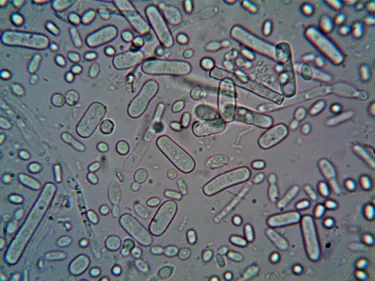
Yes. The more I learn about the microbial universe within, the more I appreciate my trillions of microbial companions. They number in the tens of trillions and rival the number of cells in my own body. Interestingly, despite their numbers that approach 40 trillion, they weigh less than a pound!
Everyone is studying our microbiome these days, and the research has revolutionized our understanding of how we interact with the world. They are discovering connections between all manner of health issues and the creatures living in our guts and on our skin.
Our microbes influence our immune systems, our smells, and even how much mosquitoes like us. Emerging research suggests they may play a role in autism, depression, anxiety, and possibly even who we are attracted to.
In short, our microbes likely mediate how we think and feel. What feels like individuality to me may be more like a barely contained democracy.
Microbiomes also extend into the air around us in a “microbial cloud”: body heat and warm breath propel biological particles outward, and each word we speak carries bacteria along with it. Air moves like water if you’re as tiny as a microbe, allowing even the smallest bacteria to stay airborne for hours.
As we learn more about the pervasive presence of microbes in our bodies, we are faced with a profound question of identity. While we are not our microbiomes, we’re not ourselves without them.
Our microbiomes are mutable and they shift when we travel, shower, take antibiotics, or meet new people. Our identity is a varied and turbulent biological orchestra. We are always ourselves, but when we learn that “ourselves” is a shifting composite intertwined with roiling microbial masses within and around us, it begs the question – who are we?
Garden Update
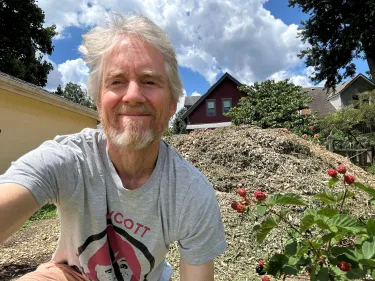
I just got several tons of wood chips dumped in my backyard by a local tree company who was eager to unload its waste—and my treasure. Over the lunch hour I filled several wheelbarrows full and spread them in my garden. I would guess there are about 197 wheelbarrows still to go. Hopefully, my neighbors will want some.
You too can get a truckload for free by signing up through ChipDrop (https://getchipdrop.com).
May your week be full of all the mulch, compost, microbes, bees, and love as you need!
Lovingly,
andrew
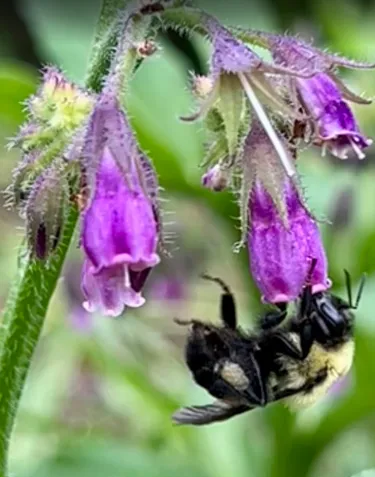
P.S. One less thing to worry about!
Bumblebees should do well even with flooding as climate chaos increases. Scientists recently discovered that hibernating queen bumble bees can survive underwater for up to a week! The discovery came after a laboratory accident flooded containers holding hibernating queen bumblebees.
Most of the queens (nearly 90%) survived even when fully submerged for days or a full week, with survival rates nearly as high as those of bees that were never flooded. Researchers believe the bees' low oxygen needs during hibernation may help explain this remarkable endurance. This is encouraging news as climate change brings more frequent flooding and suggests these critical pollinators may be better able to withstand extreme flooding than previously thought. (read more)
“Kind words are like honey—sweet to the soul and healthy for the body.” - Proverbs 16:24
Learn more and donate to the Hunger Program via our website at pcusa.org/hunger.
You may freely reuse and distribute this article in its entirety for non-commercial purposes in any medium. Please include author attribution, photography credits, and a link to the original article. This work is licensed under a Creative Commons Attribution-NonCommercial-NoDeratives 4.0 International License.