La Oroya litigation settled after nearly 20-year fight over lead contamination
Resolution reflects ‘relentless work to obtain justice for children’
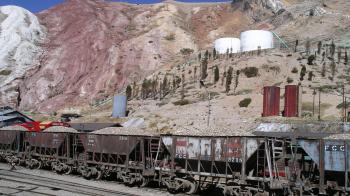
LOUISVILLE — A $150 million settlement has been reached in a lengthy legal battle on behalf of more than 1,300 Peruvians who alleged that their health was negatively impacted by a smelting and refining complex in La Oroya, a town in central Peru that has been called one of the most polluted places in the world.
The settlement is the climax of a nearly 20-year-long legal dispute with St. Louis-based Doe Run Resources, a subsidiary of the Renco Group, alleging that the company failed to reduce lead emissions at the complex, resulting in lead contamination, according to plaintiffs’ attorney Schlichter Bogard.
The case was originally filed in 2007 on behalf of 17 children but eventually consolidated in federal court with 40 other cases, a news release notes. A series of trials was scheduled to start on June 23 in St. Louis but was averted by the settlement.
“This resolution is the culmination of 19 years of relentless work to obtain justice for children who were innocent victims of one of the most severe environmental disasters of the modern era,” Jerome Schlichter, founder and co-managing partner of the law firm, said in the release. “We are deeply proud to have stood with these children, now young adults, for the long haul. Their blood lead levels were among the highest ever recorded.”
Faith groups, including the Presbyterian Church (U.S.A.), and concerned partners, such as The Peru Joining Hands Network (Red Uniendo Manos Perú), have walked alongside the people of La Oroya for many years as part of their commitment to fighting environmental injustices.
In a statement reacting to the settlement, the network’s directive council said in part, “Although the organizations accompanying this process were not part of the legal representation in the lawsuit, we recognize the efforts of those who, over the years, helped bring visibility to this cause, and we hope that this settlement represents an important step toward comprehensive justice. We also renew our commitment to continue promoting the right of all people to live in a healthy environment, have access to comprehensive health care, and obtain full reparation for the damages they have suffered.”
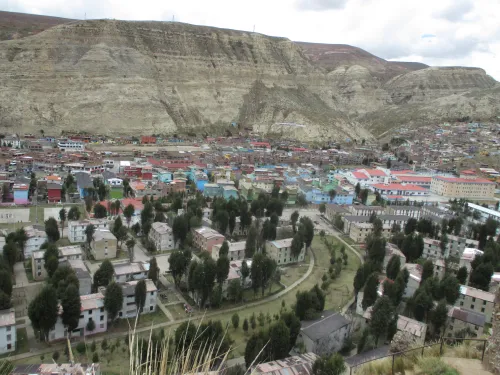
Research by the Peruvian Ministry of Health's environmental health office (Digesa) found that nearly all children younger than age 6 in La Oroya had blood-lead levels above 10 μg/dL — well above levels associated with growth impairment and lower IQs in children, according to an article in The Lancet.
A 2005 study by the St. Louis University School of Public Health confirmed not only high levels of lead but other potentially harmful substances, such as cadmium and arsenic.
“The evidence of elevated levels of lead, cadmium, arsenic and other toxic metals in the bodies of residents in study sites indicate that there is an extremely serious environmental health crisis affecting La Oroya, especially vulnerable populations such as young children,” according to a summary prepared by Fernando Serrano, the study’s principal investigator.
Yolanda Zurita, a resident of La Oroya who has followed the litigation over the years, said it would be good for affected families to receive compensation to help address some of their economic challenges.
Conrado Olivera, the former director of the Red Uniendo Manos Perú, further explained the toll that the environmental situation has taken on families, noting that La Oroya and surrounding areas endured “constant and severe environmental contamination of air, soil and water.”
“The most vulnerable communities have paid the highest price: poisoning, chronic illnesses and a deteriorated quality of life,” Olivera said as the trial was set to begin. “Despite promises and reforms, the damage persists, revealing systemic failures in environmental responsibility and social justice.”
The statement from Red Uniendo Manos Perú notes that the settlement was preceded by “a long process of advocacy and rights defense involving social organizations, faith communities, academic institutions, and national and international allies. Through this collective effort, it was possible to raise awareness of the situation in La Oroya, promote scientific research on pollution levels and its effects on public health, and support affected families in their pursuit of justice.”
But there is more work to be done, according to the statement, which says that the settlement “does not include environmental remediation measures, comprehensive health programs, or other forms of collective reparation, which remain an unresolved obligation to the broader population." The statement goes on to say that the network, “together with other civil society organizations, continues to advocate for justice in this regard."
A 2021 article by Eileen Schuhmann and Valery Nodem of the Presbyterian Hunger Program described how the plight of the Peruvians is a vestige of colonialism.
“Many former colonies are current day extractive economies, where their natural resource wealth in the form of metals, minerals, oil, gas, timber and cash crops is extracted by foreign corporations and exported to wealthy countries,” the article noted. “These former colonies, rich in natural resources, tend to have some of the worst development outcomes in terms of poverty, inequality and disadvantage.”
The article went on to note, “Local populations suffer from what is often called the ‘resource curse,’ receiving minimal benefits from the extractive operations while enduring the brunt of its consequences.”

Last year, a delegation of Presbyterian Church (U.S.A.) leaders traveled to three different regions of Peru, engaging in conversation with the Rev. Jed Koball, a Presbyterian Life & Witness global ecumenical liaison, as well as local partners about the impacts of extractive industries on the environment and indigenous communities. Representatives from the Presbytery of San Jose and Dr. Clarice Hutchens of the Presbytery of Giddings-Lovejoy also were on the trip.
Koball, a former mission co-worker, has worked for years to educate church groups about the work of Red Uniendo Manos Perú and to offer opportunities to be involved in advocacy efforts by community members, including churches and non-governmental organizations.
Koball, who is based in Peru, also led a panel discussion during the Presbyterian Advocacy Hour on the problems and opportunities posed by the mining of critical minerals (Find the webinar here.)
“The pursuit of justice in La Oroya has taught us much about the grave impacts generated by insatiable demands for metals and minerals that have long motivated colonial conquests — conquests whose legacies continue to shape geopolitics and global economies to this very day,” Koball said. “As the world transitions away from fossil fuels while also increasing its consumption of energy, extractive industries like mining will continue to wreak havoc around the world, especially on Indigenous peoples and other historically marginalized communities. Walking with the justice seekers of La Oroya is imperative for discerning our unique role as a church in pursuing a future fit for all of God’s children.”
You may freely reuse and distribute this article in its entirety for non-commercial purposes in any medium. Please include author attribution, photography credits, and a link to the original article. This work is licensed under a Creative Commons Attribution-NonCommercial-NoDeratives 4.0 International License.