
This month in Presbyterian history
A great fire in Chicago, a historic NCC election, and an oral history from a mission worker to Taiwan
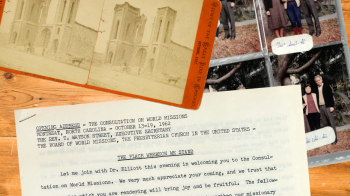
In the fall of 1871, a fire erupted in Chicago.
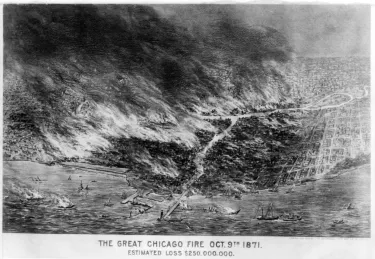
The city burned for three days straight, beginning on the eighth day of October and continuing through the 10th. The inferno ended 300 lives and destroyed more than 2,000 acres of the city, leaving around 100,000 people unhoused. Wooden buildings that held businesses and families were leveled by the Great Fire of 1871, as well as 500 miles of wooden sidewalk.
This late 19th century devastation thankfully did not touch the city’s major industries — the Union Stockyards and lumberyards were separated enough to not be in the burn zone — and so the rebuilding began quickly. Following another fire in 1874, new construction codes were written, ensuring that most new buildings contained fire-resistant brick and stone.
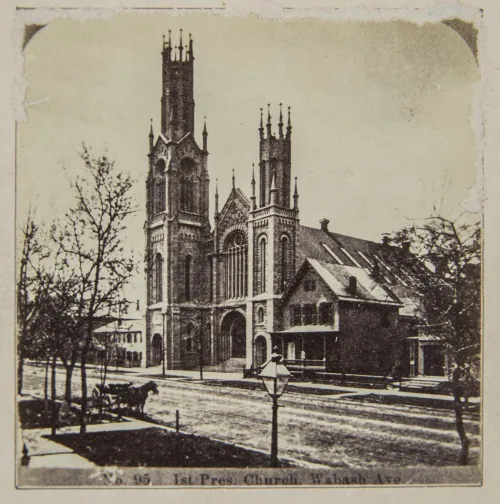
The First Presbyterian Church in Chicago was organized in June of 1833 — two months before the city of Chicago was incorporated. The first religious congregation to be established in the city, before the city was even acknowledged, the church is still active today, making it the oldest continuously operating institution in Chicago. First Church’s fifth pastor, the Rev. Arthur Mitchell, guided the congregation through the Great Chicago Fire of 1871. The conflagration consumed the church and chapel, as well as congregants’ homes and businesses. The fifth pastor led the congregation through the construction of its fifth church building, this time located on 21st Street.
Previous to the October inferno, the congregation worshiped in a sanctuary on Wabash Avenue, where they had moved to in 1857. In 1900, a history of the congregation was compiled by Philo Adams Otis; it was revised and reprinted in 1913.
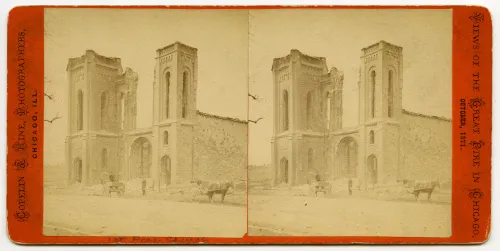
On page 42 of the history, Otis shares a note from the Session Records "regarding the destruction of the Church on Wabash avenue in the great fire of October, 1871: 'On Sunday, October 8, a collection was taken in the Church for the benefit of the sufferers from a severe conflagration which had visited the West Side on Saturday night. It was Communion Sunday; none realized that it was the last one in the old Church, around which so many precious memories clustered. That night a fire broke out in the West Division, crossed to the South Side, and then to the North, destroying a large portion of the city. Early on Monday morning, our beautiful Church home, as well as its beautiful Chapel and the Railroad Mission Chapel, was destroyed. Nothing was saved but the records of the Church, the Communion service and the Sexton Library.'"
The congregation of First Church merged with Calvary Presbyterian Church in 1871 after the fire, "The First Presbyterian Church having lost its home, and the Calvary Presbyterian Church with a new building barely started." The rest of the 320-page history deals mostly with the musical history of the church, seeing that its author, Otis, was a "Member of the Committee on Music since 1874."
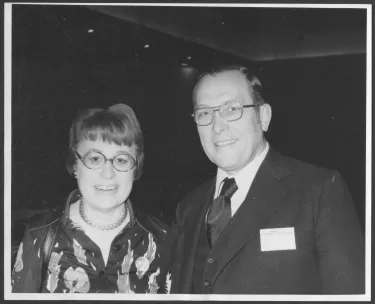
In October 1973, the Governing Board of the National Council of Churches elected Claire Randall to the position of general secretary. She was formally sworn-in to the position "in a special 'service of commitment,'" held at St. Paul's Episcopal Cathedral in Los Angeles in February 1974, becoming the first female to be elected to the position.
From the caption of this photo from the Religious News Service collection, we learn that "Ms. Randall, the first woman to be elected to the post, is joined here by Dr. William P. Thompson, stated clerk of the United Presbyterian General Assembly, who presided at the ceremony."
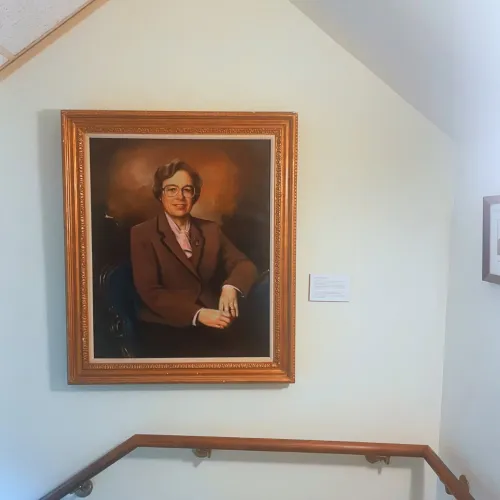
Randall, a Presbyterian elder born in San Antonio, Texas, in 1916, had previously served on the national staff of Church Women United. She was NCC’s General Secretary for a decade, from 1974 to 1984. When the organization was accused of being a communist front by media channels "60 Minutes" and "Reader’s Digest", Randall firmly denied the allegations and organized member communions of the NCC to inform their congregations that the reports were false. She died in Sun City, Arizona, in 2007.
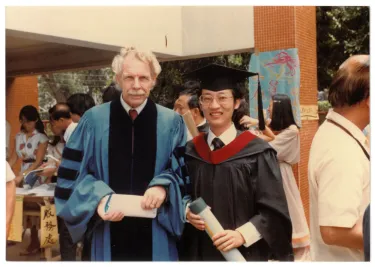
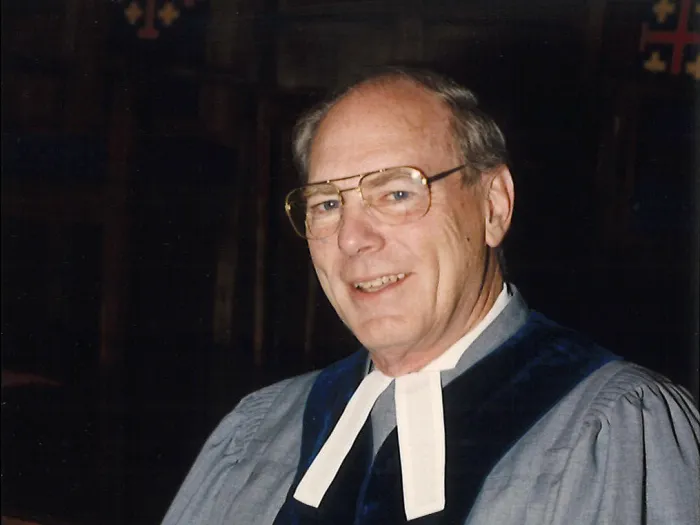
In the fall of 1996, David Gelzer sat down with interviewer Amy Roberts to talk about his experience serving in the mission field in Taiwan. In a conversation that lasted for six audio cassette tapes, David spoke of he and his wife's time of service at Tainan Theological College, where they were sent at the behest of the Presbyterian Church in Taiwan (PCT) beginning in 1975. Their work inside the PCT would be bound up with Taiwanese struggles over religious freedom, free association, free speech, and independence, caught as the island was between two superpowers, the United States of America and the People’s Republic of China.
A 1971 statement issed by the PCT, though carefully anti-communist in tone, called on Kuomintang (KMT) leaders to immediately hold fully-democratic elections. In this way, the PCT offended every power — rebuking China, the ruling party, and the U.S. in equal measure. Through Gelzer’s eyes, this opened the period of the KMT’s "persecution of the Presbyterian Church. Because it saw it as a threat." The Gelzers and other PCT figures and families had their mail confiscated and shredded, and their phones tapped. The PCT was a target, both for asserting universal values outside the state, and for its longstanding international connections. In Gelzer’s telling, in 1979 and 1980 the PCT was "totally isolated."
Another heavy blow was quick to follow. Dr. Kao Chun-ming, the general secretary of the PCT, was arrested and imprisoned immediately following the General Assembly of 1980, along with 14 others. As 1980 turned into 1981 and Kao's release had yet to be granted, the PCT questioned whether he would run for re-election from prison. He did, and in the end, won 233 to 49.
When Kao's spouse, Kao Lee Li-chen, was encouraged to run for a seat in the Legislative Yuan in 1983, she turned to a small group of confidants to ask what to do. While many counseled her to stay away from the regime, Gelzer told her: "Yes ... I would say if you have the courage, I would go ahead."
Mrs. Kao got to campaigning, barnstorming the south and returning to Tainan in November, just before the election, which was set for December. The Gelzers attended a rally that Mrs. Kao's campaign held in a public square one night, Gelzer remembering that "It was dark ...But there are cameras that can take pictures without flash." Indeed, the Gelzers were photographed that night by KMT spies and their images published in the regime newspapers, identifying them as Europeans supporting a political rally — a forbidden act. It was November 1983, and their residence permits were up for renewal.
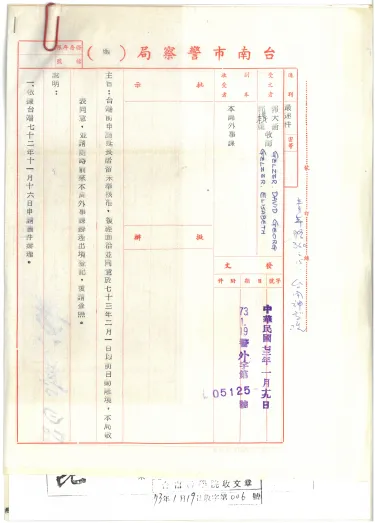
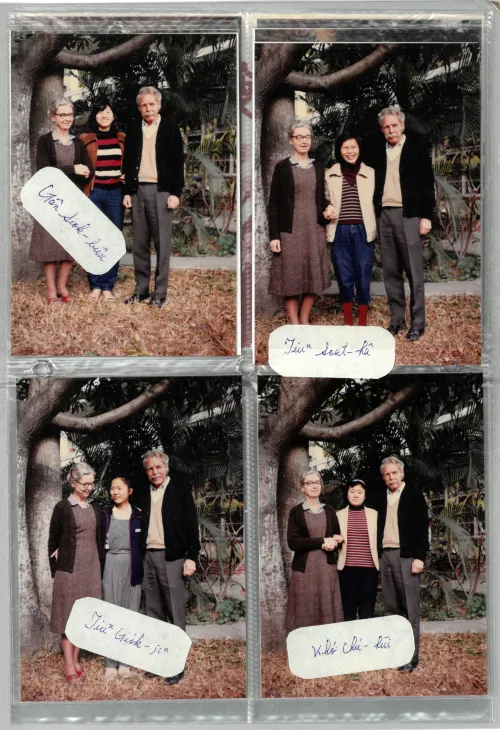
The following month, election results came in, and the Gelzers' permits expired. Mrs. Kao had lost by 17 votes in a constituency of 175,000 voters. Gelzer holds that "the KMT tinkered with the vote," and that, in reality, Mrs. Kao won by about 20,000 votes. Her loss elevated her public profile, and led eventually to her husband's release "on good behavior" in 1985. The Gelzers were initially given 72 hours to leave Taiwan — this was extended to 10 days to allow them to finish grading final exams. Their expulsion was announced at a TTC end-of-semester celebration to their students’ shock. In their personal papers, which live in the archives of the Presbyterian Historical Society, the expulsion order sits alongside an album of photos of their students.
After their expulsion, the Gelzers itinerated, traveling to churches, writing, and making radio appearances to relate to outsiders the conditions of repression that the Presbyterian Church faced in Taiwan. On David’s death in 2016, the Presbyterian Church of Taiwan remembered him as a "staunch advocate and activist of self-determination, political freedom and peace."
Further reading
- "The First Presbyterian church, 1833-1913; a history of the oldest organization in Chicago, with biographical sketches of the ministers and extracts from the choir records," by Philo Adams Otis, available in full via Internet Archive
- The History of Our Church, First Presbyterian Church of Chicago
- Listen to the full interview with David Gelzer in Pearl
- David and Elisabeth Gelzer leave Taiwan, David Staniunas, Presbyterian News Service
Enjoy these glimpses into Presbyterian history in years past? Donate to the PHS Annual Fund, which supports the efforts of the Presbyterian Historical Society to collect, preserve, and share the past in order to transform your current perspective on church history.
You may freely reuse and distribute this article in its entirety for non-commercial purposes in any medium. Please include author attribution, photography credits, and a link to the original article. This work is licensed under a Creative Commons Attribution-NonCommercial-NoDeratives 4.0 International License.



.jpg)