Responding to spiritual distress in later life
Colorado retirement community chaplain leads a helpful workshop for the Presbyterian Older Adult Ministries Network
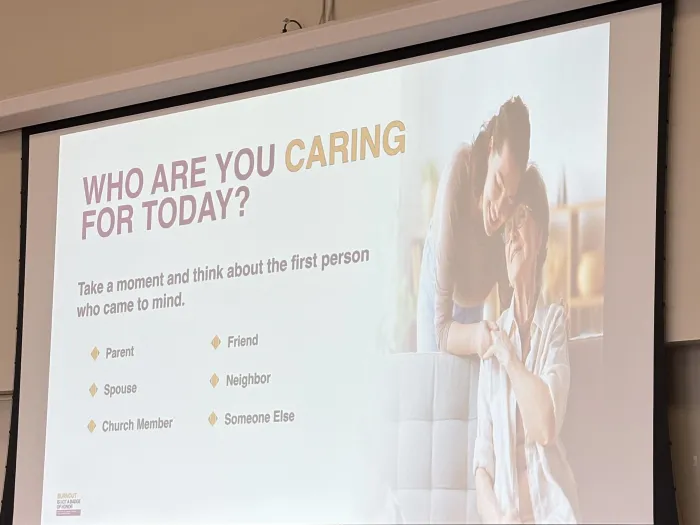
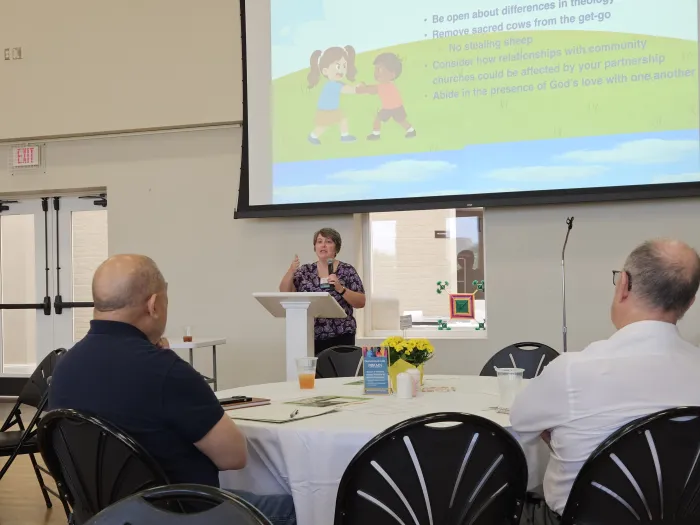
LOUISVILLE — The Rev. Cheryl Swing, the author of “Soul Purpose: My Spiritual Path to Wholeness” and a board-certified chaplain at Frasier Meadows, a retirement community in Boulder, Colorado, led the workshop “Accompanying the Soul: Responding to Spiritual Distress in Later Life” during last month’s Presbyterian Older Adult Ministries Network conference. First Presbyterian Church in Knoxville, Tennessee, hosted the conference. Swing’s slides are here.
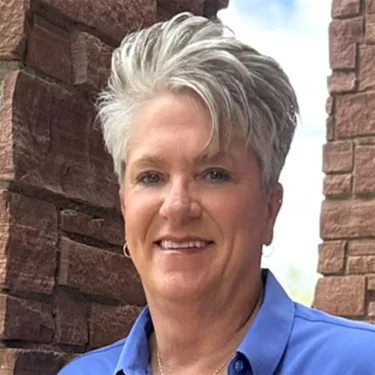
Spiritual distress is a common yet often overlooked experience in older adulthood, frequently appearing as depression, anger or withdrawal. It’s not something to fix, Swing said, but something to accompany with empathy and respect.
Swing delivered her talk on her 59th birthday. “I know 60 is right there,” she told workshop participants. “I’m trying to figure out how I’m going to age the way I tell you guys to do it.”
When we experience spiritual distress, “it does not imply we have a weak faith,” Swing said. “It’s that we’re in distress.” It can’t be treated clinically, she said. “The word I’m going to use a lot today is ‘accompany,’ because I’m a chaplain, and that’s what we do — we come beside you.”
Common triggers include loss and transition, such as suddenly having to rely on a walker to get around. Spiritual distress can show up in a number of statements, such as “Has my life mattered to this point?” and “Why am I still here?” and what Swing called “the big one”: “Where is God in this?”
It can show up as anger or expressions of shame and regret. Behavioral signs include withdrawal and isolation, disconnection from relatives and resistance to care. “Where we see it a lot, especially with dementia, is increased agitation or anxiety,” she said. “It will show up in relational language like ‘My family doesn’t come to see me anymore.’”
Later in life, our spiritual questions and wonderings are often brought into sharper focus, she said. Caregivers and others can “listen to repeated things that are said. You can stay curious. You can notice their emotional tone.”
Among their table mates, workshop attendees crafted open-ended questions that can get people under care to talk more. Among them: “Can you tell me how that feels to you?” “What’s been weighing on your spirit or on your heart?” “Where do you find hope, or where has hope faded away?” “What gives you purpose or meaning?”
“You might have to coach them through that [last question],” Swing said.
Swing presented four case studies designed to enable attendees to consider how they might minister to each of the older adults. Swing changed the names to protect the older adults’ privacy.
Margaret has just moved into assisted living, and “it’s disrupted her community, friendships and autonomy,” Swing said. We may want to help fix things by encouraging her to call the numbers at Bingo or to get involved in the resident council, “but we’re missing the spiritual distress beneath her words.” Swing asked: “Where is the ache in her story?” Margaret’s comment was, “There’s no point anymore.”
“How might you accompany her without trying to fix it or her?” Swing asked.
“We run past people’s feelings all the time,” Swing noted. “We do it with family members and church members, and we do it with each other.”
James, who lives with chronic illness at age 92, was the second case study. “Why am I still here?” he asks.
“When someone asks that, we should treat it as really sacred. Good God, don’t try to answer it,” Swing said, and certainly avoid pat answers like “God has a plan.”
“You could say, ‘That sounds really heavy,’ and then be quiet,” she suggested. You could ask James what he misses, or about what used to sustain him.
“Make room for silence,” Swing said. “We don’t like silence, and I don’t know why. It’s a super helpful tool, especially when you don’t know what to say.” What James needs most is accompaniment, she said.
Dave, a third case study, lives in memory care and says, “I’m not safe here. I want to go home.”
“This one’s important,” Swing said. “There are people in your congregations with cognitive decline. What do you say to that person?”
Keep in mind the acronym PVC, Swing said:
- Presence over Explanation
- Validation over Reassurance
- Curiosity over Correction
When asked for platitudes that are too often offered to people in distress, participants said “It’s going to be OK,” “Everything happens for a reason” and “God doesn’t give you any more than you can handle.”
Lillian, who’s prayed faithfully all her life and now can’t believe “this is how it’s going to end” following a cancer diagnosis, was an angry fourth and final case study.
“We aren’t going to defend God. God can handle God’s self,” Swing said. “We are not going to try to explain her suffering, and we certainly don’t want to correct her theology.”
What we do want to do here is to normalize her anger, Swing said, adding, “I’d be angry too.”
For pastors in the room, Swing recommended trying out this statement: “I don’t understand.”
“Please tell them you don’t have all the answers,” Swing said. A good question when people are angry is, “What do you most want God to know right now?”
“Tell God how angry you are,” the person can suggest to the one they’re caring for. “If appropriate,” Swing said, “offer a prayer that reflects lament, not just comfort.”
“Lillian’s anger, and your anger, are not a failure of your faith,” Swing said. “It’s growth, if you ask me.”
“Our task is to listen for the deeper wound,” Swing said, “and respond in a way that helps them feel accompanied.”
Swing discussed burnout briefly, defining it as “physical, emotional and mental exhaustion caused by prolonged stress, overwork or carrying responsibilities for too long without adequate rest, support and recovery.”
“What is this work asking of you? What is this work taking from you?” Swing asked. “I’m not trying to talk you out of this work, but be aware. It took me until I was almost 50 to go to seminary because I couldn’t figure out what the ministry of presence was,” because “it wasn’t valuable in my world. I’m still stepping into presence every day.”
Swing, a United Church of Christ pastor, closed the workshop with this prayer: “May we be the people who are not afraid of the questions we cannot answer, but are willing to stay long enough for someone else not to be alone in them.”
“May it be so,” Swing said. “Amen.”
You may freely reuse and distribute this article in its entirety for non-commercial purposes in any medium. Please include author attribution, photography credits, and a link to the original article. This work is licensed under a Creative Commons Attribution-NonCommercial-NoDeratives 4.0 International License.