Preaching in the midst of Christian nationalism
Or, as Dr. Heath Carter of Princeton Seminary calls it, ‘hardline Christian extremism’

LOUISVILLE — Dr. Heath Carter sees “significant dangers” in the present time. “How we in our congregations navigate these times is critical,” he told more than 40 preachers tuned in Wednesday to the Synod of the Covenant’s monthly preaching webinar hosted by Synod Executive the Rev. Dr. Chip Hardwick. Watch the webinar here.
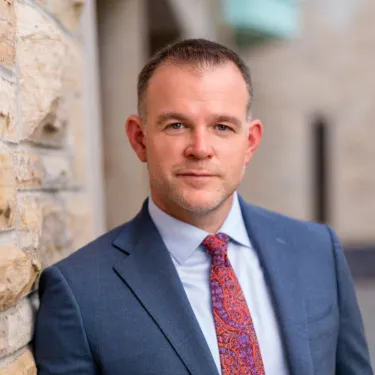
Carter, associate professor of American Christianity at Princeton Theological Seminary, called his 77-minute talk “Preaching in the Midst of Christian Nationalism.” He shared part of his own faith journey, which included a time when he considered himself a Christian nationalist until as a freshman at Georgetown University his roommate — a lifelong Catholic and the son of a Democratic congressman — together with thoughtful Jesuit clerics on the faculty helped Carter launch a highly productive career as an American religious historian.
Carter calls the term Christian nationalism “not super helpful” because it can lump together people who believe a Christian flag belongs in the church sanctuary with those who attacked the U.S. Capitol on Jan. 6, 2021.
“I wish we could find other ways to talk about the threats and dangers we face,” Carter said. “We are a hyper-polarized society, and the use of this term [Christian nationalism] is understood to be pejorative. But some take it as a badge of honor. My question for all of us is whether this way of talking about the dangers we face is helping us move forward toward a more flourishing society.”
While “Christian nationalism” is a relatively new term, “the sense of deep entwinement between Protestant faith and American nationalism goes back 250 years,” Carter said.
He offered three takes on the history of Christian America.
Take 1, from the nation’s founding to early in the 20th century, saw revivals sweeping the country, although many communities lacked churches and ministers. “Folks weren’t necessarily devout,” Carter said, but reformers believed “we could build the kingdom of God on Earth.”
The abolitionist Frederick Douglass certainly saw the need. “For between the Christianity of this land and the Christianity of Christ,” Douglass said, “I recognize he widest possible difference.”
Take 2 is the emergence of mainline Protestantism. By 1908, the Federal Council of Churches, the precursor of the National Council of Churches, “took on all kinds of projects,” Carter said. “Part of what happens is that through ingenuity and determination,” Black leaders in the FCC “get the organization in less than 40 years to condemn Jim Crow.” FCC leaders “were deeply influential” in passing New Deal legislation and fighting for civil rights. “It was a way to Christianize the social order,” he said.
Take 3 is the rise of the religious right, which is responding “to the world I just described,” he said. “The backlash ran through white supremacist politics and anti-New Deal politics.”
For Carter, the trouble ahead comes from “the tendency to identify the gospel with white supremacy, Christian supremacy, animosity toward ‘the stranger,’ militant masculinity, U.S. exceptionalism and profound inequality.”
“Whether or not ‘Christian nationalism’ is the right term to use, there is no doubt we encounter these,” he said. The question becomes “how to engage the world when these connections are being made?”
Carter said he prefers using a term like “hardline Christian extremism” to Christian nationalism. “Not everyone who wants a more restrictive immigration policy than I do is a hardline Christian extremist,” he said.
“We have a Christian imperative to protect the vulnerable and to speak the truth,” he said. “I can’t believe anyone is beyond redemption. We hold out hope,” which he said is “a way Christians can be distinctive at this time.”
“We are people who don’t give up on other people, or try not to,” he said. “We believe God is not done with us and with others.”
Throughout his talk, Carter encouraged continued engagement with siblings in the faith with whom we disagree. “When people change their minds, it’s not because they were harangued,” he noted. “It’s because someone loves them and shows them generosity, curiosity and respect.”
Not everyone is called to champion religious pluralism, “but those of us with a measure of privilege may be called to do this work,” Carter said. “As I think about the call to preach and the call to engage in public life, the call is the hope that God isn’t done with us yet.”
“I think our faith calls us into conversation with these folks,” he said. “We will be surprised by what the Spirit will do.”
During a question-and-answer time following Carter’s presentation, one preacher said in recent years she’s felt the call to interim ministry, “where I’ve been exposed to loving, good, good people.”
On one Sunday, a guest preacher talked about stepped-up enforcement by agents with Immigration and Customs Enforcement. A parishioner shrugged and said, “They’re just doing their job.”
“Those conversations are hard,” this preacher said. “The conversation we are having of loving people and keeping the Imago Dei in mind — can we imagine God loves people we disagree with as much as God loves us?”
Go here to learn more about preaching webinars offered by the Synod of the Covenant.
You may freely reuse and distribute this article in its entirety for non-commercial purposes in any medium. Please include author attribution, photography credits, and a link to the original article. This work is licensed under a Creative Commons Attribution-NonCommercial-NoDeratives 4.0 International License.