World Communion Offering empowers ministries of reconciliation in action
Three stories illustrate the far-reaching impact of the PC(USA)’s newest Special Offering
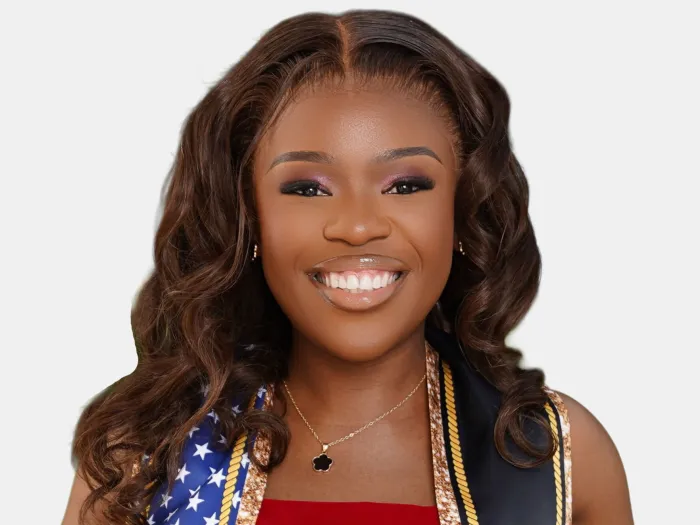
LOUISVILLE — Unlike many of her peers, 27-year-old Philile Dlamini didn’t become a social media influencer to build a following or to chase fame.
She did it to follow her faith and to chase justice.
That pursuit began with a host of injustices — particularly against women and girls — in Sudan, which for the past three years has ranked as the world’s most severe humanitarian crisis.
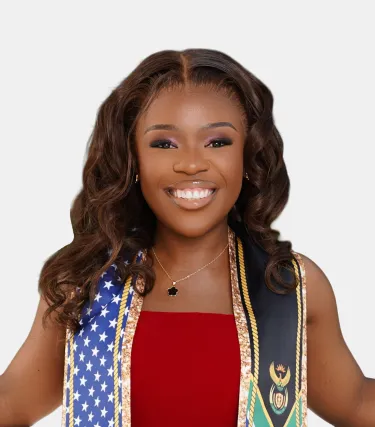
“My interest in Sudan is professional, but it’s also personal, because I see a lot of what’s happening in Sudan right now as being similar to what I saw in South Africa growing up with political and economic decisions deeply shaping everyday life, especially for women and marginalized communities,” said Dlamini. “I think there’s a need for more awareness, but not only awareness around the issue but also action and sustainability.”
After earning her undergraduate degree in international relations in Pretoria and studying African politics with honors in Johannesburg, Dlamini moved to the U.S. to pursue a master’s degree in political science.
Her studies and deep faith led her to dream of advocacy as her vocation, but she couldn’t quite picture what such a career path would look like.
Until a friend told her about a Young Adult Volunteer opportunity at the Presbyterian Church (U.S.A.)’s Office of Public Witness, the public policy information and advocacy office of the General Assembly of the Presbyterian Church (U.S.A.).
Beginning in October 2025, Dlamini served the OPW under the auspices of the YAV program in a 10-month internship, working directly with Catherine Gordon, the PC(USA)’s representative for international issues.
“My role is mainly monitoring the global policies and how they’re affecting the different communities and countries that I work with and have an interest in, specifically Sudan and the Democratic Republic of Congo,” Dlamini explained. “The humanitarian conflict in Sudan is something that needs our attention.”
And through her groundbreaking social media series focused on Sudan — exploring what’s happening, who is most affected, and how the ongoing conflict has reshaped daily life for millions of people — Dlamini is calling attention to one of the world’s most overlooked humanitarian crises.
“Through her Sudan-focused work, Philile has helped connect U.S. Presbyterians to a global crisis, embodying OPW’s mission to link faith, advocacy and international solidarity,” said Gordon. “She translated complex realities in Sudan into accessible, faithful storytelling that calls the church into awareness and action alongside global partners.”
As for Dlamini, she believes that only when people are better informed about world issues can they take action.
“I think injustice often happens when we keep quiet in the face of injustice,” she said. “But when people hear about it, it’s only then that we can start being agents for change.”
Dlamini’s experience as a YAV working at OPW is made possible, in part, by gifts to the World Communion Offering.
Received by many congregations on World Communion Sunday, which falls this year on Oct. 4, this new Offering can be celebrated at any time of the year. With its singular focus on reconciling God’s people around the sacrament of the Lord’s Supper, it supports the PC(USA)’s initiatives in racial justice, gender justice, peacemaking, global witness, and ecumenical and interfaith relations.
The prophet Micah’s charge to “love kindness” is uniquely embodied when siblings the world over join hearts and hands around Christ’s Table of grace.
“People who care about young people should give to this Offering to support gender justice,” Dlamini said. “Even a small gift can make a big difference in a young person’s life. That’s what happened for me.”
Sowing the seeds of racial justice
Due south of the nation’s capital, another advocate was similarly called to seek justice for his island, his people and his Gullah Geechee culture.
Born and raised on a small farm on South Carolina’s St. Helena Island — among the largest of the chain of Sea Islands off the coast of South Carolina, Georgia and Florida — Walter Mack initially left the rural Lowcountry to earn degrees in chemistry and business before returning to his roots.
Proud to identify as Gullah — a people descended from the formerly enslaved West and Central Africans who inhabited and worked the Sea Islands’ fertile farmlands — Mack still lives on land his family bought in the late 1800s.
As a lifelong resident of St. Helena, he was determined to safeguard the island’s rich cultural and agricultural heritage.
“I made a commitment to help preserve a lot of the Africanism here that was carried over from the slave trade,” he said. “We wanted to pass that culture — the food, the religion, the crafts and most of all, the farming — on to the next generation. In the Gullah culture, without land, there is no culture.”
Yet increasingly, the Gullah people’s land and their way of life were being threatened by rampant development.
And not only was big industry poised to disrupt the area’s native fauna and flora — including polluting its waterways, on which the residents depend for seafood — but the farming families’ lives and livelihoods were being systematically undermined by structural racism.
“Even though BIPOC [Black, Indigenous and People of Color] farmers can have the same exact or better produce than other non-BIPOC farmers,” said Mack, “they are always offered a lower price. It all has to do with racism. That’s the bottom line. For years, this has happened, and there was nothing anybody could do about it.”
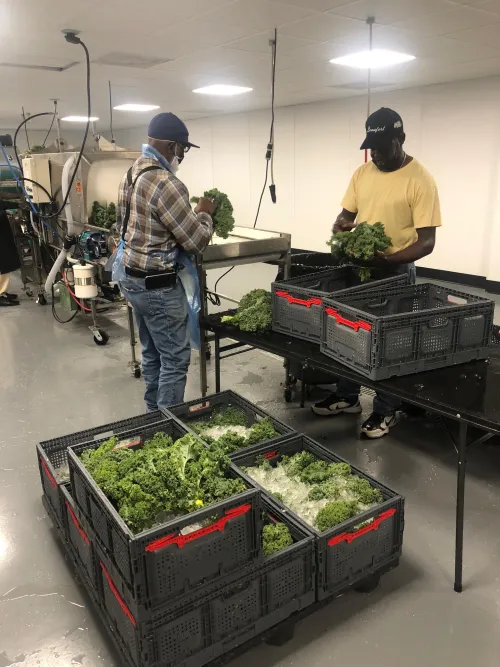
That is, until 2010, when Mack became one of the founding board members of the Gullah Farmers Cooperative Association, in which more than a dozen Black farmers with limited resources came together to secure markets for their products and to get paid fair prices.
“The co-op stepped in to pay farmers the market price. Anybody who sells to us, no matter their color, they all get the same thing,” Mack said.
The cooperative helps farmers in a variety of ways, offering marketing and technical assistance such as how to package and how to focus on food safety and quality control, as well as helping with budgeting, farm certification and U.S. Department of Agriculture programs. Several years ago, the cooperative identified a 10,000-square-foot building on St. Helena Island and received federal funding to transform it into a fruit-and-vegetable processing facility.
And because such ambitious goals and programs require adequate funding, the cooperative applied for and received a grant from the Presbyterian Committee on the Self-Development of People, a ministry that seeks to change the structures that perpetuate poverty, oppression and injustice.
“The work of the Gullah Farmers aligns with the World Communion Offering because of its distinctive ability to help them preserve their traditional African customs, which in turn strengthens their ability to uplift communities by providing fresh food and promoting more equitable labor and healthier food choices,” said the Rev. Dr. Alonzo Johnson, manager of SDOP. “When people give to the World Communion Offering, they become the hands and feet of Christ’s important work of dismantling racism, practicing peacemaking, and assisting communities to find their voice and access their God-given power by being in solidarity with them.”
Seeing others as Jesus sees them
On the other side of the world, fostering solidarity with people across religious differences is the Rev. Justin Meyers’s mission.
For Meyers, interfaith understanding isn’t just an abstract concept; it’s his lived experience.
During his 10 years in parish ministry, Meyers regularly engaged in a wide range of interfaith initiatives, from pulpit exchanges to interfaith Thanksgiving services to interfaith justice and social initiatives.
But his immersive, firsthand education and commitment to interfaith dialogue weren’t limited to the congregations and communities he served.
“I have a family history with my father’s sister marrying a Lebanese Muslim immigrant and having cousins who were all raised in the Muslim faith tradition,” Meyers said. “I was drawn to the work of interfaith relations since it was not only a piece of my personal history but also a part of pastoral ministry that I valued highly.”
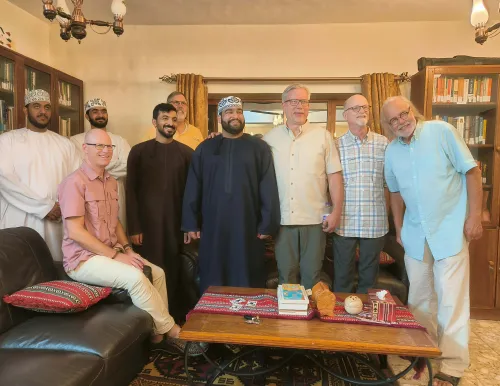
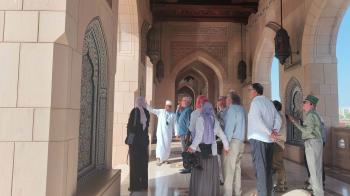
In 2013, Meyers, an ordained minister in the Reformed Church in America, became the associate director of the Al Amana Centre in Oman, a country on the southeastern coast of the Arabian Peninsula, and is now its executive director.
With its roots in the Reformed Church of America, the Al Amana Centre’s work is based on more than 130 years of collaboration between Christians and Muslims in the Sultanate of Oman. It is one of the few Christian-led organizations in the Muslim-majority world working toward sustainable peace.
The staff and Al Amana’s eight-member board seek to foster peace and reconciliation through safe, immersive interfaith experiences, offering training sessions and relational encounters that build capacity to work across differences, religious and political.
Through genuine and open exchanges, the Centre’s facilitated discussions bridge the gap between people of different beliefs and help participants gain deeper insights into themselves. One of the Centre’s priorities is to lift up the role of religion so that people can connect, reconcile and build peace within their own context.
“Interfaith opportunities increase dialogue and knowledge,” said Luciano Kovacs, Global Ecumenical Liaison for the Middle East and Europe, with Global Ecumenical Partnerships. “Interfaith experiences break prejudices without attempting to level diversity.”
GELs serve as bridges between the PC(USA) and its international/U.S. partners, mid councils, new worshiping communities, diaspora communities, ethnic caucuses, ecumenical partners and mission networks.
The Rev. Ellen Sherby, who manages international GELs, said that “the ministry of Global Ecumenical Partnerships aspires to bring people together for work rooted in strong relationships and local discernment that brings fullness of life to all.”
“Supporting the Al Amana Centre through the PC(USA) allows us to deepen partnerships, offer needed training and retreats to people in conflict zones, and allows us to help people in the U.S. meet and understand people of different religions and cultures in the Gulf, Levant, and the wider MENA [Middle East and North Africa] region,” said Meyers.
Among those who are deeply committed to nurturing just such partnerships is the Rev. Dr. Jeffrey Japinga, a Presbyterian transitional minister serving a congregation near Chicago.
“The World Communion Offering at its core invites us to something different — to act on a commitment we say has its root and its core expression at the table,” said Japinga, who chairs the board of the Al Amana Centre. “It’s a way to act: to stand alongside people and organizations breaking down the very barriers set aside at Christ’s table.”
You may freely reuse and distribute this article in its entirety for non-commercial purposes in any medium. Please include author attribution, photography credits, and a link to the original article. This work is licensed under a Creative Commons Attribution-NonCommercial-NoDeratives 4.0 International License.