Committee approves overtures concerning nuclear policy, Korea, Syria and missiology
Reformed Identity Around the World Committee advances overtures following extensive debate on theology, advocacy and global partnership

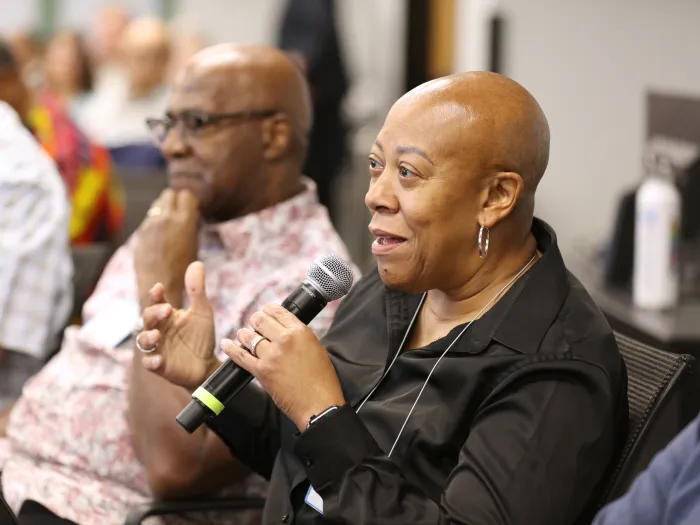
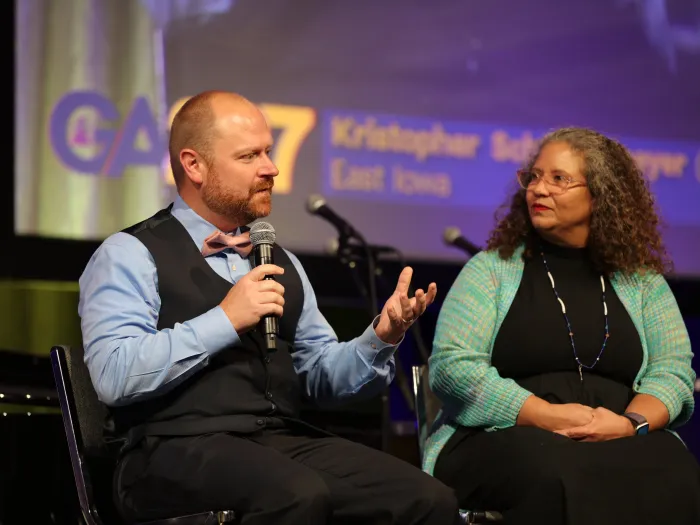
The Reformed Identity Around the World Committee of the 227th General Assembly (2026) convened Monday and concluded its work that evening, passing four major items of business — RIW-03, RIW-08, RIW-09 and RIW-02 — after hours of debate shaped by testimony, amendments and questions about the church’s global witness. The committee was moderated by ruling elder, Rachael Eggebeen of the Presbytery of de Cristo. The Rev. Dr. Matt Bussell of Salem Presbytery served as Vice Moderator.
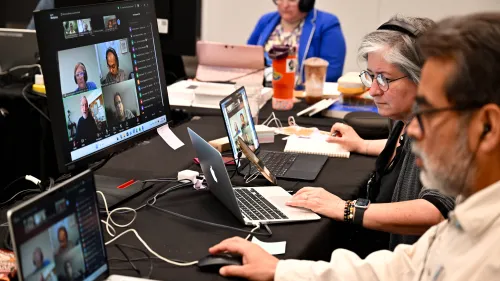
The committee first approved RIW-03 by a 43-13 vote after adopting an amendment to the original overture. The amended recommendation reaffirms the call of the 223rd General Assembly (2018) to nuclear disarmament, urges congregations to engage the topic, calls for study resources and directs new or revised social witness policy development for 2028. Commissioners amended the overture in part to align study, policy revision and resource development, with discussion reflecting concerns about sequencing these directives and consideration of the church’s existing policy framework. The financial implications discussed during debate included costs associated with creating study materials and distributing them digitally. Ultimately, commissioners affirmed that the amended language allows the denomination to “provide materials to make an in-depth and serious study of these topics possible” while also engaging broader policy work ahead of the 228th General Assembly.
RIW-08 followed with a 49-8 vote, advancing an overture on the Jeju April 3 Tragedy in Korea. The item calls for acknowledgment and grief in worship, advocacy for investigation of U.S. involvement, consultation with Korean partners and preparation for shared observances in 2028, including a pilgrimage visit, study materials and worship resources. The overture carries financial implications of $104,316, largely tied to the proposed pilgrimage and resource development. During open hearings, overture advocate the Rev. In Yang said, “This overture can help kindle the fire of the Holy Spirit for peace building on the Korean Peninsula.”
Theological Student Advisory Delegate Jose Luis Torres from the Seminario Evangelico de Puerto Rico spoke in favor of the overture while emphasizing both remembrance and reconciliation, noting the bravery of the “Borinqueneers,” an entirely Puerto Rican infantry regiment in the Korean War, adding that the church must honor that history “while also having the humility to learn from history and to walk alongside those seeking healing.”
The committee then approved RIW-09 addressing advocacy for religious minorities in Syria, after amending the motion to incorporate recommendations from the Unification Commission regarding broader language about all minorities and the indigenous nature of Christianity in Syria. The amended motion passed 54-3. The recommendation commends past actions, directs continued advocacy and encourages prayer and resource sharing across the church. During deliberation, resource persons from Presbyterian Life & Witness emphasized advocacy grounded in partner relationships and careful language. Catherine Gordon, representative for International Issues in the Office of Public Witness, underscored the need for advocacy that reflects “religious freedom for all religious groups and communities” and acknowledges that “Christian communities are historic and indigenous to Syria.” When consulted for clarification on the impact the overture would have on existing partners in Syria, Global Ecumenical Liaisons Doug Dicks and Luciano Kovacs highlighted that advocacy must remain attentive to local realities and avoid inadvertently increasing risks for vulnerable communities. The overture carries minimal direct financial implications but signals ongoing advocacy work requiring staff engagement and partner coordination.
The final item, RIW-02, called for the development of a new missiological statement for the PC(USA) and passed 54-2 after significant debate over scope and cost. The recommendation directs staff, with an advisory group, to develop a statement addressing theology, governance, funding and global engagement, including racial equity concerns and consultation with diverse partners and communities.
“What is the Presbyterian Church (U.S.A.)’s guiding missiology?” asked Overture Advocate Dr. Ruben Rosario Rodriguez, referring to questions arising in the wake of the closure of Presbyterian World Mission. He framed the theological need addressed by the overture he helped to write through the Presbytery of Giddings-Lovejoy. “My biggest concern as a theologian is that the decisions seem to be based very explicitly primarily on questions of financial exigency without any real attempt to speak to the theological rationale not only for the decision made but how the decision was made,” said Rodriguez, who emphasized the importance of both of those things.
The financial implications total $157,106 across 2027 and 2028. Commissioners debated whether to reduce costs to $25,000 and conduct work primarily online, but the amendment failed after concerns were raised about undermining meaningful, diverse and inclusive collaboration. Resource Person Tamron Keith, director of finance and administration for Presbyterian Life & Witness, explained the assumptions behind the cost: “The financial implication assumes that the advisory group is comprised of 20 members” and that they would convene in person “for a three-day meeting in both 2027 and 2028.”
A substitute motion incorporating racial equity recommendations passed before final approval, with Brandon Tacadena, ruling elder commissioner from Seattle Presbytery, noted that marginalized voices were centered in comments offered by the Racial Equity Advocacy Committee. “As a diasporic Tokelau and Samoan that was born and raised in Hawai'i, a colony of the United States, I believe that any articulation of a new missiological statement of the PC(USA) should prioritize, affirm and give preferential option for those on the margins and those who have been historically disenfranchised and harmed and continue to be harmed by white Western colonial legacies.”
Althelia Pond, a teaching elder commissioner from the Presbytery of New York City, agreed, saying inclusion “strengthen[s] our missionary and theological dialogue.”
The committee closed its workday in prayer. Bussell prayed, "Holy One, Holy Three, we thank you for her being with us this day, as we started General Assembly, doing new things and new ways, and with people we don't know well yet, and we thank you for being with us as we have discussed some difficult topics. You have sustained us, and we ask that you be with us this evening as we rest. Give us strength to come back tomorrow, ready for more discussion and discernment together. We pray this in your holy name. Amen."
You may freely reuse and distribute this article in its entirety for non-commercial purposes in any medium. Please include author attribution, photography credits, and a link to the original article. This work is licensed under a Creative Commons Attribution-NonCommercial-NoDeratives 4.0 International License.