Ebola response reflects power of networking by the Presbyterian Church (U.S.A.), partners and presbyteries
Presbyterian Disaster Assistance grants will assist with prevention and hygiene efforts

LOUISVILLE — With experts making dire predictions about the fast-moving Ebola outbreak in Africa, the Presbyterian Church (U.S.A.) is working through partners to help promote prevention and proper hygiene in hard-hit Democratic Republic of the Congo (DRC).
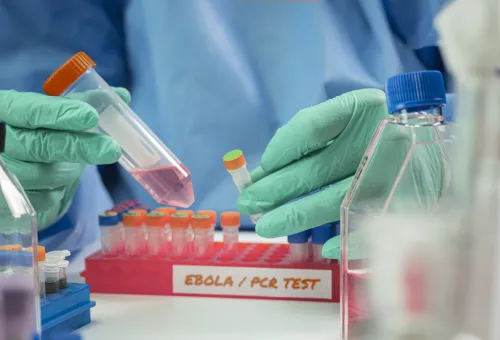
Presbyterian Disaster Assistance (PDA) recently approved solidarity grants for a new partner, the Rebuilders Ministry in Bunia, and the Church of Christ in Congo, to help protect people from the dangerous Bundibugyo strain of the Ebola virus, said Dayna Oliver, Associate for International Program Administration for PDA.
Both organizations are “doing basically the same type of work,” Oliver said. “They're doing some awareness campaigns. They’re getting fluoride tablets, making sure there’s access to clean water,” and also seeking personal protective equipment (PPE) for health professionals.
This is important work because the outbreak is growing, and as Oliver noted, there is no approved vaccine for this particular strain. Experts have warned that it could become the deadliest Ebola outbreak ever if urgent action isn’t taken.
As of mid-June, there had been 837 confirmed cases and 196 deaths in DRC as a result of the outbreak, the Centers for Disease Control and Prevention noted. Meanwhile, Uganda, which shares a border with DRC, had experienced 19 confirmed cases and two confirmed deaths.
Containing the outbreak is complicated by several factors, including armed conflict in and near the DRC, the presence of thousands of people displaced by that violence, and burial practices that can spread the disease, said the Rev. Dr. Laurie Kraus, manager of international response for PDA in Partnerships Beyond the PC(USA), which is part of Presbyterian Life & Witness.
“Burial traditions in Africa are very personal, very physical,” and that has been a “huge issue” in various Ebola outbreaks, Kraus said.
As the battle to contain the virus continues, having local partners to provide prevention information will be a plus, according to the Rebuilders Ministry, which is also receives funding from Bel Air Church in Los Angeles.
“We (at Rebuilders) are known in these communities,” said the Rev. James Byensi, founder and executive director of Rebuilders Ministry, in correspondence with PDA. “Since 2019, our teams have worked in the very markets, schools, and churches where this project operates. In a region where deep mistrust of outside institutions, including government agencies, means the difference between people accepting help and turning it away.”
The current outbreak was first identified in May in Ituri Province, the epicenter, where Bunia is located. Cases also have occurred in other parts of DRC, such as North Kivu and South Kivu as well as Uganda.
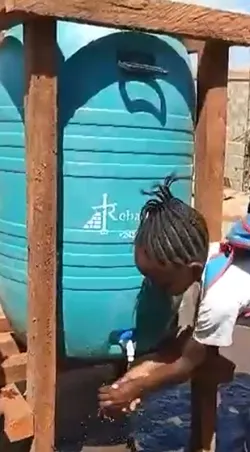
The Church of Christ in Congo is working to raise awareness about preventive measures to combat and limit the spread of Ebola. They include informing the community about the ways that Ebola spreads, familiarizing people with the signs and symptoms of the illness, promoting good hygiene practices, encouraging fast reporting of suspected cases and reducing misinformation and rumors related to Ebola.
Meanwhile, the Rebuilders Ministry has adopted three major approaches, including radio and public sensitization of the masses, distribution of medical equipment to hospitals, and supplying clean, chlorinated water and hygiene education to Bunia’s “most vulnerable and highest-traffic locations.”
The ministry uses motorized cargo tricycles to make it easier to get to difficult-to-reach places, and trained hygiene educators provide instruction at each stop.
Over the course of two months, the Clean Hands Initiative “will reach more than 100,000 people, distribute 1,200 jerrycans of water daily, and train 10 community health volunteers,” according to Rebuilders.
Global Ecumenical Partnerships (GEP) of the PC(USA) was instrumental in getting the Rebuilders Ministry in contact with PDA through a connection with the Presbytery of the Pacific.
“The Presbytery of the Pacific has a strong connection with Rebuilders Ministry through ThinSpace Africa, a local nonprofit that supports several ministries in DRC and some neighboring countries,” explained Joseph Russ, a Global Ecumenical Liaison (GEL) within GEP. “Several presbytery members and prominent Southern Californian Presbyterians beyond this presbytery are involved with ThinSpace and brought one of the leaders from Rebuilders to Los Angeles some years ago, where he shared about the work they do and built some of the relationships with the local leadership.”
Russ added, “Because I work closely with local presbytery leadership as a Global Ecumenical Liaison, they let me know when Rebuilders expressed this urgency and need (related to Ebola). Because the work of GELs responds flexibly to local discernment, I was able to work quickly with Rebuilders, Pacific Presbytery, Doug Tilton (GEL for Africa) and PDA,” Russ said. “We got them connected so we could respond quickly.”
PDA was able to host a call with Byensi to find out more about their work and to quickly award a grant, Oliver and Kraus said.
Tilton, the GEL for Africa, noted that this is the kind of good networking that’s been occurring since the rollout of the GEP model.
This is “a wonderful example of the way in which our new structure helps to promote collaboration across levels within the church and also has an openness to working together with new partners in new ways that we haven't necessarily explored in the past, so that’s exciting,” Tilton said.
He’s also pleased to have been able to share information about the Ebola response with interested parties, such as the Africa mission networks, and to inform “congregations that have connections in the region due to their partnerships and have been asking” about PC(USA)’s response to the Ebola outbreak. “It's quite a kind of web of connections.”
Meanwhile, time is of the essence as partners and health officials continue the fight against Bundibugyo. “In Bunia, clean hands and medical supplies are saving lives and we are grateful that Presbyterian Disaster Assistance moves with the speed this moment demands,” Byensi said.
If you’d like to be part of the Ebola response, consider donating to Presbyterian Disaster Assistance here. The fund supplements One Great Hour of Sharing.
You may freely reuse and distribute this article in its entirety for non-commercial purposes in any medium. Please include author attribution, photography credits, and a link to the original article. This work is licensed under a Creative Commons Attribution-NonCommercial-NoDeratives 4.0 International License.