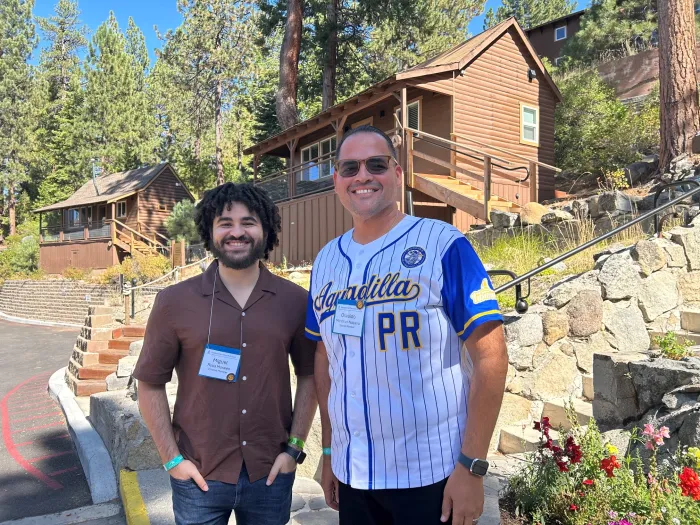
Leader Formation webinar explores being Presbyterian in a ‘dysvangelical’ age
Authors and GA Co-Moderators highlight Reformed identity, community and hope for the church’s future
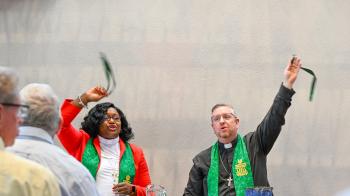
“Grace is our word.” With that simple but sweeping claim, the Rev. Alex Thornburg framed a recent Leader Formation webinar exploring what it means to be Presbyterian in a time shaped by what he and co-author the Rev. Ted V. Foote Jr. call “dysvangelical” Christianity.
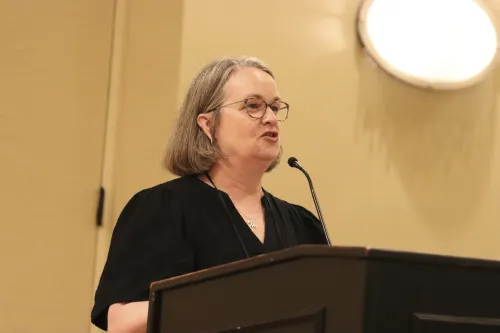
Hosted by the Presbyterian Church (U.S.A.)’s Leader Formation office and moderated by Martha Miller, the webinar drew strong participation with 552 people registered. “The chat was hopping, so the participants seemed to be very engaged,” Miller said. Miller serves in Presbyterian Life & Witness, focusing on ministry education and support for ruling elders, deacons and Christian educators, and the webinar reflected that office’s mission to form leaders grounded in Reformed theology while navigating contemporary challenges.
The conversation brought together Thornburg and Foote, authors of “"Being Presbyterian in a Dysvangelical America" with the Co-Moderators of the 226th General Assembly, the Rev. CeCe Armstrong and the Rev. Tony Larson. Published by Westminster John Knox Press, the book is the authors’ third collaboration, each exploring questions of Presbyterian identity in changing contexts.
At the heart of the discussion was a defining contrast: Presbyterian theology’s understanding of grace as a gift versus what the authors described as a transactional approach to faith.
“The centrality of the gift of God’s love, unearned, unmerited … freely offered, no strings attached,” Thornburg said, is core to the Reformed tradition. By contrast, dysvangelical faith “turns faith into a contract,” where belief or behavior becomes a means to secure salvation or avoid punishment. Presbyterians resist that framing, Thornburg said. “No one earns their way into God’s love,” and faith is not “hell insurance or apocalyptic immunity” but a response of “awe and gratitude and celebration.”
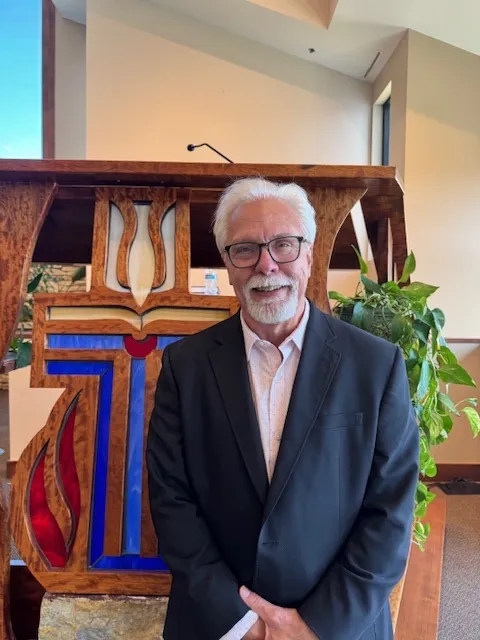
Foote emphasized that this understanding of grace is not exclusive to Presbyterians but shared across Christian traditions, particularly as churches respond to the influence of Christian nationalism and distorted expressions of the gospel.
A Reformed understanding of grace shapes a communal faith. “The Presbyterian tradition, the Reformed tradition, is focused on community,” Thornburg said, emphasizing that Christian life is lived together, not as an individual transaction. He connected that communal vision directly to the Reformed principle of ongoing transformation. “For Presbyterians, we have a more humble understanding of truth as a continual, constant movement led by the Spirit,” he said, explaining that the beloved phrase from the PC(USA)’s Book of Order, “reformed, always being reformed,” calls the church to keep listening and changing.
That transformation happens as the church listens to voices long ignored. Thornburg said faithful community includes hearing “the voices of feminists and women … the poor and disinherited … people of color,” as well as those excluded because of gender or sexual orientation.
He grounded that commitment in the work of the Holy Spirit. “Diversity, equity and inclusion are not policies of the church. They are the core work of the Holy Spirit,” he said.
Foote emphasized that this listening work belongs to the whole church. “Everyone is a theologian,” he said, calling Presbyterians to practice “the spirituality of listening … as we come to grow into our identity with the mind and life of Christ.”
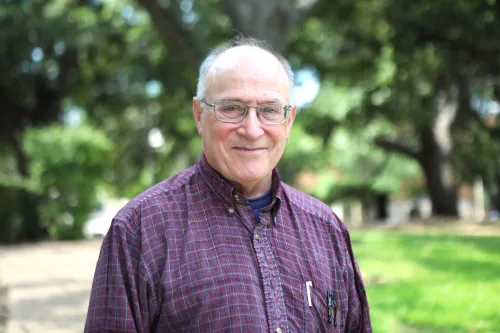
The authors also pointed to biblical scholarship that reinforces this expansive understanding of God’s presence. Foote cited Dr. Jacqueline Hidalgo, who “talks about how for Indigenous and other marginalized peoples, the ‘City of God’ is transportable and mobile,” meaning “God’s dwelling and presence go with God’s people wherever they are, with the oppressed and marginalized communities anywhere all the time.”
That theological framework shaped the panel’s engagement with current challenges in the church. Drawing on their travels as Co-Moderators to churches, mid councils, conferences and ecumenical partners over the past two years, Armstrong said many Presbyterians describe feeling “defensive when they’re challenged with the phrase, ‘but the Bible clearly says ….’”
Thornburg responded that such claims can limit interpretation and conversation. “Their interpretation is not the only interpretation,” he said, encouraging Presbyterians to read Scripture through the life and teachings of Jesus Christ.
Larson emphasized the need for practical engagement. Whether in formal settings or conversations “at a local dog park and a local tap house,” he said, leaders must translate theology into everyday language and relationships.
The conversation also touched on Christian nationalism, with Armstrong offering a pastoral metaphor shaped by her own experience. She encouraged Presbyterians to “turn up the volume of being a Christian” through acts of compassion and justice that reflect the gospel more loudly than political rhetoric.
As the webinar drew to a close, Thornburg shifted the conversation deliberately, asking the Co-Moderators about hope. The question, he said, grows out of the book’s conviction that “the world needs Presbyterians with its theology of grace and its message of welcome and inclusion.”
Both Armstrong and Larson offered hopeful responses grounded in their experiences across the denomination.
“I am hopeful,” Armstrong said, pointing to younger generations in the church who “are bold enough to ask questions of our traditions and are wise enough to tweak them for this day and age.”
Larson echoed that perspective, noting that in visits across synods and presbyteries he has consistently encountered innovation and faithfulness. “I haven’t been to any of those visits where I haven’t seen bold, creative, sacrificial ministry,” he said.
Together, their reflections pointed back to the theological foundation that shaped the entire webinar. In a religious landscape often marked by fear, division and transactional faith, Presbyterian identity rooted in grace, community, and listening offers both a clear witness and enduring hope.
You may freely reuse and distribute this article in its entirety for non-commercial purposes in any medium. Please include author attribution, photography credits, and a link to the original article. This work is licensed under a Creative Commons Attribution-NonCommercial-NoDeratives 4.0 International License.