Giving babies a better chance at life by improving farmworker conditions
Study finds positive results for program with Presbyterian ties

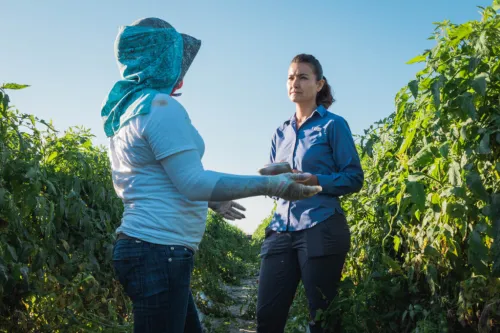
LOUISVILLE — A program that has been protecting the rights of migrant farmworkers for more than a decade has a new reason to be proud: Researchers have found that it’s good for infants and their hard-working mothers.
A study in the journal Demography centers on the Fair Food Program (FFP), which was started about 15 years ago by the Coalition of Immokalee Workers (CIW), a longtime partner of the Presbyterian Hunger Program.
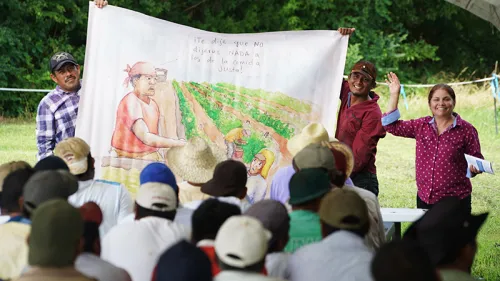
Farms that participate in the Fair Food Program agree to uphold ethical labor standards to ensure that migrant workers receive health and safety protections and fair wages. There’s a code of conduct aimed at eliminating abusive practices that workers would otherwise be vulnerable to.
Additional program features include vigorous monitoring, worker education, a 24-hour complaint hotline, and a bonus on workers’ paychecks.
“The area of Southwest Florida where the program was born was known to federal prosecutors as ground zero for modern day slavery, and that was because of the numerous cases of forced labor impacting hundreds of workers … so you had people being held against their will, subject to wage theft, violence, sexual assault and dangerous working conditions,” said Laura Safer Espinoza, a former judge who’s executive director of the Fair Food Standards Council, which monitors and implements the FFP.
Researchers from the University of North Carolina at Chapel Hill and Indiana University decided to explore how improvements to the working and employment conditions of frontline farmworkers impacted the prevalence of low-weight births among mothers born in Latin America.
Their research, which included analyzing data from 2006 to 2018 from the National Vital Statistics System, found that the Fair Food Program was associated with a 10% decline in low-weight births.
The peer-reviewed study also found that the program was associated with improvements in maternal health and how much money people made.
“The findings suggest that the improvements in infant health were likely linked to improvements in maternal health during pregnancy,” the researchers noted. “Specifically, we demonstrated that the adoption of the FFP led to reductions in gestational hypertension and diabetes among mothers in FFP counties. Finally, we provide suggestive evidence that the FFP helped to improve wages among agricultural workers in treated counties, a crucial downstream social determinant of maternal health.”
PHP National Hunger Associate Andrew Kang Bartlett was pleased to hear of the results.
“As longtime supporters of the CIW, we are thrilled to see the Fair Food Program create tangible benefits for the children of farmworkers!” Kang Bartlett said. “This groundbreaking study is a powerful affirmation that dignity at work is inseparable from health and life itself. The research makes clear that protecting those who harvest our food is essential to nurturing the next generation and building a truly just food system.”
Safer Espinoza, a retired New York State Supreme Court justice, welcomed the results as well.
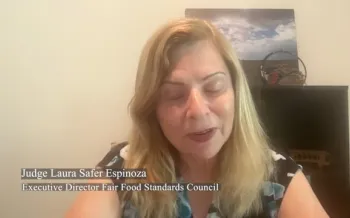
“We were very pleasantly surprised that the research yielded such concrete, measurable results. But when you think about it, the difference in the environment that's been created is so dramatic that it makes perfect sense this would be one of the outcomes,” she said.
“The kinds of conditions that lead to healthy pregnancies are much more present for female workers on Fair Food Program farms than outside the program,” she added. “For starters, as the researchers found, their income is better, so they’re not subject to wage theft. They receive the Fair Food Program premium, so they're able to feed themselves and their growing families better. And then everyone knows that working in less dangerous conditions, free of sexual harassment, free of verbal harassment, free of threat of violence and general worry about retaliation if you enforce or attempt to enforce your rights under the law — all of that makes for so much less stress and healthier pregnancies all around.”
She was particularly excited to hear about the good news for infants.
“It is transformational to have a generation that is being born healthier, with a better chance of just succeeding in life,” she said. And let's not forget that they're growing up in families working on those farms where … the psychological and physical environment for their parents is better, and their parents are earning more money so they're able to provide for their families.”
The study was led by Dr. Joaquin Alfredo-Angel Rubalcaba, an associate professor of public policy at UNC Chapel Hill.
"By combining worker rights protections with meaningful wage premiums, the Fair Food Program functions as a powerful public health intervention in the communities it serves," he said in a news release. "Our findings suggest that expanding the program — and applying its model in other low-wage industries — could have significant public health consequences for millions of working families living paycheck to paycheck."
Household names such as Walmart and Whole Foods are part of the program.
There are “legally binding agreements with now 14 major brands at the top of the food supply chain, and that creates a binding obligation for those brands to buy preferentially from growers that are respecting human rights standards on their farms,” Safer Espinoza said. “It also makes them responsible to pay a small premium for their produce, which is passed along through the supply chain to workers to mitigate the effects of what were stagnant wages for many decades.”
The program is now in nearly two dozen states, but Safer Espinoza would like to see is spread even farther.
“We hope that buyers at the top of the food supply chain will value this kind of result for the workers — the most vulnerable workers at the bottom of their supply chain — and join the Fair Food Program,” she said. “The more buyers that join the Fair Food Program, the more growers that will also come in, and more workers will benefit from the kind of environment that is created on Fair Food Program farms.”
Read more about the Fair Food Program here, and connect with the Presbyterian Hunger Program to learn even more ways to fight poverty and hunger.
You may freely reuse and distribute this article in its entirety for non-commercial purposes in any medium. Please include author attribution, photography credits, and a link to the original article. This work is licensed under a Creative Commons Attribution-NonCommercial-NoDeratives 4.0 International License.