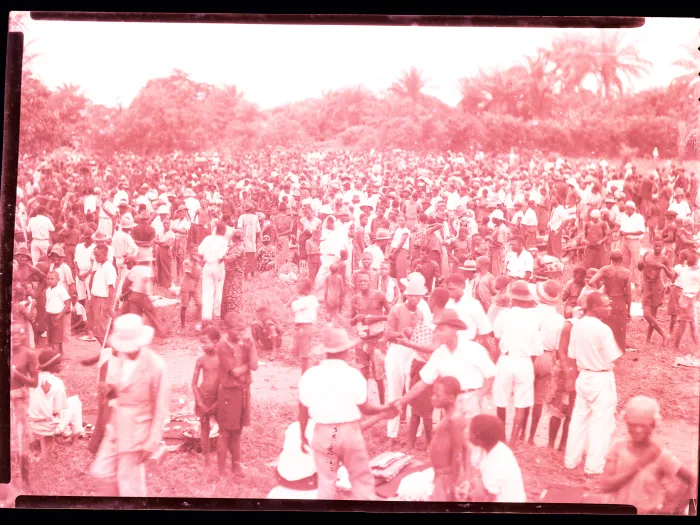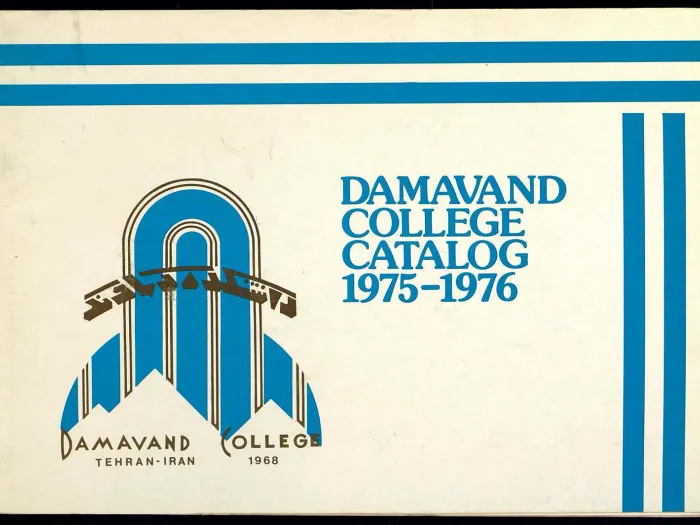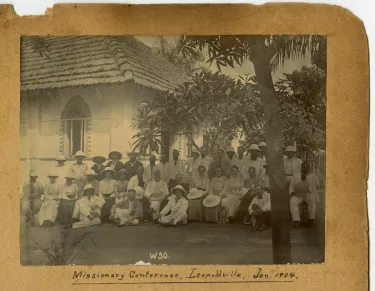
During my research fellowship at the Presbyterian Historical Society (PHS) from May 27 to June 5, 2025, I examined primary source documents that illustrate the relationship between British Imperialism, Presbyterian mission work, and the development of political culture in Malawi from the late nineteenth century to the post-colonial era. This research builds on the premise that, while Scottish missionaries have received significant scholarly attention for their political involvement in Malawi’s independence movement, a crucial but underexplored connection exists with American Presbyterian missionaries, especially during the decolonization and post-independence periods.
My time at PHS was crucial in uncovering the transnational dynamics of Presbyterian mission work as it unfolded in Malawi. I examined collections from the National Council of the Churches of Christ in the USA Division of Overseas Ministries (RG 8), the United Presbyterian Church in the USA Commission on Ecumenical Mission and Relations (RG 547), and the David and Polly Miller Papers (RG 537). I reviewed correspondence, administrative reports, development project evaluations, and missionary reflections that revealed how American Presbyterian missionaries collaborated with their Scottish counterparts to develop schemes, such as the Utumiki project, in an ecumenical manner.
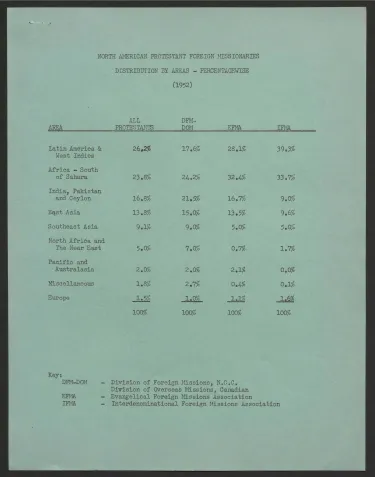
RG8 – NCC Division of Overseas Ministries
The Division of Foreign Missions, and later the Division of Overseas Ministries, continued the work of one of the oldest ecumenical agencies in the world, the Foreign Missions Conference of North America. The agency was founded in 1893 and served mission boards and agencies in the United States and Canada.
The work of the Division was substantially expanded in the NCC reorganization in the mid-1960s. Church World Service, which had conducted very substantial relief and development work since 1946, united with the DFM to form the Division of Overseas Ministries (DOM) on January 1, 1965. Both financially and administratively, DOM became by far the largest unit of the council. The Africa Department was one of the most active in the DOM and its files are the most voluminous. It continued earlier work under the Foreign Missions Conference of North America (FMC), and no effort has been made to separate FMC from NCC material in this group, so records are preserved here from as early as 1921.
RG547 – Commission on Ecumenical Mission and Relations Records
The Commission on Ecumenical Mission and Relations (COEMAR) was created in 1959 after the United Presbyterian Church of North America (UPCNA) and the Presbyterian Church in the U.S.A. (PCUSA) merged to become the United Presbyterian Church in the U.S.A. (UPCUSA) in 1958. COEMAR sought to represent the UPCUSA living in fellowship and witnessing in action with other Christian churches throughout the world and to supervise the UPCUSA's responsibilities in ecumenical mission. Informed by the Confession of 1967, COEMAR also sought to help heal and reconcile enmities between people and God and between peoples. In 1972, as a result of reorganization within the UPCUSA, the foreign mission activities and COEMAR's work were placed under the direction of the Program Agency.
RG537 – David and Polly Miller Papers
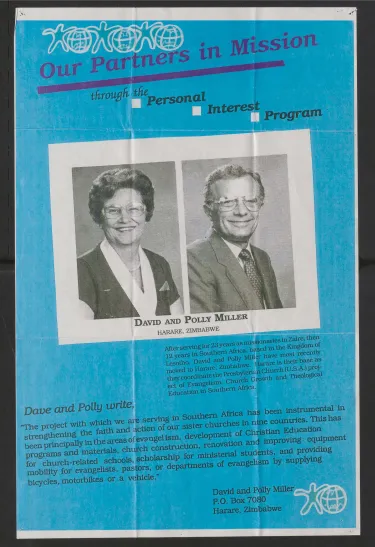
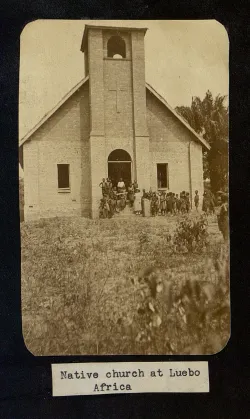
David and Polly Miller were wed on June 6, 1952. After studying French at the Colonial University of Belgium in Brussels, the couple were assigned to the Luebo Station at the American Presbyterian Congo Mission in the Belgian Congo in August 1954. The couple remained there for 23 years, where David worked as an itinerating pastor and translator. He simultaneously served as Moderator of the Evangelism Department of the Presbyterian Church in the Congo (Église Presbytérienne au Congo; EPC). In July 1960, Polly and the Miller children evacuated during the events of Congolese Independence.
The Millers would not return to foreign mission service until 1977, when the PCUS Board of World Missions assigned them to serve at Lesotho. They retired from mission service in 1994 and left Zimbabwe to return to the U.S.
These archival documents provided valuable insights into the social and political tensions of the post-war era. Correspondences from this period highlighted how missionary relationships with the Malawian state, under President Hastings Kamuzu Banda, evolved within the context of Cold War dynamics and the international development agenda. These findings challenge the traditional view of mission-state relations, offering a more detailed understanding of how church actors influenced Malawi’s post-colonial governance structures and civic institutions. These perspectives also shed light on how Presbyterian missionaries responded to political pressures amid internal debates on political and social issues, thereby broadening our understanding of the transnational aspects of the Civilizing Mission and its evolution over time.
These findings help strengthen the foundation of my doctoral dissertation and my exploration of Malawi’s political history as it interacted with transatlantic development actors from a religious perspective. I plan to publish these findings in peer-reviewed journals focused on southern African studies and in my eventual book project.
I am deeply grateful to the Presbyterian Historical Society for the financial support, which allowed me to spend significant time in the PHS archives, accessing rare materials that reveal a unique history of Presbyterian mission work, imperialism, and African politics. I also appreciate the archivists and office staff who made me feel comfortable by providing support and guidance and making the materials available during my research.
Check out our other Fellows' projects and learn more about the Research Fellowship Program at PHS by visiting pcusa.org/rf
You may freely reuse and distribute this article in its entirety for non-commercial purposes in any medium. Please include author attribution, photography credits, and a link to the original article. This work is licensed under a Creative Commons Attribution-NonCommercial-NoDeratives 4.0 International License.