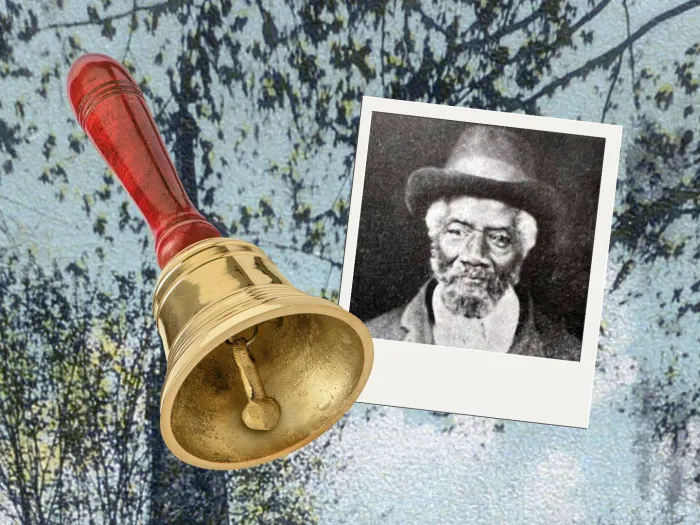
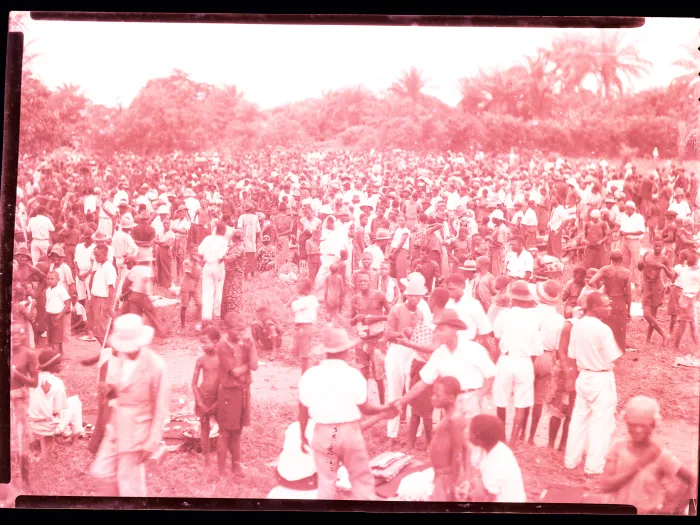
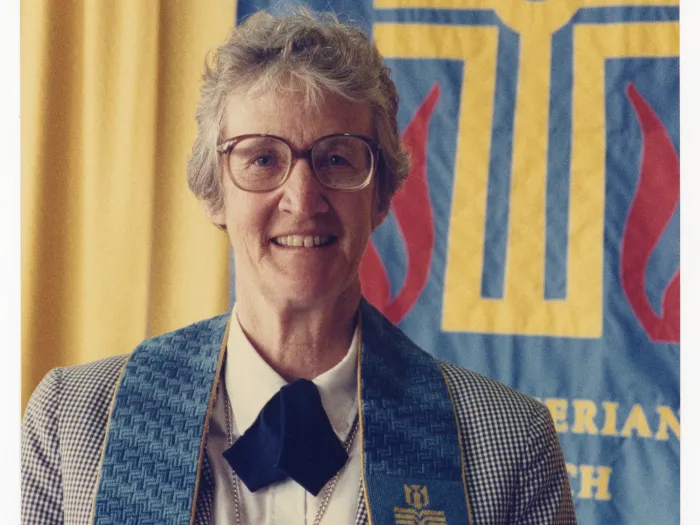
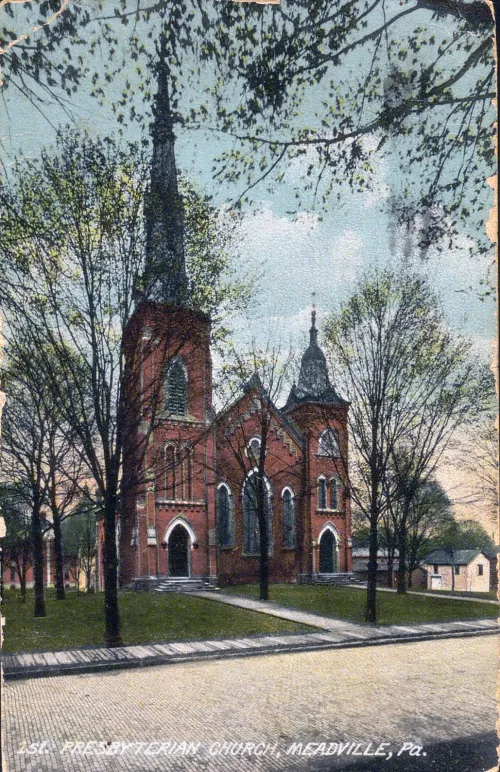
There are remarkable people in every community, large or small, but it seems that especially in communities with a small Black population, the achievements of Black residents are often overlooked. As time goes by, even their names can be shrouded by obscurity. In my research on African American residents of Northwest Pennsylvania, I encountered the amazing life of Samuel O. Pratt, the Sexton of First Presbyterian Church in Meadville, Pennsylvania, from approximately 1890 to 1926. During that era, a paid church sexton typically rang the church bell, kept the church clean and orderly, and was occasionally responsible for recording deaths. If the cemetery was adjacent to the church, the sexton was often the gravedigger as well. Presbyterian churches were not alone in hiring Black men as sextons in the late nineteenth and early twentieth centuries as most denominations appear to have done so.
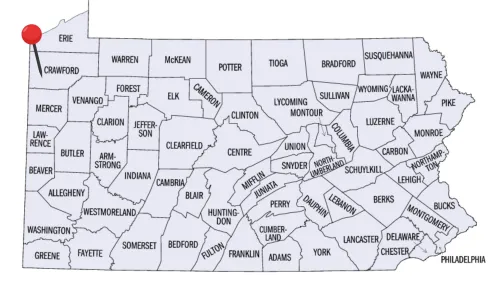
Pratt was born enslaved in Virginia in 1842, served in the United States Colored Troops (USCT) during the Civil War, migrated to Meadville soon after, and established himself as a businessman, politician, and religious leader in the African Methodist Episcopal (AME) church. At the same time, he worked as sexton at First Presbyterian Church, a white congregation, for decades. It is a life story worth telling and knowing.
To begin, some denominational context. The first African American Presbyterian Church was founded in Philadelphia in 1807 by a formerly enslaved minister from Tennessee, John Gloucester.[1] As settlers began to move over the Allegheny Mountains, there was an urgent need for additional churches in what was then known as "The West." Pittsburgh’s Grace Memorial Presbyterian Church was organized on January 12, 1868, the first Black Presbyterian Church west of the Alleghenies. It was led by Rev. Henry Highland Garnet, a formerly enslaved abolitionist, president of Avery College in Pittsburgh, and an active participant in the Underground Railroad.[2]
The African Methodist Episcopal Church had a much stronger presence in Northwest Pennsylvania than did the Presbyterian denomination. Meadville’s original Bethel AME Church was founded in 1849 as the only African American church in the Erie Conference. As the denomination grew in numbers, Bethel AME hosted many regional meetings. In contrast, Presbyterian churches were simply not part of the historic African American religious tradition in Northwestern Pennsylvania.
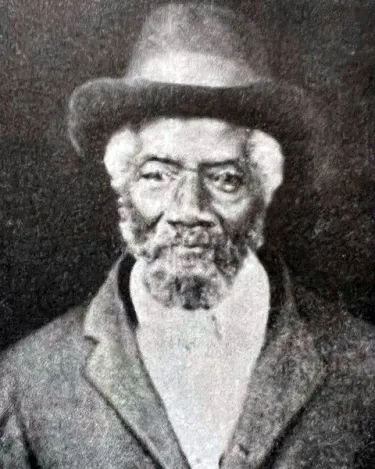
Samuel Pratt was born in Amosville (likely Amissville), Virginia, on February 15, 1842, and moved to Meadville, Pennsylvania, in January 1866.[3] No historical account has been written about Pratt and few records are extant. Most of what is known comes from contemporary newspapers. In 1889, the "Meadville Saturday Night" featured a substantial article on his service to the Union Army. Titled "Samuel Pratt: How He Saved the Lives of Four Regiments of Soldiers," the article noted that while still enslaved, Pratt served as a "Black Dispatcher" who provided intelligence to Union troops. During the Spring of 1863 near Fort Royal, Virginia, Pratt alerted Union soldiers to the proximity of Confederates, which enabled them to avoid the trap of the enemy.[4]
In 1869, soon after moving to Meadville, Pratt enrolled at the Meadville Theological School, although there is no evidence he graduated.[5] At the same time, he established himself as a businessman and "the owner of real estate, all of which has been secured by his own efforts."[6] He initially worked as a butcher, and he later ran a bakery at the time he served as sexton of First Presbyterian Church. It was even announced in the Meadville press in 1897 that Samuel had improved his method of delivering baked goods by using a "delivery wagon drawn by a horse" instead of a hand cart.[7]
By 1914, the price of flour had increased and Pratt "leased his place of business to a Meadville man, but will act as manager."[8] At the age of 72, Pratt had decided he couldn't "attend to his work as sexton at the First Presbyterian Church and bake at the same time."[9]
The Presbyterian Historical Society in Philadelphia holds an 1897 "Manual" for the First Presbyterian Church, which verifies Pratt’s employment and states that "The Sexton may be found at the Church on Sundays and on Wednesday evening, or at his residence, No. 811 Liberty street."[10]
Samuel Pratt was also a political figure in Meadville. He ran for office in 1889 as a Republican and became Crawford County's first Black councilman. He was chosen as candidate for City Council in the Second Ward (short term).
Applauded for his business acumen and his suitability for the position, the "Meadville Saturday Night" commented on the candidate's qualifications: "Mr. Pratt is a colored man and one of the most faithful Republicans in the city. Besides this he is a man of sound judgement and has had experience in business which especially fits him for the position to which he has been nominated. Mr. Pratt can be safe trusted to act in the best interests of his ward and city and should have the full vote of his party."[11]
After winning the election, it was noted that "'Sam' will always be found on the right side."[12] In January 1890, Pratt said he was "willing to be reelected"[13]. He won the primary vote against two other Republican candidates, but it did not end there.[14] The white contenders were not happy with the outcome, and wanted to upend the election. "The Evening Republican" took Pratt's side, writing in a column titled "For Fair Play" that "Mr. Pratt may not be as white as some men, but he has made a good councilman and deserves re-election. Every Republican of the Second ward owes it to his party, by every rule of fair play, to make it a special point to give Mr. Pratt an energetic and cordial support."[15]
On February 15th, it was announced that "Councilman Samuel Pratt was nominated over two rival candidates," but by the 18th the tide had turned. A reporter with "The Evening Republican" wrote a column titled "Stand by the Nominee" cautioning that throwing in the names of two white candidates would guarantee a Democratic victory—and it did.[16]
The election results recorded Samuel Pratt’s loss by twenty-three votes[17], and the newspaper chastised Second Ward voters for having voted for the Democratic candidate though Pratt was "an honest and capable man."[18] In announcing his "retirement" from office, the paper printed the following: "Mr. Pratt distinguished himself a contentious and thoughtful legislator, and a safe man to trust in representing the interests of his ward." Unbelievably, the election was remembered almost twenty-five years later when in 1914 a reporter referred to the "Jim Crow" aspect of Pratt's defeat.[19]
Samuel Pratt did not give up altogether, although his name was not again placed on an official ballot. Eighteen months after the unfortunate incident, either undaunted or perhaps having his arm twisted, Pratt was back to politics. Later, he served as president and treasurer of Crawford County's Colored Voters.[20]
Over his lifetime in Meadville, Pratt wore many hats in Crawford County's social, religious, and political life. He was a prominent member of Bethel AME Church, giving his time and talents to both church and community. He served as chairman of the committee planning the "Northwestern Emancipation Committee of the Fifteenth Amendment" which evolved into a grand celebration held in Meadville on August 2, 1887. He had become a charter member of the Eastern Light Lodge (Odd Fellows) when it organized in 1870. Pratt was also selected to serve on the Board of Trustees at Wilberforce University in Ohio along with two other Crawford Countians, the Reverends Till and Jeffries. He served as Vice President of the mixed-race Prohibition Amendment committee[21] and when Bethel AME Church organized an Independent Improvement Society in 1914, Pratt served as treasurer.[22]
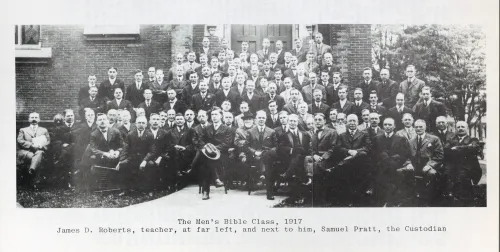
As is the case with many church positions then and now, the work Pratt did at Bethel AME was as a volunteer. Both the Presbyterian Church and Bethel AME of Meadville are located on Liberty Street, one block apart, so it would have been easy for Pratt to move from one church to the other. Of course, at First Presbyterian his primary job was keeping the building clean and that paid work was usually done after services.
Samuel Pratt valued education and may have dreamed of becoming a pastor. Meadville’s seminary was ecumenical and Samuel was one of its first Black students. He must have been well-respected, as twenty years later he filled the pulpit at the Independent Congregational Church (Unitarian) speaking on the subject, "I have fought the good fight, I have finished the course, I have kept the faith."[23]
Samuel Pratt married Harriet L. Jackson in 1869, and they became the parents of two daughters, Minnie Bertha and Bessie Lorena. Like her husband, Harriet Pratt was involved in church and community activities. When she died in 1912, Samuel posted the following "Card of Thanks" in "The Evening Republican" a few days after the funeral: "Mr. Samuel Pratt and family desire to thank their friends and neighbors, and especially the congregation of the Presbyterian Church, for any and all kindness shown during their recent bereavement."[24]
When Samuel died on October 27, 1926, his obituary stated that the deceased was "known as an honest and law-abiding citizen and ... possessor of a legion of friends."[25] Among his many duties as sexton, Samuel Pratt rang the church bell. Now exactly a century since his death, let us ring the bell for Meadville’s Samuel Pratt and his family.
Marianne Berger Woods, a long-time member of First Presbyterian Church, Meadville, PA, has an elevated interest in the history of those on the margins, primarily women and African Americans. Though she has known about Samuel Pratt for years, her interest in him was piqued while undertaking research on a proposed book about Blacks who lived in Northwest Pennsylvania from slavery to the Great Migration. Pratt’s story is richer than she ever could have imagined.
[1] Euell A. Dixon, "First African Presbyterian Church, Philadelphia, Pennsylvania,1807," February 24, 2015). Accessed November 20, 2025.
[2] "Visit Pittsburgh: Historic Black Churches." Accessed November 10, 2025.
[3] February 19, 1889 edition of "Meadville Saturday Night," p. 2. See also, Annette L. Lynch and William B. Moore, "African-American Heritage: People of Color in Crawford County, Pennsylvania, 1797-1917" (Meadville, PA, Crawford County Historical Society, 2011), p. 159. This may not be correct as there is no evidence of such a place. There was/is a place called Amissville but it is not near Richmond.
[4] "Samuel Pratt: How He Saved the Lives of Four Regiments," February 19, 1889 edition of "Meadville Saturday Night," p. 2.
[5] The seminary was established in 1844. In 1869, Samuel Pratt enrolled in the seminary, but it may have been as a special and non-degree seeking student. A Unitarian Universalist archivist believes Pratt was the first Black student to attend; he is listed as a student in the 1869 roster of the Meadville Theological School. April 13, 1889 edition of "Meadville Saturday Night," p. 4.
[6] "Samuel Pratt: How He Saved the Lives of Four Regiments," February 19, 1889 edition of "Meadville Saturday Night," p. 2.
[7] "The Evening Republican," September 4, 1897, p. 4.
[8] "The Evening Republican," August 13, 1914, p. 3.
[9] "The Evening Republican," August 13, 1914, p. 3.
[10] Email to author from Nancy J. Taylor, Executive Director, Presbyterian Historical Society, January 16, 2026. "1897 Manual," pp. 9 and 52.
[11] "Meadville Saturday Night," February 18, 1889, p. 2.
[12] "Meadville Saturday Night," April 1, 1889, p. 1.
[13] "The Evening Republican," January 30, 1890, p. 1.
[14] "The Evening Republican," February 15, 1890, p. 2.
[15] "The Evening Republican," February 17, 1890, p. 2.
[16] "Stand by the Nominee," February 18, 1890 edition of "The Evening Republican," p. 2.
[17] "The Evening Republican," February 19, 1890, p. 1.
[18] "The Evening Republican," February 19, 1890, p. 2. It was a bad night for Republicans as Meadville's George Wallace Delamater also lost in 1890, and he was a stalwart friend of African Americans.
[19] "The Colored Man’s Vote," October 3, 1914 edition of "The Evening Republican," p. 2. Pratt's situation was actually compared with incidents in the Federal Government.
[20] "Another Republican Club," September 29, 1900 edition of "The Evening Republican," p. 2; "Colored Voters Choose Their Officers for the Ensuing Year," June 30, 1905 edition of "The Evening Republican," p. 1.
[21] "Meadville Saturday Night," May 18, 1889, p. 4.
[22] "The Evening Republican," October 16, 1914, p. 4.
[23] "Meadville Saturday Night," April 13, 1889, p. 4.
[24] "The Evening Republican," April 9, 1912, p. 4.
[25] "The Tribune Republican," October 27, 1926.
You may freely reuse and distribute this article in its entirety for non-commercial purposes in any medium. Please include author attribution, photography credits, and a link to the original article. This work is licensed under a Creative Commons Attribution-NonCommercial-NoDeratives 4.0 International License.