The anonymous invitation appeared in newspapers in late March 1776 for county committees of correspondence to meet in New Brunswick, NJ. No one thought much of it.
When Rev. Dr. John Witherspoon failed to appear at the College of New Jersey Trustees meeting the next month, no one gave much thought to the missing President of the College.


Elias Boudinot, William Peartree Smith, and other Trustees took care of the remaining College business without him on April 18 and left for home. Boudinot and Smith headed to Elizabethtown, breaking to feed their mounts in New Brunswick. As they walked into the White Hall Tavern, a friend from Bergen County hailed them.
He told them John Witherspoon had spoken that morning “with the united committees [of correspondence], and acknowledged himself” to be the source of the call to meet. What the Bergen delegate said next astonished and frightened Boudinot.
Witherspoon had “informed the [36 attendees] that the design of the meeting was to consider the peculiar situation of the province, and the propriety of declaring a separation from Great Britain and forming an independent constitution for ourselves.”
This was shocking. Not only had the Royal Assembly five months earlier ordered the delegates to the Continental Congress to oppose independence, but its rival, the extra-legal Patriot-controlled Provincial Congress. had so far refused to authorize independence. The impatient Witherspoon had convened his own “congress” and was trying to form a junto to overthrow both bodies while they were in recess. Witherspoon was staging a one-man coup.
When Witherspoon proposed that action in the morning, he had seen uncertainty and skepticism in his audience. He had thus suggested a recess until the afternoon when he would explain why they needed to act now.
When Boudinot and Smith heard that “unexpected account,” with their “curiosity” raised, and horrified by the leap Witherspoon wanted the province to take, they scrapped their plans for lunch and decided to stay and listen.
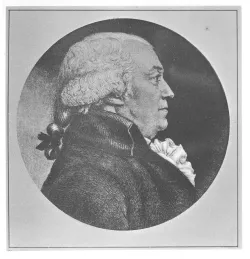
Boudinot knew Witherspoon well. He was not only a Trustee of the College of New Jersey, but the brother-in-law and former law clerk of Richard Stockton, a close acquaintance of Witherspoon’s, and yet another of the Presbyterians who led the resistance in New Jersey. He was also the leader of its more conservative wing.
Boudinot did not record how Witherspoon reacted when he and Smith joined the afternoon session, but he described Witherspoon’s 90-minute oration as, “A very able and elegant speech.” Witherspoon “endeavor[ed] to convince the audience and the committee of the absurdity of opposing the extravagant demands of Great Britain while we were professing a perfect allegiance to her authority and supporting her courts of justice.”
Witherspoon must have been good because Boudinot feared that the “character of the speaker, his great influence among the people, his known attachment to the liberties of the people, and the artful manner in which he represented the whole subject,” would lead the province to disaster. The audience’s reaction “astonished me,” he wrote. There as “a general approbation of the measure and a universal acquiescence of both committee and audience in approving the doctor’s scheme."
Boudinot was concerned on the merits: the “measure was totally against my judgment.” He wasn’t ready to declare independence, and neither was most of the colony. He was also frightened by the optics; he found the situation “mortifying” for less flattering reasons. If the province followed Witherspoon and independence failed, the Presbyterians would be blamed.
“The Doctor was known to be the head of the Presbyterian interest,” and he and Smith were well known Presbyterians. It would look like Witherspoon’s rogue operation was a “preconcerted scheme” by the province’s dominant Presbyterian political forces. He decided to stop Witherspoon.
None in the audience openly opposed Witherspoon until Boudinot rose. “Wholly unexpected,” it melted Witherspoon’s earlier sangfroid. He was “a little disconcerted.” Boudinot did not mince words in the half hour or more he spoke to “endeavor to show the fallacy of the Doctor’s argument, that his plan was neither founded in wisdom, prudence nor economy.”
Boudinot reminded the audience that, “We had chosen a Continental Congress, “to whom we had resigned the consideration of our public affairs.” Congress, he said “coming from every part of the union, would best represent all the colonies now thus united. They would know the true situation of our country, with regard to finances, union and prosperity and prospects we had [for] happy reconciliation with the Mother Country.” Only the Continental Congress was the “proper judge of the measures to be pursued, and we had no right to involve them in distress and trouble by plunging ourselves into measures of so delicate of nature, until they should advise us.”
Witherspoon was twenty minutes into his rebuttal when Boudinot “observed some person whispering to him.” Whatever he said, Witherspoon stopped immediately. Earlier in the meeting, “two or three gentlemen” had approached Boudinot and told him that if Witherspoon continued, “they would not be answerable for his safety.”
Witherspoon told the audience that he was now aware “that he was giving offense and, therefore, [would] say no more.” He hoped the Committees would return to their counties, talk with their voters, and decide on their own.
Boudinot then pulled his trump card: he demanded a vote, pushing Witherspoon from a “little disconcerted” to “a good deal out of humor.” Boudinot was afraid of what Witherspoon hoped for: without a vote “the meeting would be variously reported in the different counties.”
By 1776, the only thing that seemed more reasonable than a committee meeting was a vote and usually Witherspoon would have welcomed one, but now, he “contended warmly against a vote.”
Despite that, the group voted 32 to 4 against Witherspoon’s call, rejecting it “with great warmth.” Witherspoon had lost decisively, ending “the first attempt to try the pulse of the people of New Jersey on the subject of independence.”
One month later, Witherspoon was elected to the Provincial Congress. Two months later, the Provincial Congress declared New Jersey’s independence and sent Witherspoon to Philadelphia with Richard Stockton to make sure the Continental Congress did, too.
The premature coup ultimately became a Witherspoon victory.
1. Elias Boudinot, Journal of Historical Recollections of American Events During the Revolutionary War, excerpted in Larry Gerlach, ed., New Jersey in the American Revolution, a Documentary History (New Jersey Historical Commission, 1975).
2. Ibid.
3. Ibid.
4. Ibid.
5. Ibid.
6. Ibid.
7. Ibid.
Mark S. Herr is the son, grandson, and great grandson of preachers and a ruling elder at Nassau Presbyterian Church in Princeton, NJ. He is a lawyer by training and a historian by passion. He is currently writing “First Church of the Revolution: How a Small Church in a Tiny Village and a Fractious Demonization drove New Jersey to Independence.”
You may freely reuse and distribute this article in its entirety for non-commercial purposes in any medium. Please include author attribution, photography credits, and a link to the original article. This work is licensed under a Creative Commons Attribution-NonCommercial-NoDeratives 4.0 International License.