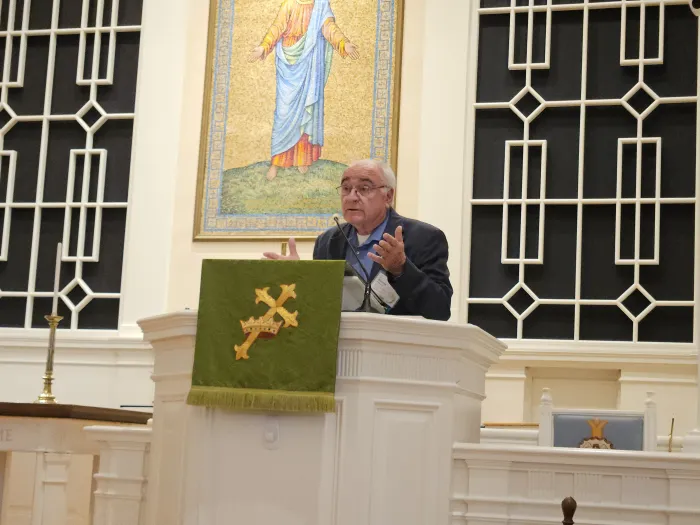
Presbyterian Older Adult Ministries Network gathers at First Presbyterian Church in Knoxville, Tennessee
One helpful workshop focuses on how to organize a grief support gathering

LOUISVILLE — Presbyterian Older Adult Ministries Network held its annual conference, “Rooted in Hope: Equipping Leaders for Ministry with Older Adults” last week at First Presbyterian Church in Knoxville, Tennessee. POAMN was kind enough to supply Presbyterian New Service with recordings and photos from the conference, and so news reports will follow over the next few days.
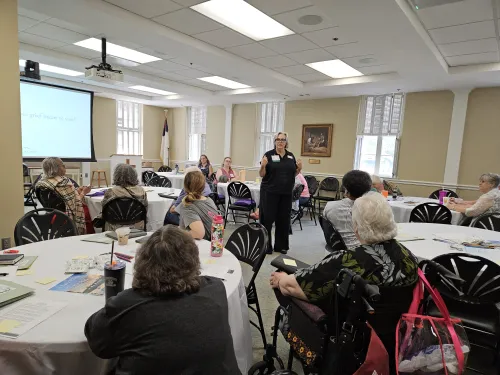
One workshop, “Starting a Grief Support Gathering,” was offered by Shelley Craig, program director for Faith & Grief, a multifaith nonprofit that provides online and in-person grief support. Craig is a PC(USA) ruling elder and a certified grief educator who lives in Dallas, Texas.
Craig asked workshop participants what one word describes grief for them. Among their responses: loss, painful, changed, separation, support, love and hope.
“Although it’s typically associated with the loss of a person — and that’s where Faith & Grief started, working specifically with the loss of a loved one — grief can happen for lots of other reasons,” she said, including loss of identity and retirement, because “so much of our culture is based on what we do and not who we are.” When a beloved pet dies, the pain can be akin to the death of a spouse or a parent or a child.
She asked: What surprised you the most when you were grieving?
One participant said she “felt something like ADHD. I wasn’t finishing anything.”
Others experienced having conversations they later can’t remember. “Do you remember what people said at the funeral?” Craig asked, and people said they didn’t. “Our brain does that for a reason. When we’re experiencing intense feelings, especially about loss, our brain can only do so many things.”
“That’s where most people think about grief, during the funeral and when the casseroles are coming in,” Craig said. “A little later, people will forget that we’re grieving, and we start protecting ourselves.”
Then Craig asked: “Did you experience people you expected to show up did not show up, and people you didn’t know well showed up for you very well?”
“The only thing we know about grief is it changes. How you feel today may change tomorrow, and in six months it may feel different — maybe better or worse,” Craig said. “Every day is a little different when we’re missing someone we love.”
Grief in the workplace costs companies billions of dollars due to lost productivity, absenteeism and increased turnover, Craig noted. Estimated costs range from $75 billion annually to more than $225 billion per year.
The session then turned to how to support people who are grieving. “When you’re willing to talk about something painful you’ve gone through,” Craig said, “that’s the Holy Spirit showing up and also your heart, because you loved that person.”
Some cultures grieve more overtly than others. “My Jewish friends sit shiva for seven days,” Craig said. “Everyone in the community takes care of [those who are grieving].” By way of contrast, we Presbyterians sometimes “get a little uncomfortable with how long we need to hang out” with those who are grieving.
We can be surprised by some of our feelings around grief, with workshop participants mentioning relief and anger, even anger at God. “Why would you take the best people in the world? That’s what I thought at the time,” Craig said, “that God took them.”
Grief changes, she noted, and “if sadness, despair and loneliness is persistent and intense, please do not hesitate to reach out and get help. Sometimes our grief manifests itself all the way into depression. Things we haven’t thought about for years come back and say, ‘Hi. You didn’t deal with me and now I’m getting back in your face.’”
“We need to be brave enough to tend to our grief,” she said, “and witness others’ grief.”
Craig then modeled a support gathering that Faith & Grief trains churches to offer regularly to their community. The gatherings help people know they are not alone. Those gathered hear others’ grief stories and have an opportunity to engage in honest conversation about their grief. “The need for comfort in grief and a compassionate understanding community is universal,” Craig said, adding, “those who just sit with you can have a real impact on how the grieving goes.”
Grief support gatherings are led by lay people and trained small-group facilitators and often involve a meal. They’re framed in liturgy and can be available both in person and online. Typically, a guest speaker will offer a brief reflection on the intersection of faith and grief. More than half of the hour-long gatherings is spent in table sessions led by the small-group facilitators.
“Our grief gets activated,” Craig said. A friend used to shop for groceries late at night because she’d burst into tears upon turning to the peanut butter aisle. Her loved one loved peanut butter, and the grieving person chose to cry relatively undisturbed.
Craig asked participants to take a few minutes to “share what your grief bursts have been. Maybe you haven’t had one yet. You may have different grief experiences for different losses.”
“One thing that’s so important is to say our loved one’s name,” she said. “When we say their name, it matters, because they mattered to us.”
The Faith & Grief Podcast can be heard here, here or here. Learn more about the Faith & Grief Book Club here.
You may freely reuse and distribute this article in its entirety for non-commercial purposes in any medium. Please include author attribution, photography credits, and a link to the original article. This work is licensed under a Creative Commons Attribution-NonCommercial-NoDeratives 4.0 International License.