Remembering September 11
A lament for what was lost and a hope for what may yet be
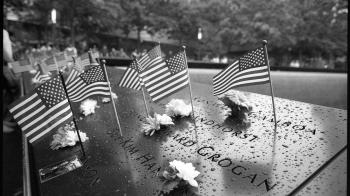
On September 11, we remember.
We remember the lives taken in an instant, the families whose lives were forever changed, the first responders who ran toward danger, and the communities that carried grief far beyond the days and weeks that followed. We remember the fear and confusion of that morning, the ways neighbors reached toward one another, and the profound sense that the world had shifted beneath our feet.
And so we lament.
Lament is not simply sadness. In the language of our faith, lament is the courage to bring our grief, anger, confusion and unanswered questions before God. The Psalms teach us that God's people do not need to hide their pain or make peace with what is broken. We cry out because we believe God hears the cry of the wounded.
Today, we lament the nearly 3,000 people who died on September 11, 2001: the office workers who began an ordinary morning and never returned home; the passengers and crews aboard the four planes; and the firefighters, police officers, emergency medical workers, and first responders who ran toward danger while others fled. We lament the bystanders, construction workers, volunteers and strangers who rushed to offer assistance, search for survivors, comfort the frightened and carry the wounded.
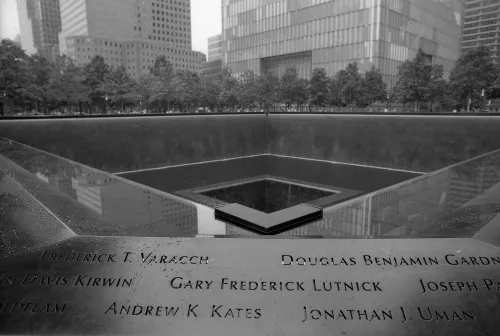
We lament the families who waited for calls that never came, the children who grew up without parents, and the communities whose grief continues 25 years later. We lament those who spent days, weeks, and months amid the rubble and toxic dust at Ground Zero and elsewhere, and those who have since suffered cancers, respiratory diseases and other lasting illnesses as a consequence of their exposure.
We lament those who lost their lives in the wars that followed, the countless civilians killed, wounded, displaced or left grieving in Afghanistan, Iraq and elsewhere, and the children whose lives were shaped by violence and war. We lament the service members who were killed or wounded, the veterans and families who continue to bear the physical, psychological, and moral wounds of war, alongside journalists and humanitarian workers.
And we confess.
In the years following September 11, our nation centered itself in ways that too often placed our own security, our own fear, and our own interests above the lives and dignity of others. We confess that we have too often measured the worth of human lives according to whether they were perceived to be ours or theirs. We confess the ways fear shaped our public policy and narrowed our imagination about what was possible.
We confess that, in the name of security, our nation embraced policies and practices that inflicted suffering far beyond our borders. Fear and suspicion took root among us causing hatred directed toward Muslim, Sikh, Arab and South Asian neighbors, and the ways violence and grief hardened our hearts and divided our common humanity.
We confess our participation, whether through silence, acquiescence, or insufficient resistance in a public culture that too often treated war as inevitable, suspicion as wisdom and militarization as the primary answer to insecurity.
We do not make this confession to diminish the horror of September 11 or to excuse those who committed acts of terror. Evil is not made less evil by another's wrongdoing. Rather, we confess because our faith calls us to examine ourselves honestly. Jesus teaches us to remove the log from our own eye before seeking the speck in another's. The prophets remind us that God desires justice and mercy for all humanity, not merely the preservation of our own power.
Twenty-five years later, the world has shifted again.
The assumptions that shaped our response to September 11 no longer describe the world in which we live. New conflicts have emerged. Old ones have deepened. Authoritarianism and nationalism have gained strength. Displacement and migration have reached historic proportions. Violence is increasingly experienced not only across borders but within our own communities. The climate crisis has altered the conditions of life itself. And technologies, economies, and forms of warfare have changed in ways we could not have imagined in 2001.
The temptation, once again, is to respond to a changing world by centering ourselves — to protect what is ours, to draw ever-harder boundaries between us and them, and to believe that security can be achieved through power alone.
As people of faith, we are called to another way.
We remember September 11 not so that fear will have the final word, but so that memory might become wisdom. We lament not because we have lost hope, but because we believe God cares about the suffering of the world. We confess not to condemn ourselves, but to turn — again and again — toward the justice, mercy and reconciliation to which Christ calls us.
We therefore recommit ourselves to a public witness that recognizes the image of God in every human being. We seek a vision of security that is rooted not only in military strength, but in human flourishing: peace, diplomacy, economic justice, care for creation, welcome for those who are displaced, and the protection of human dignity.
May our remembrance of September 11 become more than remembrance.
May it become repentance.
May repentance become transformation.
And may transformation become a witness to the peace of Christ in a world that still longs for it.
Learn more:
- The Confession of 1967
- 2004 GA policy condemning terror attacks and intentional targeting of civilians
- 222nd General Assembly (2016) call to practice boldly the things that make for peace
- 225th General Assembly (2022) on power through conquest
The Rev. Jihyun Oh is Stated Clerk of the General Assembly of the Presbyterian Church (U.S.A.) and Executive Director of Presbyterian Life & Witness. The Office of Public Witness is the public policy information and advocacy office of the General Assembly.
You may freely reuse and distribute this article in its entirety for non-commercial purposes in any medium. Please include author attribution, photography credits, and a link to the original article. This work is licensed under a Creative Commons Attribution-NonCommercial-NoDeratives 4.0 International License.