Film under production tells stories of preventing gun violence through healing
The as-yet unnamed documentary is the work of the PC(USA)’s Counter Stories Production
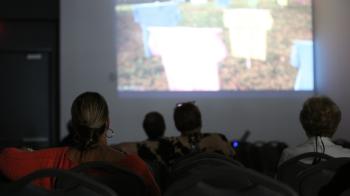
MILWAUKEE — In a small conference room at Milwaukee’s Baird Center on Saturday, a screen flashed with images of blacksmiths at work, T-shirts as tombstones, children scrambling for a basketball, and bright reds, blues and greens of a mural on a community center wall.
All these illustrations tell stories of how communities stop talking about how firearms kill and start preventing gun violence.
The screening of this as-yet unnamed documentary was part of the 227th General Assembly of Presbyterian Church (U.S.A.).
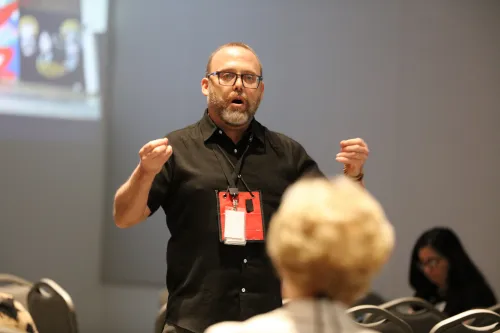
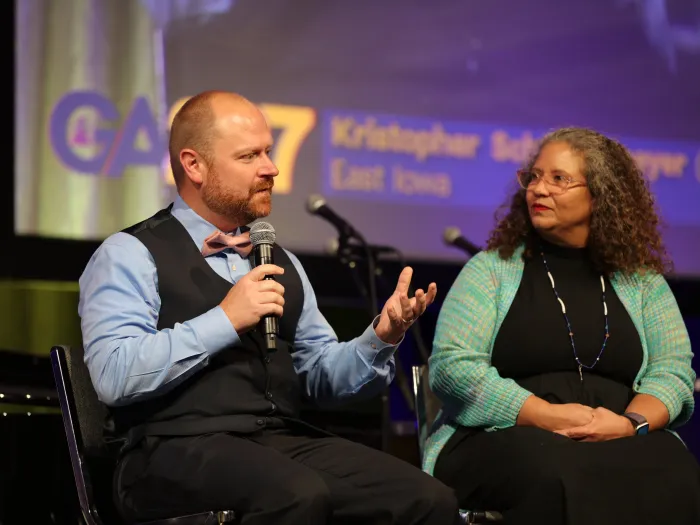
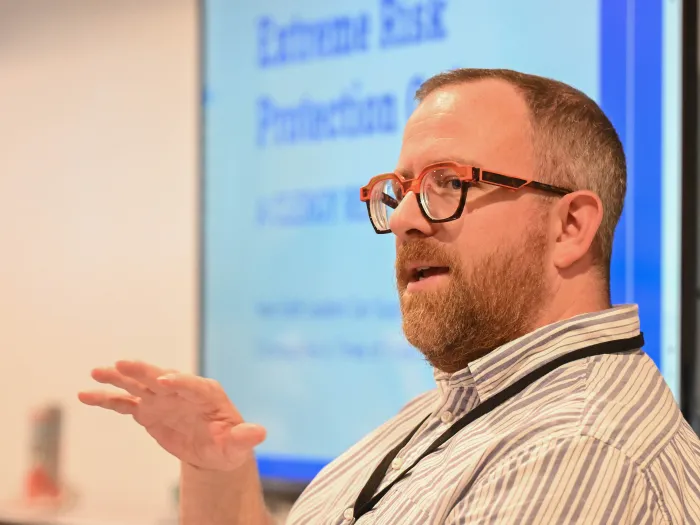
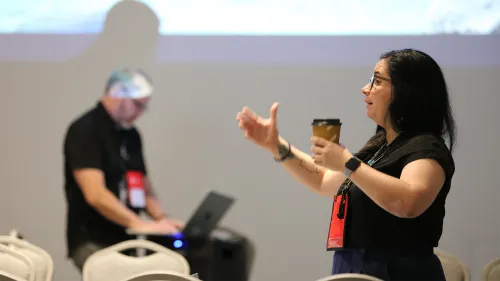
David Barnhart and Michelle Muñiz led the clips of a documentary under production speak for themselves. They work for Counter Stories Production, a ministry of Presbyterian Disaster Assistance.
Both Barnhart and Muñiz were clear that the stories they’ve spent almost two years gathering through interviews in Albuquerque, Philadelphia and Detroit aren’t framing so much the terror and loss of gun violence, but what communities already are doing about it.
Before showing the first clip, Barnhart shared that the process of the images carried much more weight than seen at first glance.
Dozens of neon T-shirts, each bearing a name and an age, hanging on posts across a lawn rippled across the screen. The project by Heeding God’s Call in Philadelphia, an ecumenical nonprofit, works to fight gun violence, but not before honoring those who have died. What this makeshift cemetery of cloth with names does is jolt us from the idea that death by firearms is inevitable, Barnhart said.
“We are becoming desensitized and numb to the gun violence every single day, and so one of the things they're doing in Philadelphia is they're bearing witness to that,” he said. “They are publicly saying we are losing all these people in our community to gun violence, and who are those people? What are their names? What were their ages? Where did this happen? How did it happen?”
In Detroit, the Rev. Kevin Johnson speaks plainly in the documentary:
“There's a story of a brother that murders a brother,” he said. “God calls Cain into accountability: ‘The blood of your brother cries out from the ground.’ And in the streets of cities across America, there's blood crying out from the ground.”
In the past few years, gun deaths in Detroit have dropped precipitously, according to what Police Chief Todd Bettison said in a report in January. In 2025, 165 homicides were committed, 38 fewer than the year before.
At least part of the credit for that is a youth sports program featured in the documentary.
With most of the young boys in the program having never played in organized sports, a basketball program teaches the basics, plans games and goes on to tournaments. Aside from dribbling, defense and scoring, the program includes critical personal skills.
When there are scuffles on the court with high emotions, coaches guide the players in de-escalation and emotional regulation. Police officers partner in the program, bridging a gap from negative stereotypes to friendships.
Muñiz told those gathered for the screening that the healing that comes from these programs also is prevention.
“The reflection about this is that when we talk about gun violence prevention, we think about what happens before an incident and not necessarily what the community can do after an incident to heal forward,” she said.
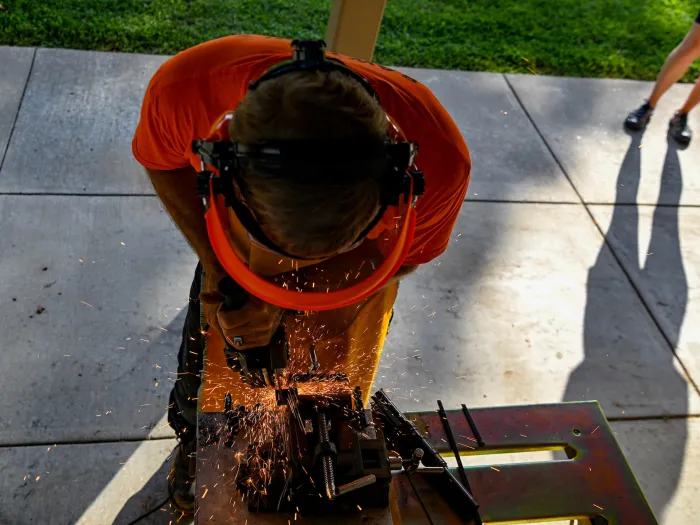
Particularly healing is seeing people who have lost loved ones to suicide break the weapon down and create from it something beautiful. Raw Tools is a mission of pastors as blacksmiths guiding people through that process.
The documentary producers were present with a woman named Teresa letting go of a firearm a loved one had used to take their own life. Through dismantling it, holding it under the flame of a forge, then beating what remained against an anvil, the blacksmith formed a cross.
“It’s also the vulnerability of acknowledging ‘this is how I'm affected by this, this is how I'm hurt,’ and being able to heal together,” Muñiz said.
Warren Montoya is a New Mexico artist who helped youth process their feelings about gun violence through art. The young people created a huge mural for an Albuquerque community center.
“What always surprises me is their willingness to really go deep in the conversation about gun violence prevention, but more so how gun violence actually exists in our communities and their own experiences,” Montoya said.
He chuckles in the video clip about how a roadrunner showed up on the mural, and that the artists featured the Zia banner, an element of the New Mexico flag that symbolizes the state’s Indigenous heritage.
The project offered an opportunity for young people to heal, he said.
“What they're holding, like that weight, and the fact that they want to heal — that courage is really what's always surprising me,” Montoya said.
Counter Stories Productions has produced dozens of films highlighting communities tackling such painful issues as the water crisis in Flint, Michigan, impact of gun violence, disrupting racism and how evictions carrying life-long impact on children.
Both Barnhart and Muñiz lifted to those present for the screening that the ministry of Counter Stories Production’s films is more powerful when shared. Muñiz shared a guide for congregations, mission committees and community groups to screen the films and bring more people into the conversations.
You may freely reuse and distribute this article in its entirety for non-commercial purposes in any medium. Please include author attribution, photography credits, and a link to the original article. This work is licensed under a Creative Commons Attribution-NonCommercial-NoDeratives 4.0 International License.