Board of Pensions keeps its promise to Cuban pensioners
Decades-long effort mounted to overcome the 1960 US embargo of Cuba
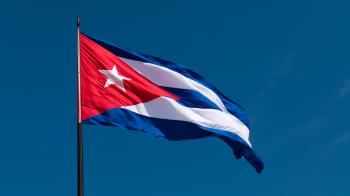
PHILADELPHIA — After nearly 65 years, The Board of Pensions of the Presbyterian Church (U.S.A.) has fulfilled a long-standing commitment to disburse pension funds to 44 Presbyterian church workers affected by the 1960 U.S. embargo on Cuba. What began with a geopolitical barrier became a multigenerational effort to ensure these pensioners and their beneficiaries received benefits owed to them.
“This effort reflects who we are as an organization,” said Executive Vice President and Chief Financial Officer Staci M. Wilhelm. “Our teams navigated regulatory, financial and operational challenges over decades with persistence and collaboration, honoring our responsibility to those we serve.”
The resolution marks the conclusion of a complex process shaped by international policy, shifting regulatory environments and significant logistical barriers. At its core, the work toward the resolution was grounded in fiduciary responsibility and a commitment to equity.
A commitment interrupted
Cuban Presbyterian workers were part of the Synod of New Jersey until 1967 and earned pension credits under what is now the Defined Benefit Pension Plan of the Presbyterian Church (U.S.A.). When the embargo took effect, the Board deposited their pension payments into U.S.-based accounts that recipients in Cuba could not access.
For decades, the Board explored solutions to transmitting these funds. The agency appealed to the U.S. Department of the Treasury, engaged lawmakers and coordinated with federal agencies to obtain a series of licenses that would allow limited funds transfers. However, with shifting political and regulatory conditions, access to funds remained inconsistent.
Perseverance across generations
The mission endured across generations of Board employees, many of whom inherited the responsibility without having witnessed its origins firsthand.
“It was amazing to be a vehicle,” said Wender Ozuna of Plan Operations, who served as a translator and key point of contact for pensioners and beneficiaries during the final phase. “Though I wasn’t there when it began, I became deeply connected to the work.”
Ozuna’s role often required maintaining communication through unreliable infrastructure, frequently relying on mobile messaging platforms to reach individuals across Cuba. His experience also reflected the emotional significance of the effort.
“They felt forgotten,” he said. “To be able to say that we were still committed to them, and to follow through, meant a great deal.”
A breakthrough to resolution
In recent years, renewed challenges emerged. By 2019, wire transfers became increasingly difficult, and by 2021, the Board’s primary banking partner discontinued sending payments to Cuba. Despite repeated efforts to identify alternative channels, progress stalled.
A breakthrough came in 2024 through collaboration with partners connected to the then Presbyterian Church (U.S.A.) World Mission office. Engagement through the Cuba Partners Network enabled Finance team members to connect directly with individuals associated with pensioners and beneficiaries, helping to clarify documentation requirements and overcome longstanding barriers related to verification, language and infrastructure.
“Shortly after those conversations, we began receiving the documentation we needed,” said Callie Sterkenburg, Assistant Director, Finance. “It allowed us to move forward in a way that hadn’t been possible before.”
From that point, progress accelerated. The Board resolved individual cases over periods of up to five months, with approximately three years required to complete all remaining payments and ensure funds reached their rightful recipients.
The end of a long chapter
“This resolution closes the door on decades of perseverance on the part of Board employees,” said Vivian D. Wesson, Executive Vice President and General Counsel. “Our staff saw this as a matter of justice and remained steadfast in ensuring that these individuals and their families received what was rightfully theirs.”
The completion of these final payments not only fulfills a decades-old obligation but also reinforces the Board’s enduring commitment to stewardship, accountability and care, regardless of circumstance or complexity.
The Board of Pensions supports wholeness in the Presbyterian Church (U.S.A.) community and care for Benefits Plan members. For information, contact [email protected].
You may freely reuse and distribute this article in its entirety for non-commercial purposes in any medium. Please include author attribution, photography credits, and a link to the original article. This work is licensed under a Creative Commons Attribution-NonCommercial-NoDeratives 4.0 International License.