Migration gaps put women, children and youth at risk
Side events of the International Migration Review Forum spotlight unmet promises for migrant families

NEW YORK — “This is not migration. This is expression of desperation,” Pervez Siddiqui of the Films 4 Peace Foundation in Bangladesh described the peril many migrants face during one of many civil society gatherings that underscored how the Global Compact for Safe, Orderly and Regular Migration is falling short, especially for women, children and youth. Members of a multinational delegation hosted by offices across Presbyterian Life & Witness participated in several side events of the International Migration Review Forum throughout the week of May 4-8 to drive home this point and search for collaborative solutions.
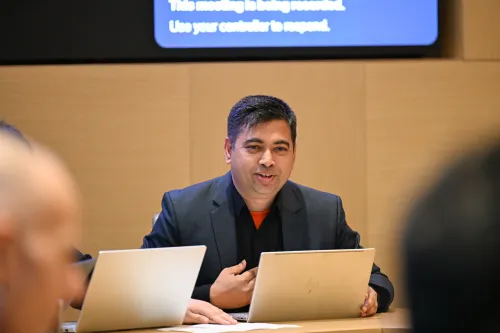
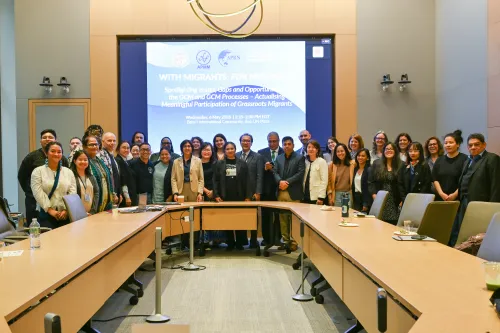
A May 6 side event of the International Migration Review Forum, “With Migrants, For Migrants,” brought together advocates from across Asia and the Pacific, including Siddiqui and Rey Asis of the Asia Pacific Mission for Migrants, both part of the Presbyterian Church (U.S.A.) delegation. In a separate but related engagement on May 5 titled “Faith Meets Global Values: Crisis and Promise of Multilateralism,” Jimarie Snap Mabanta of the National Council of Churches in the Philippines (NCCP), also part of the delegation, contributed insights on women, youth and migration from the Philippine context.
Across both conversations, speakers drew a consistent conclusion: The lived realities of migrants — especially women, children and youth — remain largely disconnected from global policy commitments.
Siddiqui pointed to rising trafficking and exploitation as legal migration pathways shrink and young people are trapped in organized trafficking rings where they are forced to leverage trust to recruit their friends. “Behind this number are broken families, shattered futures,” he said, describing the human toll of irregular migration fueled by debt, deception and desperation.
Women migrants face compounded risks within those systems. Asel Dunganaeva of Public Foundation “JIPAR” in Kyrgyzstan said, “Migrant women working in informal sectors such as domestic work are particularly vulnerable as they are often excluded from labor protections and benefits like Social Security.” She added that women encounter barriers to healthcare, legal protections and safe working conditions, leaving them exposed to exploitation and violence.
One of the starkest examples of policy gaps came from Patricia Pek Wan Low of Family Frontiers in Malaysia, who focused on the realities of marriage migrants — a largely invisible category dominated by women.
Low explained that an estimated 690,000 marriage migrants live in Malaysia, many of whom arrive through various migration pathways, including labor migration, cross-border mobility and tertiary education. Women marriage migrants are often forced to navigate “structural dependency,” as their legal status is tied to their husbands. If relationships break down, they risk deportation, loss of legal status or separation from their children. Many are barred from employment, creating “economic dependency on husbands,” while also performing unpaid domestic and care work.
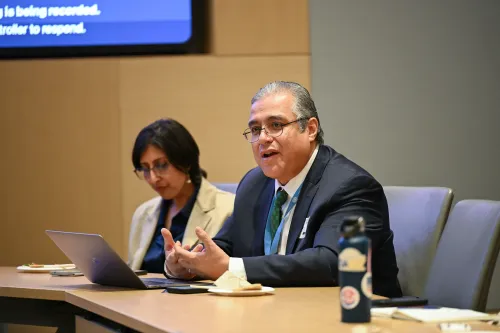
During the discussion, Catherine Harrington of the Global Campaign for Equal Nationality Rights reinforced how legal discrimination compounds those challenges. She noted that more than 40 countries maintain gender-discriminatory nationality laws, preventing women from passing citizenship to spouses on equal terms and, in some cases, to their own children.
“In Malaysia, when you have migrant women having children, those children have no right to nationality,” Harrington said, calling it “a huge issue” affecting entire families.
Harrington also pointed to the impact of grassroots advocacy of migrant women, noting that Family Frontiers’ work contributed to a constitutional amendment in Malaysia granting women equal citizenship rights for children born overseas — an example of how migrant women’s organizing can drive policy change even amid systemic barriers.
Even so, panelists stressed that progress remains uneven at best.
Edgar Corzo Sosa, an independent expert with the United Nations Committee on the Protection of the Rights of All Migrant Workers and Members of Their Families, said, “There has been no significant progress in its implementation” of the Global Compact, with outcomes remaining “slow and uneven in many areas.”
The consequences ripple across generations. Dunganaeva described how migrant children face barriers to education and integration, noting that “thousands of children were unable to go to school” due to restrictive policies. In countries of origin, children left behind face safety risks and emotional strain, particularly girls.
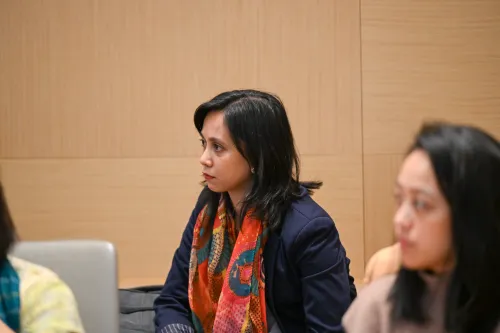
According to Sunita Mainali of the Women’s Rehabilitation Centre in Nepal, even when women return home, they face stigma rather than recognition. “When I return back home, they question my body, but no one is talking about my contribution,” she said.
Those regional realities echo in the Philippines, where migration is heavily feminized.
In a follow-up interview, Mabanta said that “among the 8,000 Filipinos going out of the country every day, most are women.” Driven by poverty and entrenched gender expectations, women often shoulder the burden of supporting families. “It would always be the women who would have that extra burden of sustaining families,” said Mabanta. As the director for Ecumenical Education and Nurture at the NCCP, her focus is on children, youth and women, with key emphasis on children’s rights, youth empowerment and gender justice. She is a long-time collaborator with the Rev. Cathy Chang, one of the Global Ecumenical Liaisons for Asia and the Pacific with Presbyterian Life & Witness.
Through church networks, NCCP responds to these realities with programs that equip migrants and their families. Mabanta said the organization offers “know your rights orientations, paralegal trainings and psychosocial training” to empower women from “being a victim; they become survivors, and then later on, advocates themselves.” NCCP also provides direct support, including “food, shelter for distressed migrant workers and psychosocial interventions for those who are having trauma.”

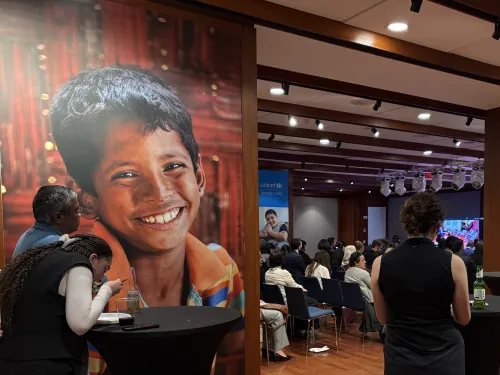
The trauma of migration and reintegration, whether forced or willing, is shared across the global landscape. On May 6, another member of the PC(USA) delegation, Yesenia Castillo Lopez of Pop No’j, a licensed counselor who works with youth on the border of Guatemala and Mexico, attended the launch of the Global Compact for Migration’s Family Unity Initiative at UNICEF, a donor to her organization. During informal sharing times between members of the PC(USA) delegation, Castillo Lopez shared the trauma of people leaving their homes in Guatemala and traveling north only to face additional trauma once they were returned to a home many of them did not even remember. The Guatemalan Institute for Migration reported that between 2022 and 2023, more than 10,450 children had been deported back to Guatemala from the United States and Mexico.
Together, the voices from the PC(USA) delegation — across multiple side events and amongst their internal networking — underscored a shared message: While grassroots and faith-based responses are critical, they cannot replace systemic change.
May 4 at the United Nations had been set aside for multi-stakeholder testimonies. However, space constrictions limited many of the civil societies and grassroots organizations to overflow rooms where translation services were not offered.
Siddiqui said grassroots migrant groups had little access to formal decision-making spaces at this year’s forum, making side events especially significant spaces for us to share lived realities: "For many grassroots organizations, these side events are often the only meaningful opportunity to bring the voices of migrants into global conversations on migration governance.”
As Asis and other delegates emphasized, migrants themselves must be meaningfully included in policymaking. Until then, panelists at the "With Migrants, For Migrants" event said, the gap between global commitments and lived realities will continue to fall hardest on women, children and youth.
You may freely reuse and distribute this article in its entirety for non-commercial purposes in any medium. Please include author attribution, photography credits, and a link to the original article. This work is licensed under a Creative Commons Attribution-NonCommercial-NoDeratives 4.0 International License.