Planting churches in exile
Egyptian immigrants find a home through 1001 New Worshiping Communities and the Presbytery of San Fernando

ESTES PARK, Colorado — When the prophet Jeremiah told God's people in Babylon to build houses, plant gardens and seek the welfare of a foreign city, he was speaking to people who never expected to leave home.
That biblical story grounded the closing worship at the 2026 gathering of 1001 New Worshiping Communities, a movement that according to its webpage is “focused on igniting and supporting flourishing new faith communities in every context,” especially ones where people resonate with the theme of exile due to immigration status, church trauma or other forms of marginalization.
For the Rev. Raafat Aboelfarag and his wife, Amal Aboelfarag, Jeremiah 29 was more than a worship theme. It was the story of their lives. Fifteen years after violence and political upheaval uprooted them from Egypt, the couple found themselves in Estes Park surrounded by fellow church planters, sharing the story of how God transformed trauma and displacement into a ministry among immigrants in Los Angeles.
“Yesterday’s message was amazing for me,” Amal told participants during the gathering's closing reflection, referring to Wednesday evening worship designed and led by the Rev. Laura Beth Buchleiter under the theme "(re)Considering Babylon."
“I have read Jeremiah 29 maybe more than a thousand times, but I never thought about it this way,” Amal said. Before exile came, there was stability. The Aboelfarags built their lives and ministries in Alexandria, Egypt. Raafat served as senior pastor of a Presbyterian congregation in the coastal city, while Amal worked full time with Campus Crusade for Christ. Together they enjoyed a thriving ministry and deep family roots in Egypt's Protestant community.
“We had a beautiful ministry in Alexandria, Egypt,” Amal said. “We had a beautiful life. We had everything. Even though we had challenges, it was a beautiful, very stable life.”
That stability shattered in 2011 after a bombing targeted a Coptic church in Alexandria near the Presbyterian congregation where Raafat served. The attack intensified fears among Christians and became part of a broader season of violence and instability. “Everything went upside down,” Amal said. “Our whole life was turned upside down.”
As churches responded to bombings, shootings and injuries, Amal threw herself into ministry and care for others while the country around them descended into uncertainty.
Seeking rest, she traveled to California with the couple's 8-year-old son, Raffy, planning a temporary stay with family while Raafat remained in Egypt with his congregation amid ongoing threats against churches.
“I came for a break,” Amal recalled. “I just came to rest from all the bombing and injuries and blood we saw, and the shootings and fires and all the pain.” What neither of them understood was how deeply the trauma had taken hold. “Nobody knew it when I was in Egypt,” Amal said of the post-traumatic stress disorder that had gone undiagnosed amid the chaos. “We were so busy caring for so many people.”
During her flight to California, Amal became completely paralyzed. Shortly after arriving, she slipped into a coma. Raafat rushed from Egypt to her bedside as doctors fought to save her life. After a week in the hospital, Amal emerged from the coma. A physician delivered a message she still remembers: “Amal, God gave you a new life. You were supposed to be dead.”
The medical crisis became a turning point. What began as a temporary escape from violence became a permanent relocation. Returning to Egypt was no longer possible. For years, the Aboelfarags struggled to accept that the life they had built in Alexandria was over. “We didn't want to accept it,” Amal said. “It took us five years.”
Throughout that difficult season, her mother reminded her of a simple truth. “You have the same God,” Amal recalled being told. “He was with you in Egypt, and he is with you here in Babylon.”
For Raafat, the journey toward a new calling was rooted in a long Presbyterian heritage.
His grandfather was among the pioneering Egyptian Presbyterian missionaries who traveled from Egypt into Sudan to establish congregations in the early 20th century. Despite difficult travel conditions and personal hardship, he continued planting churches throughout the region.
“There was no transportation available,” Raafat recalled. Yet his grandfather persisted, traveling by whatever means were available to establish new faith communities. After losing an eye in an accident, he continued serving.
“He said, ‘I will still serve. I have one eye, and that's OK.’”
Raafat followed that legacy into ministry, studying at Cairo Evangelical Theological Seminary under the Rev. Dr. Raafat Girgis, one of the keynote speakers at this year's 1001 gathering and the minister who officiated the Aboelfarags' wedding in Alexandria.
Even before leaving Egypt, Raafat sensed God preparing him for something unexpected.
“I saw myself in another country, in another place, preaching and serving,” he recalled. “God spoke to me and showed me that I would be a missionary in another country.”
That calling began taking shape after the family's arrival in Southern California. In 2012, the Aboelfarags connected with La Cañada Presbyterian Church in Southern California and eventually found support through the Presbytery of San Fernando as they rebuilt not only their lives but their call to ministry. Drawing on years of ministry experience and training through Campus Crusade for Christ, they began reaching out to Arabic-speaking immigrants from Egypt, Iran, Afghanistan and elsewhere across the Middle East.
Their ministry became known as Neighbors Ministry in Los Angeles.
Rather than waiting for people to enter a church building, they carried ministry into neighborhoods, homes, schools and community spaces. “We go to them,” Raafat and Amal said.
Through community gatherings, holiday events, Bible storytelling, hospitality and practical support, the ministry helps Arabic-speaking immigrants establish relationships and find belonging in an unfamiliar country. Many participants come from faith traditions other than Christianity. The ministry creates space for friendship, practical assistance and conversations about faith grounded in the love of Jesus.
Raafat also serves as a hospital chaplain and connects with Druze communities from Syria and Lebanon through gatherings. Amal teaches lower-elementary STEAM (Science, Technology, Engineering, Art and Math) education and is pursuing a master's degree in education. Raffy is now studying medicine in the University of California system.
In September, Neighbors Ministry in Los Angeles received an initial $10,000 seed grant through the 1001 New Worshiping Communities movement. “Their ministry is especially meaningful because it is culturally informed and relational,” said the Rev. Juan Sarmiento, executive presbyter of the Presbytery of San Fernando. “It is not simply an established congregation designing a program for refugees. It is a community taking shape through the leadership and experiences of people who themselves understand migration.”
“In many ways, Neighbor Ministry is helping us recognize people whom our existing congregational structures might otherwise struggle to reach,” Sarmiento added.
Sarmiento draws on his own experience immigrating to study in the United States and finding a home in the Presbyterian Church (U.S.A.) to be an advocate and guide to immigrants building new churches. Among the new worshiping communities within the presbytery are Korean, Arabic, English, Spanish, Punjabi and Swahili-speaking ministries.
In addition to Raafat, there are two other Egyptian Presbyterians laboring within the bounds of the presbytery. Sarmiento expressed admiration for how well-prepared pastors trained in Egypt are for the intercultural ministry of hospital chaplaincy and in a growing and diversifying presbytery. In the past few years as the PC(USA)’s national offices have moved to a global ecumenical partnership model, the Presbytery of San Fernando has explored and deepened its global identity and ways of showing up as partners, including sending delegations to other countries and receiving partners to visit the presbytery.
“Some of our members have visited Egypt to visit with the Egyptian Evangelical Church (Synod of the Nile), the church body that ordained Raafat,” said Sarmiento, who explained the presbytery has also invested in partnerships in the Middle East and North Africa: “Last year we sent a delegation to Beirut to learn more about how Christians are extending Christ’s hospitality to Syrian refugees there.” The presbytery has received two visits from Dr. Martin Accad, president of the Near East School of Theology in Beirut, Lebabon, a longstanding partner of the PC(USA).
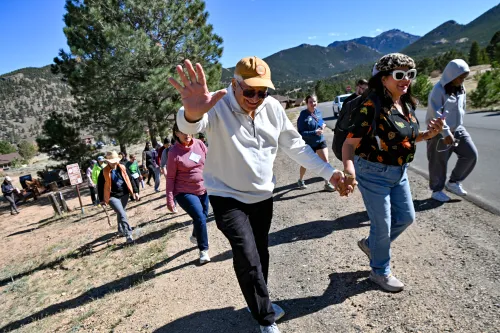
At the Estes Park gathering, however, the grants and ministry support were only part of the story of boosting mutual hospitality and expanding the table. Over four days, the Aboelfarags shared meals, conversations, workshops and worship with fellow leaders imagining new expressions of church. For immigrants who once felt stranded between worlds, the gathering offered something deeper than networking; it offered belonging.
Among other leaders planting ministries on the margins, they found companions who understood what it means to follow God's call into unfamiliar territory and to discover home again in unexpected places.
The church they left behind remains part of their story. So does the trauma that forced their departure. But in the language of Jeremiah, Raafat and Amal have learned to plant gardens in Babylon. And in Los Angeles, far from Alexandria, they are helping others do the same.
-
Image
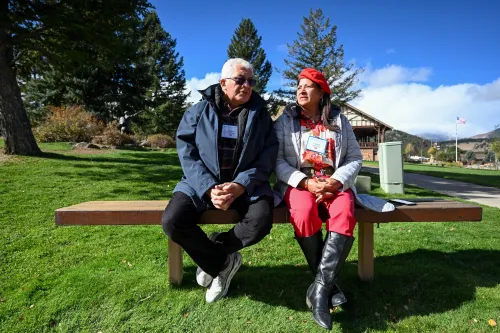
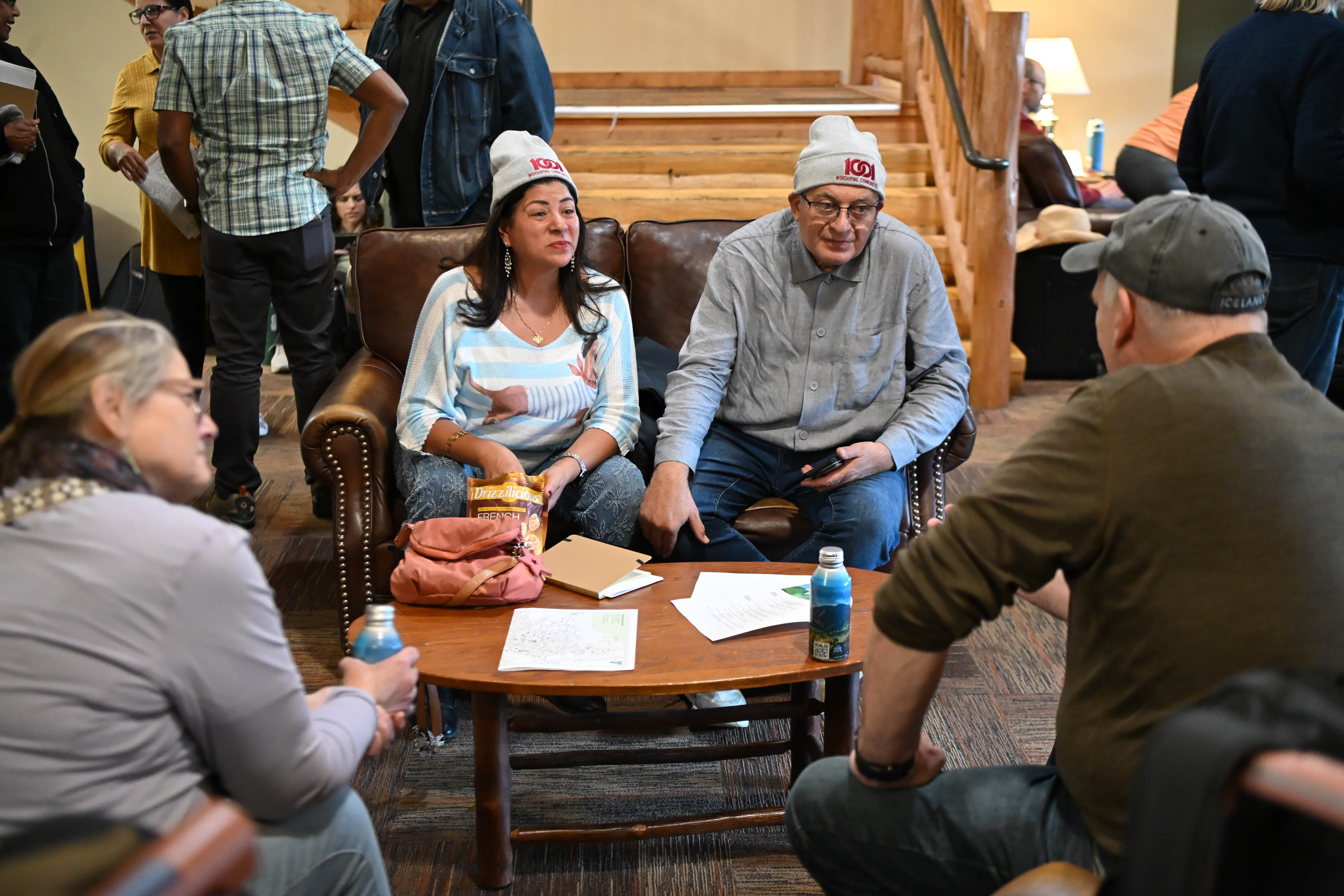
 Making friends while waiting for keys with other NWC leaders upon arrival to the YMCA of the Rockies.
-
Image
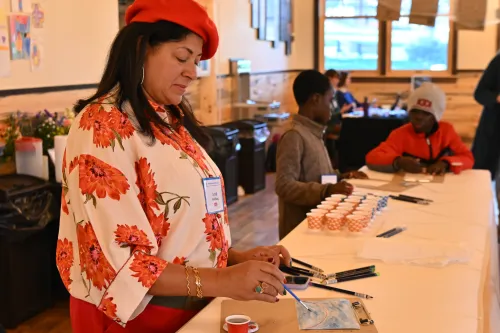
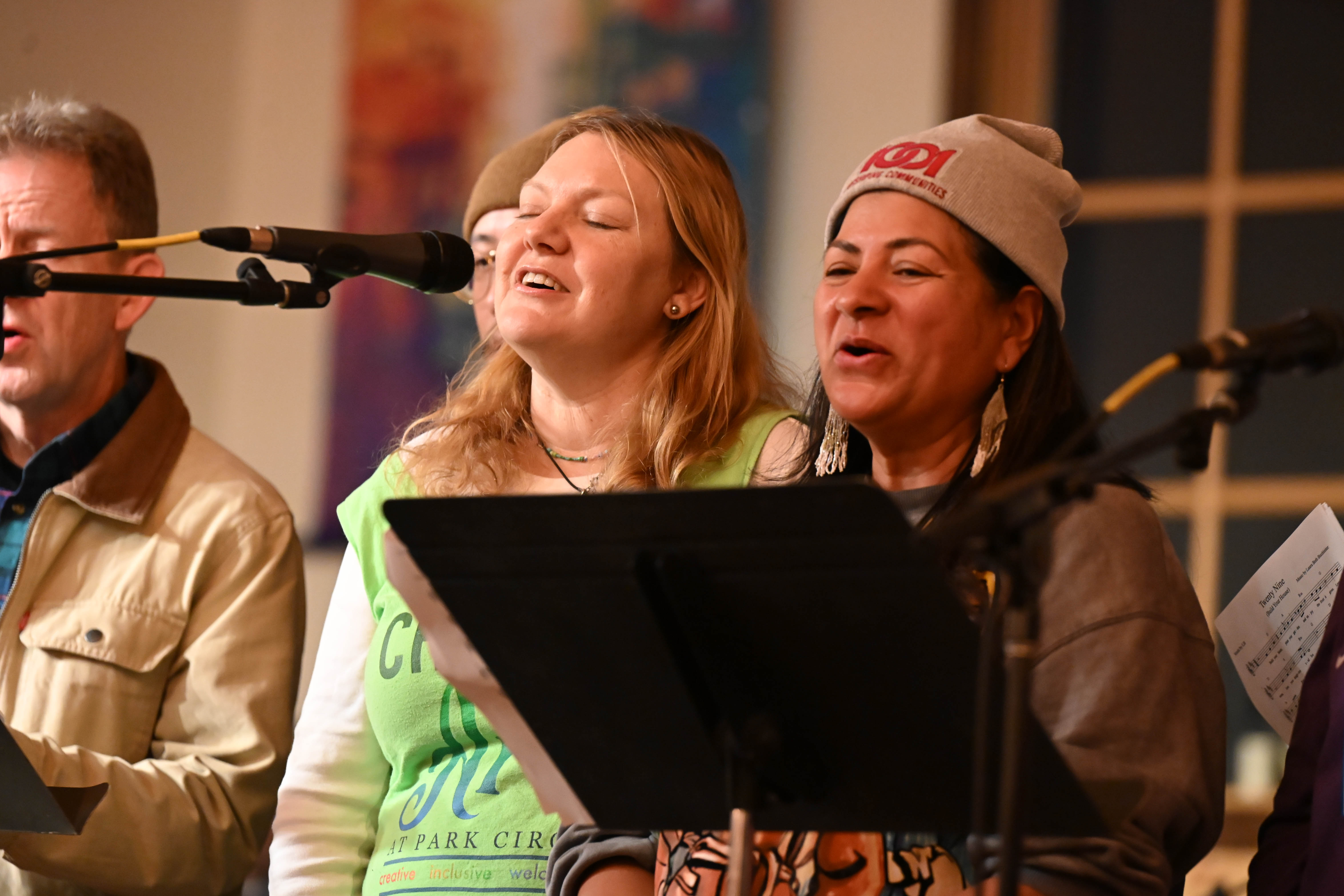
 Amal Aboelfarag joins the 1001 NWC gathering's choir.
-
Image

-
Image
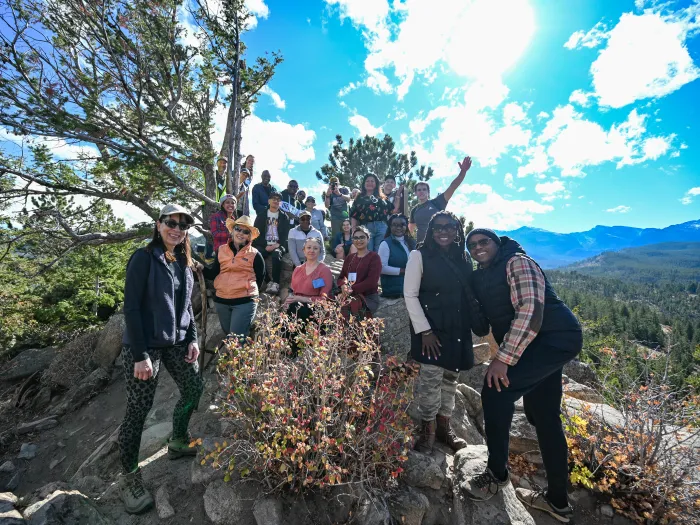
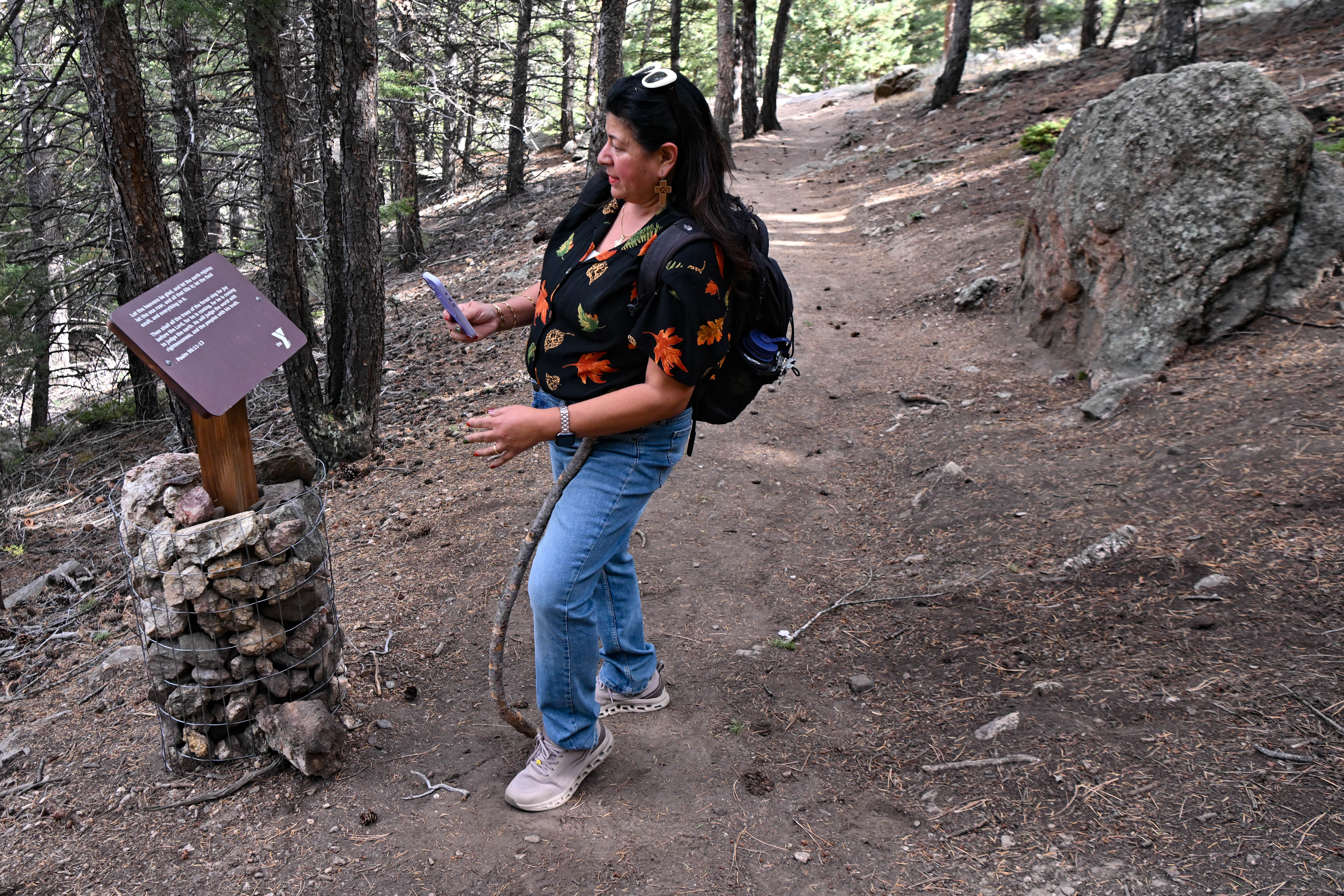
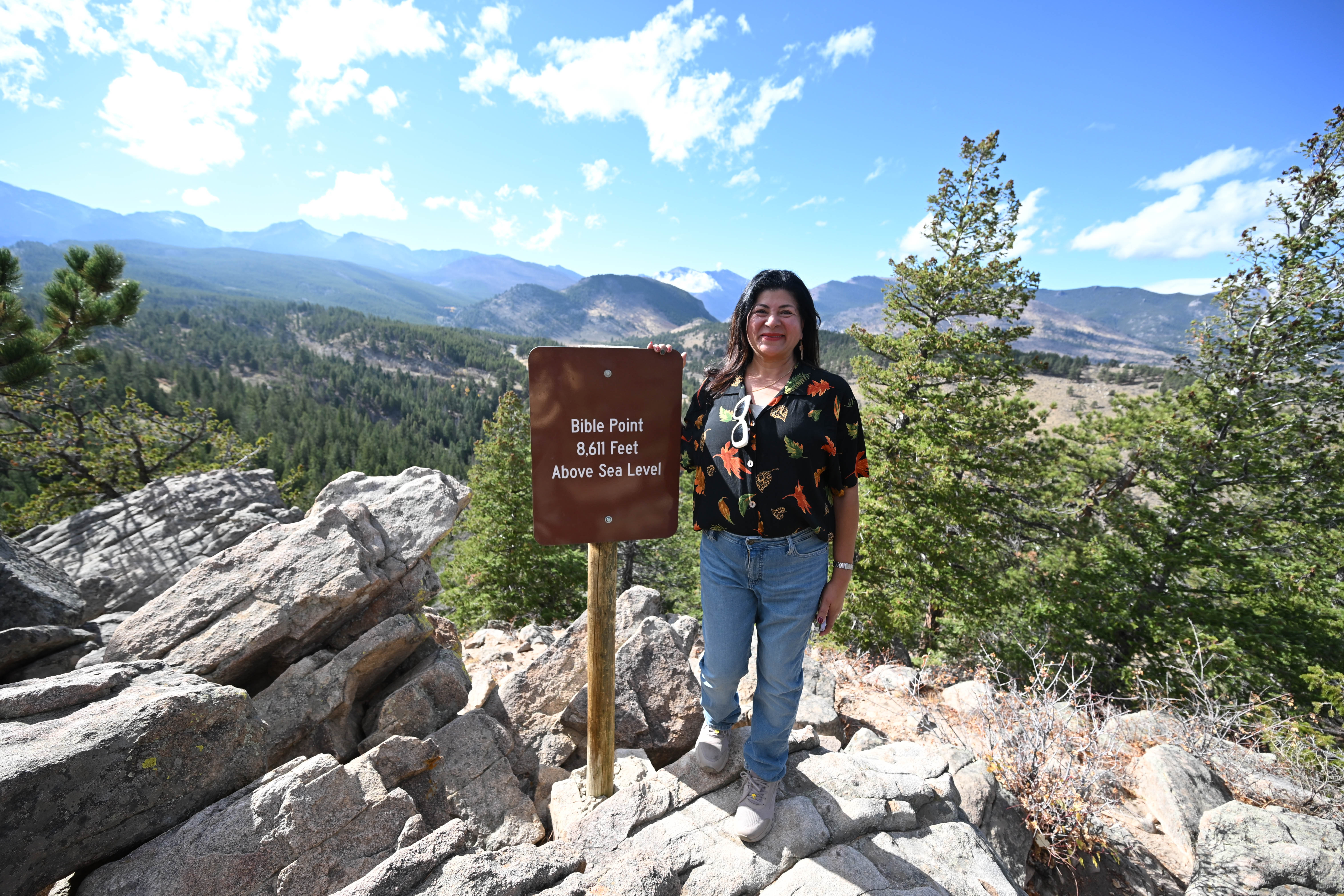
 Amal Aboelfarag journeys to Bible Point, a hiking path lined with Biblical quotes and beautiful vistas.
-
Image

-
Image
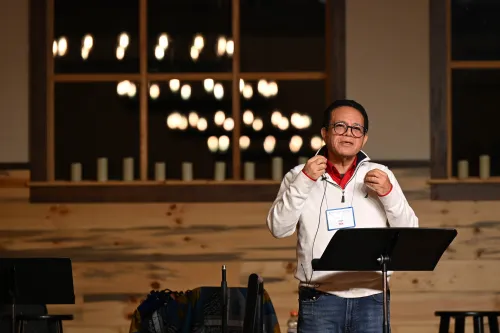
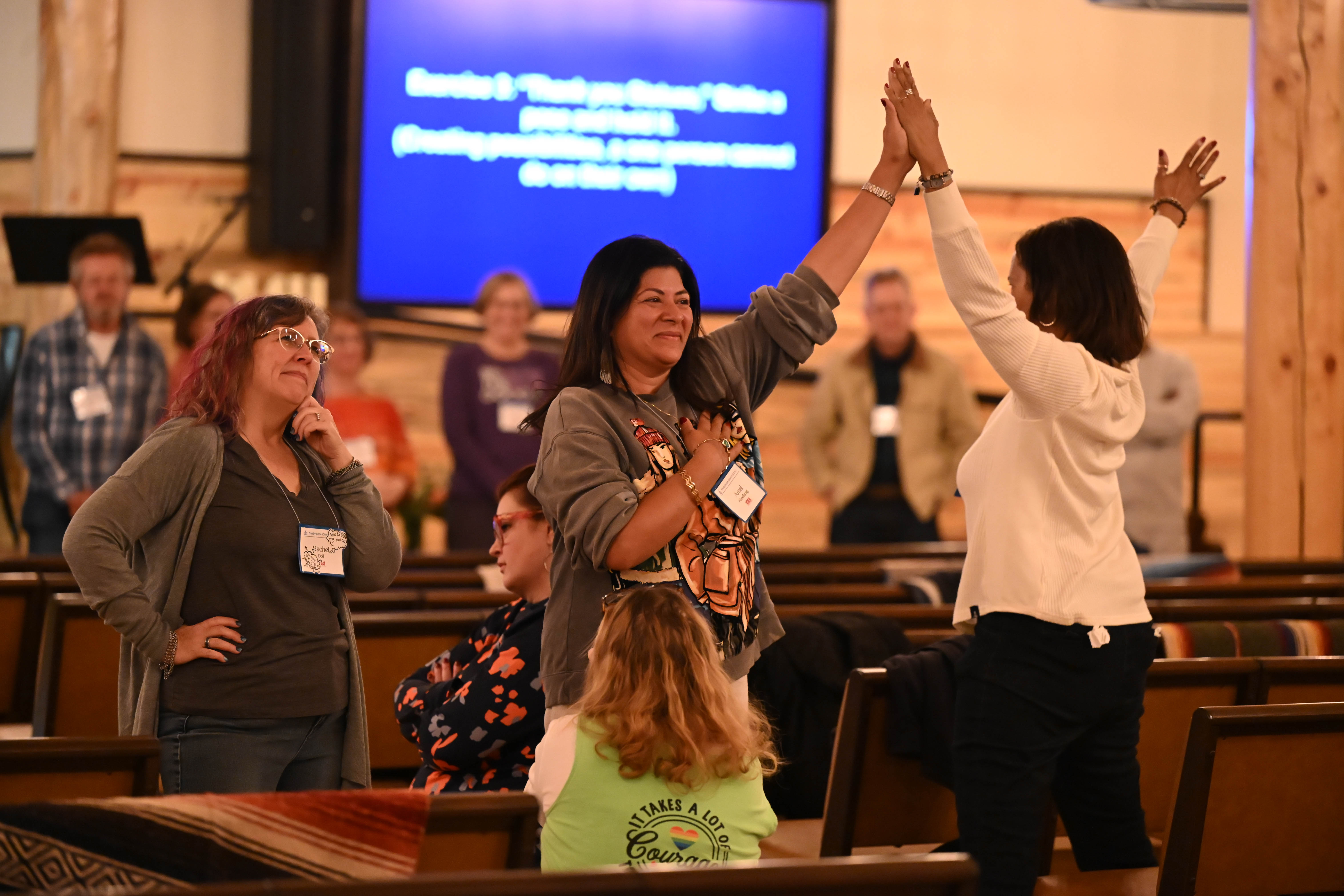
 Amal participates in an improvisational game led by the Rev. Raafat Girgus in worship.
-
Image
 Other NWC leaders add on to Amal's pose to make a larger statue in one of Rev. Girgus's improv games.
-
Image
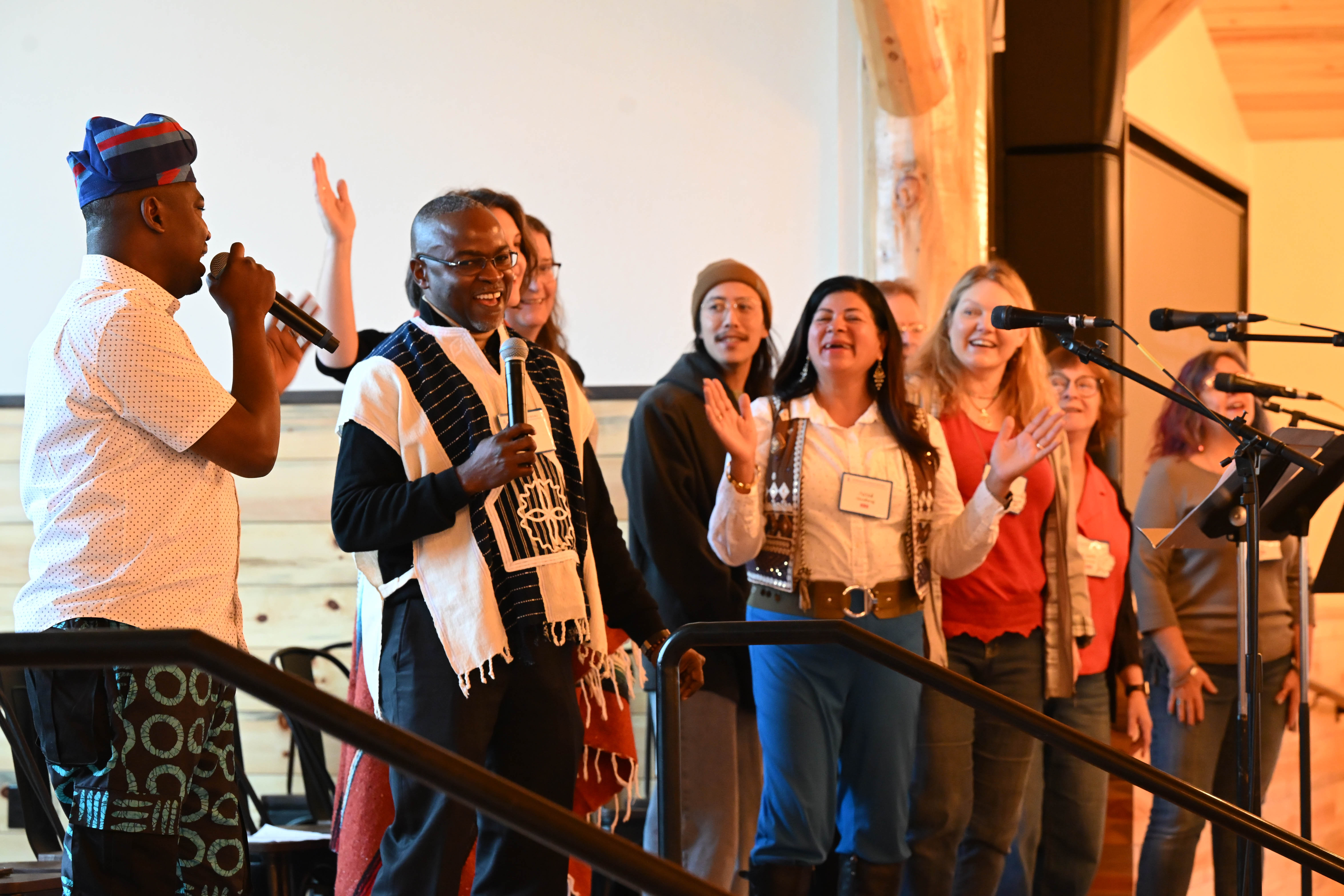
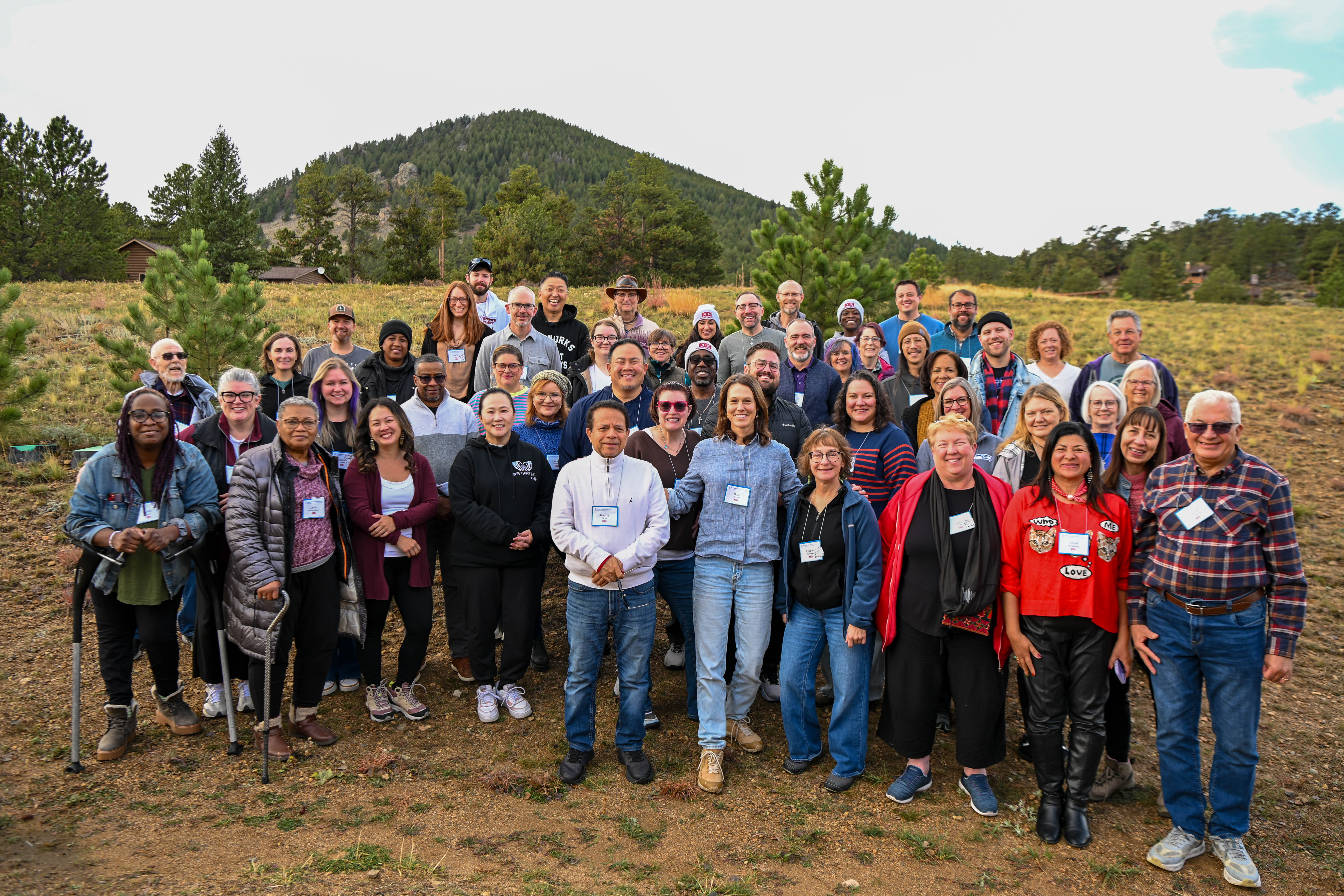
 The Aboelfarag's (center) pose for a group photo with other New Worshiping Communities leaders to close the 2026 annual gathering.
-
Image
-
Image
-
Image
-
Image
-
Image
-
Image
-
Image
-
Image
You may freely reuse and distribute this article in its entirety for non-commercial purposes in any medium. Please include author attribution, photography credits, and a link to the original article. This work is licensed under a Creative Commons Attribution-NonCommercial-NoDeratives 4.0 International License.