“When you do things from your soul, you feel a river moving in you, a joy.”
~ Rumi
Dear Lovers of Food and Justice,
Greetings! I’ve had a few weeks of travel, work convenings, and needed vacation, which means we’ve missed four weeks of “love letters.” The last one was about altruistic plants, bumblebees and the Black Farmer Fund, and you can find it here.
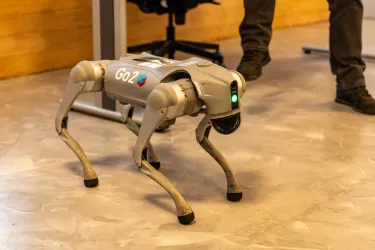
Photo credit: Vladimir Srajber (Pexels)
Today, I want to talk about the elephant in the room. Artificial intelligence. Don’t freak out, there is good news, too!
Cards on the table… I don’t have anything personal against machines, but I reserve most of my love for humans and the more-than-human natural world. And I do have serious concerns about the current trajectory of AI mega-corporations, which is to have Artificial Intelligence systems train themselves and to develop unbounded, recursive, self-improvement.
That may not end well.
All the potential benefits of AI will be extinguished by the downsides that might emerge: scheming and rogue AIs, weaponized robots, massive loss of jobs and the clout of labor, and other more ominous possible outcomes.
Even (or especially) the AI makers, researchers, and safety experts know the risks, but each AI company is in a race to develop AGI (Artificial General Intelligence, a.k.a. super intelligence) first before China and competing AI companies do – because “only they can be trusted” with such unimaginable power.
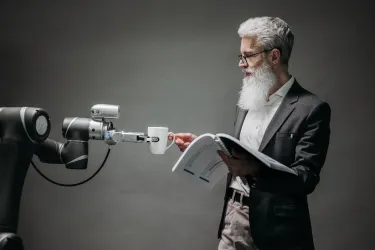
My love for humanity makes me deeply concerned about the current AI arms race. We will need to band together to push for the needed regulations and brakes on this technology.
These two interviews on the topic are fascinating – Escaping an Anti-Human Future with Tristan Harris and an interview with Ex-OpenAI researcher Daniel Kokotajlo. Sobering, yet not without hope, if we quickly wake up to where things are heading if a handful of Big Tech companies continue to call the shots.
Good AI News
Away with ChatGPT, Claude, Gemini, Perplexity and Grok! Meet Thaura.ai!
Developed in Finland, Thaura allows you to search anonymously and doesn’t collect or sell your data. No surveillance. And in this age of global warming, Thaura actually reduces CO2 emissions. It does this in two ways: exceptional energy efficiency per query and a commitment to powering its infrastructure entirely with renewable energy
Check this out. While a query to a large frontier model might consume around 40 watt-hours (Wh), a Thaura reply uses only about 0.1 Wh! Thaura is built on a compact model architecture (Qwen3.6, for those of you who follow AI model names) that is optimized for efficiency, unlike the parameter-heavy models used by Big Tech competitors. Thaura is approximately 98% more energy-efficient per response than typical Big Tech AI systems. And the energy it does use for infrastructure in Finland and Germany is 100% renewable.
Use thaura.ai for your next query. (No, I don’t own stock in this private company…)
And on the topic of renewable energy, China added more wind and solar capacity than the rest of the world combined in 2025, while India’s renewable electricity generation rose nearly 24% and fossil fuel generation fell. These are major shifts toward clean power in the world’s largest emerging economies.
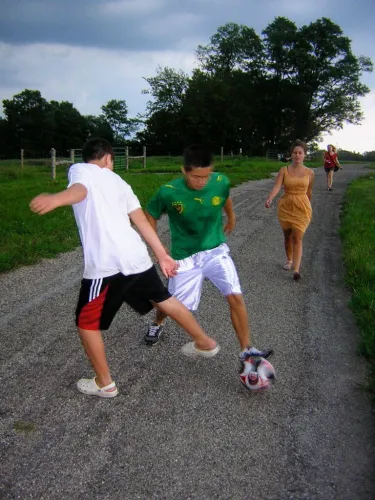
And speaking of energy, watching your national soccer team gives many people the energy to reproduce.
Testosterone and Futbol (Soccer)
Watching soccer raises viewers' cortisol (the stress hormone) and testosterone levels. Researchers found that during the 2010 World Cup final, testosterone levels rose in fans watching the match. Unlike cortisol, the increase was universal and not tied to sex, age, or degree of fandom.
This lends scientific weight to the urban legend about tournament baby booms. During the 2024 UEFA European Championship, researchers tracked daily sexual behavior, thoughts, and fantasies of nearly 1,000 participants across five European countries. Fans reported roughly 27 percent more sexual activity in the days following their national team’s wins compared to losses.
“Collective rituals and celebrations have been associated with increased intimacy and social bonding since ancient times,” noted Dr. Matt Butler, a neuropsychiatry research fellow at King’s College London. Read more about Butler’s study and this topic here.
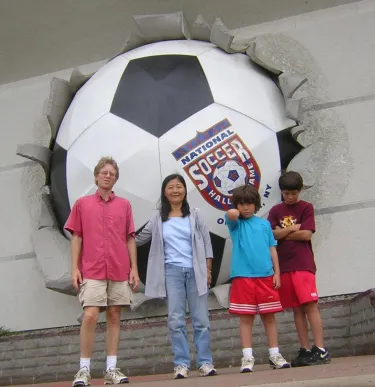
This year, the World Cup brought much joy to my family, including my son Elias, who went to see one of the matches in Toronto. He and his wife, both avid soccer players in high school, are awaiting the birth of their first child. We are awaiting our first grandchild—and, no doubt, a future soccer player—in just a couple of weeks.
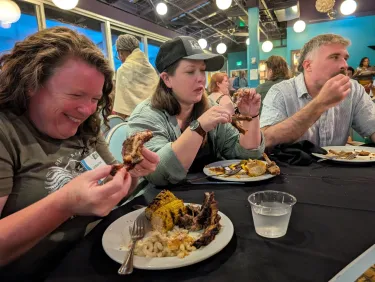
I mentioned traveling the past few weeks and one of them was to St. Louis to help celebrate the National Family Farm Coalition’s 40th Anniversary, which felt more like a family reunion than a conference.
Last Week’s Celebration
Happy 40th birthday to the National Family Farm Coalition! They are the nation's leading coalition representing small and mid-sized family farmers and fighting for policies that protect and support them. PHP has been providing financial aid to this fabulous group for 30 years and they have informed G.A. policy and the advocacy directions on farm issues for the PC(USA) all this time.
Plant Intelligence? Yes, indeed.
For all you plant lovers, "The Light Eaters: How the Unseen World of Plant Intelligence Offers a New Understanding of Life on Earth,” is one book you won’t want to miss. Research on plant intelligence has been booming in recent years, and the author describes an experiment by botanist Monica Gagliano.
A well observed fact is that plant roots can detect moisture gradients in soil, allowing them to find water close by. In the first step of the experiment, Gagliano placed pea shoots at the end of Y-shaped PVC pipes with a tray of water at the other leg of the Y. As expected, nearly all the pea shoots grew roots toward the water tray.
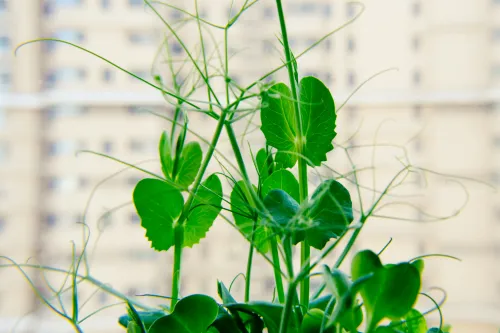
Next, Gagliano redid the experiment, but instead of water freely available in a tray, she pumped water through a sealed plastic pipe near the base of one of the legs of the Y, while the other Y-leg remained above an empty tray.
An aquarium pump continuously replenished the water. This time, there was no way for the plant to detect moisture; only the sound of running water was available as a cue. But again, nearly every pea plant grew its roots toward the sound of the running water.
Next, they were given the choice between the tray of water and the water flowing in the sealed pipe. In this case, the plants' roots grew toward the open water, suggesting the plants prioritized a guaranteed drink from the tray over the sound of it. The seedlings appeared to be able to parse various sensory cues, ranking the inputs in terms of priority to their own health, Gagliano concluded. Even more nuanced, they could distinguish and reject the sound of water in lieu of the actual water. (The Light Eaters, p. 111)
Even pea shoots appear to distinguish between the promise of water and water itself.
Garden Update
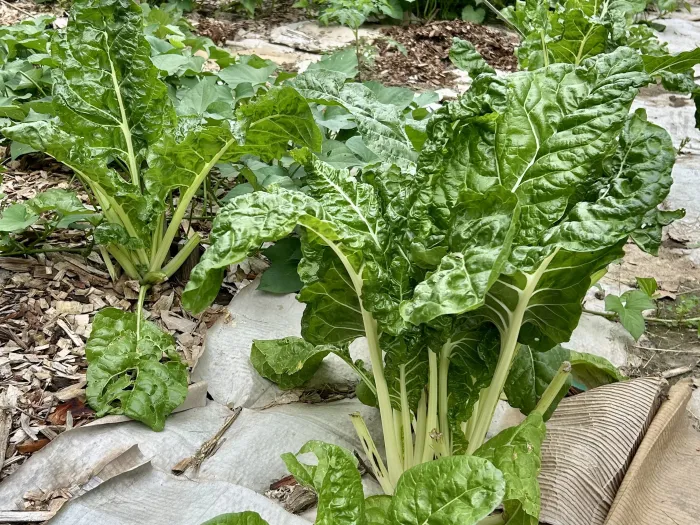
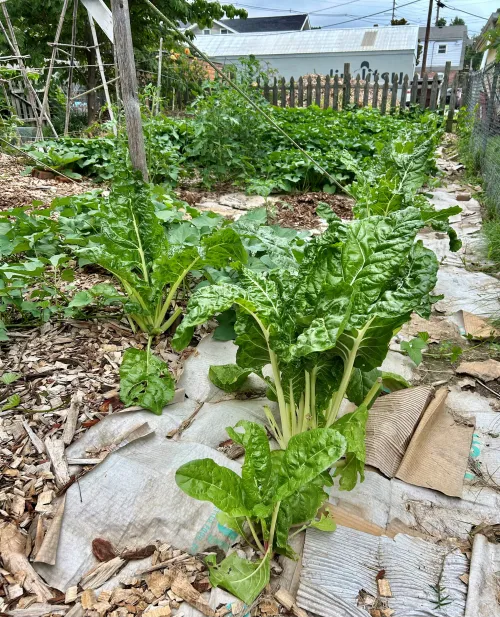
My row of Fordhook Giant Swiss chard is going gangbusters. You can see the cardboard I used to cover the winter cover crops. Notice the lack of weeds? The cardboard and wood chips have saved me so much time and effort!
In the background are a few tomato plants and a mountain of sweet potato leaves. Everything has loved the rain we’ve been getting.
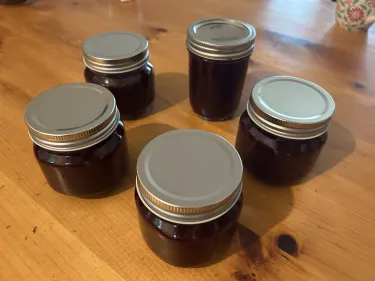
As for the blackberries, they just keep giving. They started in mid-June, and we still have ripe ones. They are a thornless variety.
The only downside to the blackberry and raspberry patch is the enduring love chiggers have for it. After multiple mini-blood suckers getting me, I’ve resorted to spraying my shoes, socks, and a set of long-sleeve pants and shirt with a nasty insecticide - permethrin.
I'm no purist. I grow organic produce, but when it comes to chiggers, I make an exception.
Be well until next week!
Peace,
andrew
P.S. Next week we’ll see what Jim Turner has to say about the new General Assembly overture to support regenerative farming practices. Stay tuned!
You may freely reuse and distribute this article in its entirety for non-commercial purposes in any medium. Please include author attribution, photography credits, and a link to the original article. This work is licensed under a Creative Commons Attribution-NonCommercial-NoDeratives 4.0 International License.