Finance panelists, housing official draw development summit to a close
Last week’s Faith-Based Development Summit was packed with helpful ideas and real-world experience
LOUISVILLE — Last week’s Faith-Based Development Summit concluded with a panel that focused on finance options and a talk on what the church’s role can be providing home repairs.
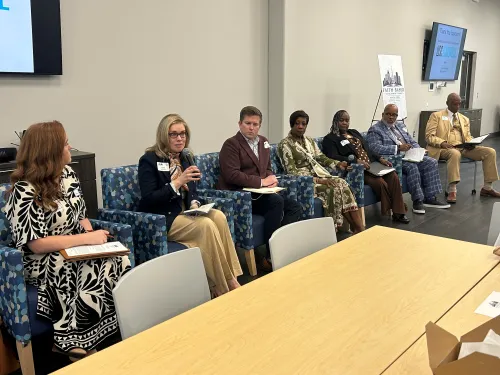
Liz McQuillen, chief policy officer of Metro United Way, moderated the panel, which included:
- Carrie Sanders, the CEO of Hope Community Capital and a consultant to the United Church of Christ Building and Loan Fund/Amistad Redevelopment Corporation
- Raymond Smith, vice president of multicultural engagement for Park Community Credit Union
- Joe Hennessee, director of project finance for Cherry Bekaert Advisory LLC
- Christie J. McCravy, executive director of the Louisville Affordable Housing Trust Fund
- Laura Douglas, president and CEO of the West End Opportunity Partnership
- Damon Thompson, senior director for national housing strategic initiatives at Local Initiatives Support Corporation.
“Find yourself some great partners, because financing is complex,” McCravy said. Partners can “help you see where the holes are and help you think about what will happen 10 years from now.”
“Understand your own risk tolerance,” Thompson said. “How much debt can you afford?”
“You’re a church. Don’t forget what your core values are,” Smith said.
Hennessee suggested this test for faith communities considering a development project: “Is this vision we have come up with complementary with the vision the community would have come up with had they had the opportunity?”
The Wisconsin Council of Churches has this guidance, Sanders noticed: “Cultivate your holy imagination.”
“I try to be as truthful as I can with people” who are seeking financial resources, Douglas said. “There are few resources to do the hard, critical work that you want to do. … A track record and an experienced partner are critical. That makes it much more likely an entity will invest in you.”
In addition, “know your project,” McCravy said. “Know the zoning of the site you’re trying to redevelop. Know who you are planning to serve.”
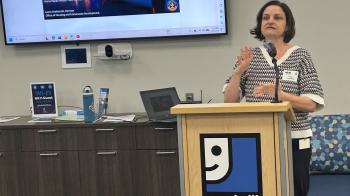
Laura Grabowski, director of the Office of Housing and Community Development with Louisville Metro Government, drew the summit to a close with a talk she called “Preserving Homes, Strengthening Neighborhoods.”
“The most affordable house,” Grabowski noted, “is often the one people are in.”
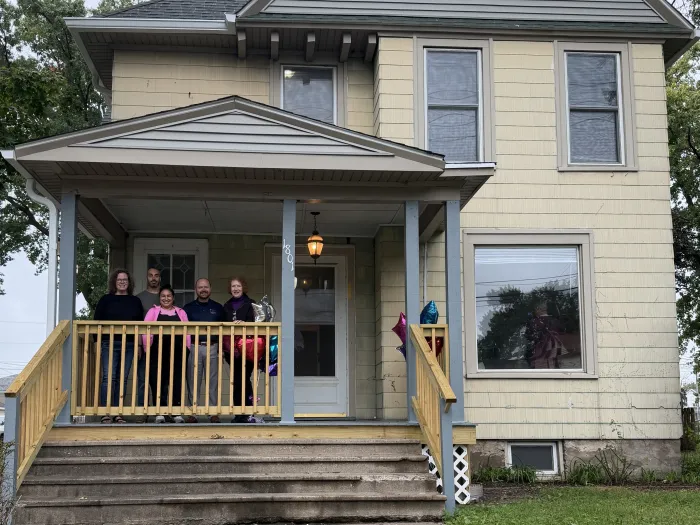
Grabowski recounted how five years ago, the city received enough money to fund repairs for 150 qualifying homeowners. An application portal was opened one summer day and the city received 1,100 applications during the first seven hours.
One elderly woman Grabowski was working with told her how she could look at the stars each night through a hole in her roof. “That may be drastic,” Grabowski said, “but it’s the lived experience of many people in the home repair program.”
A consultant conducted a home repair needs assessment, finding there are about 29,000 Louisville homeowners in need of “some sort of home repair and can’t access funding to pay for it themselves,” Grabowski said. Some will go without the needed repairs, she said. Others will borrow from predatory lenders or “hire a contractor who is scamming or doesn’t know what they’re doing,” she said.
A few “strong nonprofits” have created a home repair network, she said. “We have been able to use nonprofits who have a relationship with the community and have approved some amazing contractors to do some of these home repairs,” Grabowski said. The needs assessment says the city can help facilitate about 1,000 repairs a year, “so that means we are about 29 years out,” she said.
“That’s why I wanted to speak to you today,” Grabowski said. “Churches often know what issues your congregation is having even before they call us to say, ‘there’s a hole in my roof.’”
“These are people who own their homes outright,” Grabowski said, “and ought to be able to stay in them.”
She noted that churches “can strengthen home repairs in powerful ways,” including:
- Providing direct service, including mobilizing volunteers for cleanups, minor repairs and accessibility projects
- Filling critical gaps by supporting emergency repairs and providing flexible funding when programs fall short
- Strengthening the system by being a partner advocate and helping to grow the network that serves homeowners.
Grabowski said the Tennessee-based Coalition for Home Repair “has tons of partners.”
Check out additional Presbyterian News Service reporting on the Faith-Based Development Summit here, here and here.
You may freely reuse and distribute this article in its entirety for non-commercial purposes in any medium. Please include author attribution, photography credits, and a link to the original article. This work is licensed under a Creative Commons Attribution-NonCommercial-NoDeratives 4.0 International License.