Create in me a clean heart, O God
But a clean heart is not a heart with no memory, Chapel service sermon stresses
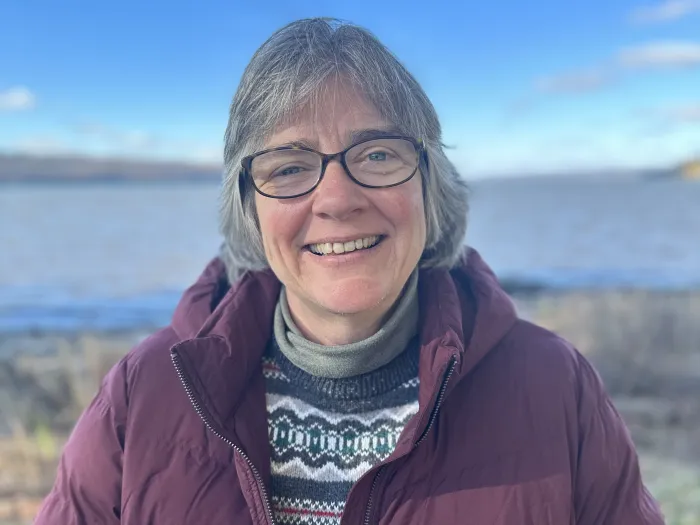
LOUISVILLE — Psalm 51, traditionally ascribed to David, is a model for recognizing and naming our sins and seeking forgiveness through repentance. “Scripture does not tell us to simply forgive and forget,” Jacklyn Walker told PC(USA) staff during online Chapel service Wednesday. “Sometimes remembering protects us.”

“But there is a difference between remembering for wisdom and remembering in bondage,” said Walker, project administrator for Partnerships Beyond the PC(USA) in Presbyterian Life & Witness. “The question is not simply, do I remember? The question is, what is the memory doing in my heart?”
If David is seeking a clean heart from all his sins that Nathan has pointed out to him, it requires the kind of surrender that’s sometimes difficult to muster. “A clean heart is not a heart with no memory,” Walker said. “A clean heart is a heart where the memory no longer has authority. It is a heart willing to surrender what it was never meant to carry.”
Walker highlighted three places “where that kind of surrender has to happen”:
- Forgiveness toward others, such as the mercy David showed to Saul. “Forgiveness does not always mean that the relationship returns to what it was,” Walker noted. “I can release the offense and still establish a boundary. I can wish you well and still understand that you may no longer be able to occupy the place you once held in my life.”
- Forgiveness for myself, which is where “David’s prayer speaks so powerfully,” she said. “Psalm 51 came in the aftermath of choices that carried serious consequences.” But “consequences do not cancel restoration. Repentance says, ‘I did it.’ Grace says, ‘That is not who I am.’ … What I did does not get to hold my heart. God holds my heart.”
- The release of grievances against God, which can be the most difficult, because it involves “releasing what I believe God should have done differently and choosing to trust God’s character,” Walker said. We pray about things, believing God will prevent something from happening or change it. “But life happens, and sometimes not in the way we believe it should.”
Think of the picture on the cover of a jigsaw puzzle, she suggested. “The picture is complete, but when you open the box, all you see are the pieces,” Walker said. “Sometimes, the piece in my hand makes me say, ‘God, what is the picture you are trying to get me to see?’ Faith does not require me to call the painful piece good. But faith says, ‘I do not have to call every piece good in order to trust the One who sees the whole picture.’”
“Whether I’m dealing with them, with me, or with God, the issue eventually comes back to my heart,” Walker said of forgiveness. “What is the hurt producing in me? What is the guilt producing in me? What is disappointment producing inside of me? What am I willing to surrender so God can make me free?”
A clean heart, she said, is “one that can remember and still be free. I forgive them. I forgive me. I release what I am holding against God — not because none of it matters, but because none of it gets to have my heart.”
Antonia Shaffer with Operations and Meeting Support offered a benediction that included these words: “May you mind your boundaries with clarity and without apology. May you lean into wholeness, making room for healing, rest and becoming.”
“And as you go, remember this: Great is God’s faithfulness. The memories that you carried yesterday will meet you again tomorrow, for they are renewed every morning.”
You may freely reuse and distribute this article in its entirety for non-commercial purposes in any medium. Please include author attribution, photography credits, and a link to the original article. This work is licensed under a Creative Commons Attribution-NonCommercial-NoDeratives 4.0 International License.