What makes Special Offerings special?
During last week’s Synod School, Stewardship & Funds Development team highlights changes and recent initiatives
STORM LAKE, Iowa — During Synod School last week, a pair of officers with Stewardship & Funds Development offered a talk on Special Offerings, the Presbyterian Giving Catalog, the PILLARS program and more.
The talk, offered by the Rev. Mary Beene, Stewardship Officer for the West Region, and Sarah McDowell, Annual Giving Officer, included changes approved by the 226th General Assembly (2024) to the PC(USA)’s Special Offerings.
Three Special Offerings — One Great Hour of Sharing, the World Communion Offering and the Christmas Joy Offering — are now received, down from what was four Special Offerings. “People were feeling a little bit strapped” with participating in four Special Offerings, according to McDowell.
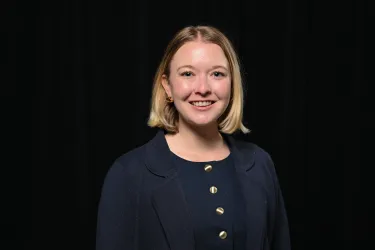
McDowell said that all causes previously supported by the Pentecost Offering and Peace & Global Witness Offering will still be supported.
- One Great Hour of Sharing will support disaster assistance, hunger, poverty, climate change, immigration, migration and refugees.
- The World Communion Offering will support racial justice, gender justice, peacemaking, global witness, and ecumenical and interfaith relations.
- The Christmas Joy Offering supports at-risk children, youth and young adults; leadership development for people of color; critical care for church leaders; and Presbyterian-related schools and colleges equipping communities of color.
“The General Assembly chose to shift to this cause-based language,” McDowell said. “I think about the broad causes as what we as followers of Christ are called to act on,” such as Presbyterian Disaster Assistance and other causes.
Beene asked those in attendance to name their favorite PC(USA) ministry or cause to support. Among those were the traditional fish banks.
“I love seeing the way kids do things,” McDowell said. “You tell them stories and they want to help change the world.”
Among the changes to the World Communion Offering is a new grant opportunity. Any council of the church — session, presbytery or synod — doing reconciliation ministry around racial or gender justice, peacemaking, global witness or ecumenical/interfaith relations can begin applying for this new grant beginning Sept. 7.
Applications for the World Communion Offering Grants take about 15 minutes to complete, so long as the applicant has the required documentation. Learn more here.
“We’re excited to see what comes out of this,” McDowell said, including “the problems they’ve identified in their communities and the ways they can take action on it.”
Grant recipients will be eligible to receive $500-$5,000 from 25% of the total WCO receipts. Those receiving grants will be notified in March 2027. Stay in the loop by signing up for the Special Offerings email list here.
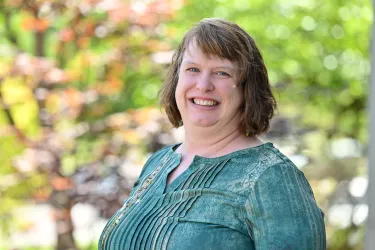
McDowell anticipates there will be “a lot of different ways to interpret these ministries,” including grants for gun violence prevention, such as Guns to Gardens programs. One congregation she knows of hopes to construct a ramp to the communion table for its older members, “providing access for all God’s children,” she said.
In the Presbytery of the Redwoods, where Beene lives, “they’re talking about [establishing] community circles and restorative justice work instead of having youth go to jail,” Beene said. The church she attends has a food pantry, and people who utilize it “are able to identify injustice issues.”
“We have hundreds of people coming every Tuesday despite the wealth in the community,” Beene said. “The hope for the grant program is that congregations can dream of really impactful projects.”
Congregations awarded grants will be required to share their story with next year’s applicants, McDowell said.
“We want small churches to be able to apply for these grants,” McDowell said, by answering basic questions including “What is your idea? How much money do you need?” and “What cause are you trying to engage?”
“People are very excited about it,” McDowell said. “There’s not a lot of grant opportunities for congregations.”
You may freely reuse and distribute this article in its entirety for non-commercial purposes in any medium. Please include author attribution, photography credits, and a link to the original article. This work is licensed under a Creative Commons Attribution-NonCommercial-NoDeratives 4.0 International License.