Worship as resistance
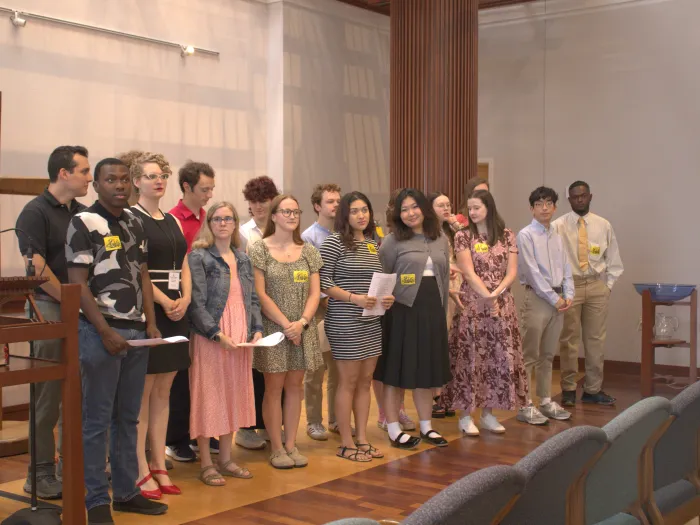
During the Christianity without Christian Zionism conference, the Rev. Dr. Whitney Wilkinson Arreche tells how Emmanuel Presbyterian Church confronted Christian Zionism during a special worship servic
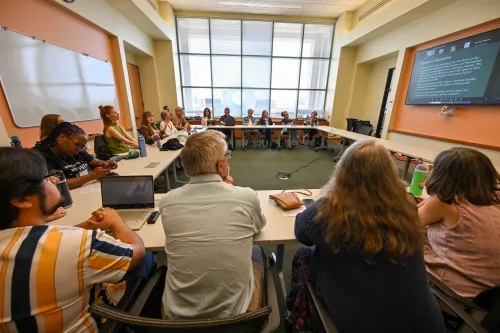
LOUISVILLE — Using the case study of a worship service at Emmanual Presbyterian Church in Bedford, Texas, the Rev. Dr. Whitney Wilkinson Arreche led a workshop last week on “Worship as Resistance: A Case Study in Confronting Christian Zionism and Nationalisms Liturgically and Theologically.” The workshop was part of the Christianity without Christian Zionism conference.
“You’re officially in the workshop with the longest title,” she told workshop attendees, grinning.
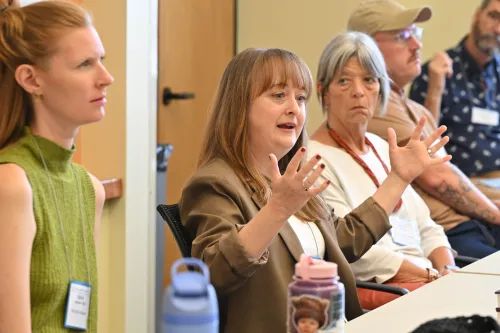
Wilkinson Arreche is the pastor of the church near the Dallas-Fort Worth International Airport and served eight years on the General Assembly Committee on Ecumenical and Interreligious Relations.
Emmanuel Presbyterian Church held a service on July 13, 2025, as part of a preaching series Wilkinson Arreche called “Holy Curiosity.” She selected John 18:28-40 as her preaching text for the service. Near the end of the passage, Pilate asks Jesus, “What is truth?”
Why choose Pilate to talk about the sin of Christian Zionism?
“He is the consummate politician. He manipulated and wielded both political and religious ideologies, something we see in our time,” Wilkinson Arreche said. “He had a loose relationship with the truth, charged Jesus with sedition, and then washed his hands of it all.”
But did he in fact wash his own hands? Wilkinson Arreche’s sermon was told from the point of view of the enslaved person who was responsible for washing Pilate’s hands.
“He did wash his hands, but only because I brought the bowl of water and held the towel,” she had the enslaved one say. “Only because I, the invisible one, did that invisible work that was the trademark of enslaved people in my time. In all times. …
“I belonged to him. I couldn’t say anything but ‘yes, Lord,’ but I can tell you what I was thinking: there’s not enough water in the world to wash away your part in this horror, Pilate.”
This enslaved person watches Jesus’ face carefully when Pilate asks him, “what is truth?”
“Jesus did not look angry, just bone tired and sad, and not at all surprised,” the enslaved person says. “You know what happened next. Pilate spun his own truth, where he told the crowd he couldn’t find any charges against this man, but that the crowd should decide his fate, washing his hands of it before I helped him wash them.”
Later, when Jesus from the cross asks for water, “he did not own a human to bring it to him; his beloveds lifted sour wine on a sponge to his lips. Not an act of subservience, but an act of adoration and grief,” the enslaved person observes. “And he drank. And he died. But the truth never did.
“This is the truth of a God who does not make slaves of humans. This is the truth of a God whose kingdom is not about armies and influence and money, but about every person sitting under their own vines, and their own fig trees, unafraid. Home in many nations; truth in many languages; freedom in many forms. ‘What is truth?’ Pilate asked (though he never really wanted to know the answer). Truth is a place made up of many nations; a place of napping under the safe shade of a fig tree, where your grandchildren will rest, too. But mostly, truth is a person, a God-person born with brown skin in a war-torn land very far from you, and I think you know his name,” the enslaved person says. “Amen.”
The service also featured liturgy “to anchor hope,” Wilkinson Arreche said. Worshipers affirmed their faith by saying a portion of the Confession of Belhar. They sang “This is my Song” and “Canticle of the Turning,” among others.
“Let all of us become spiritual creatives. Let the story of God be your teacher,” Wilkinson Arreche told those in the workshop. “Embrace worship as resistance in building a better world.”
Read previous reporting on the Christianity without Christian Zionism conference here and here.
You may freely reuse and distribute this article in its entirety for non-commercial purposes in any medium. Please include author attribution, photography credits, and a link to the original article. This work is licensed under a Creative Commons Attribution-NonCommercial-NoDeratives 4.0 International License.