Cuba Faith Advocacy Hour combines learning with doing
The 80 or so people on the call were encouraged to contact their elected officials after learning more about the embargo

LOUISVILLE — The Presbyterian Office of Public Witness joined with ecumenical partners last Monday to offer the Cuba Faith Advocacy Hour, a webinar devoted to helping participants learn more about the history between the United States and Cuba and the current embargo before turning to the time-honored practice of contacting, in real time, the elected officials of each person on the call in support of a pair of bills.
Watch the 62-minute webinar here. PC(USA) partners included the Alliance of Baptists, Friends Committee on National Legislation, the Evangelical Lutheran Church in America, the Mennonite Central Committee, The Episcopal Church, the General Board of Church and Society, and the United Church of Christ.
“Tonight’s event is taking place at a critical moment. The humanitarian situation in Cuba continues to worsen,” said Catherine Gordon, OPW’s Representative for International Issues. “Church partners report shortages of medicines, medical supplies, fuel and food. Blackouts continue to disrupt life, and many families are struggling to meet basic needs.”
At the same time, the Trump administration “has increased sanctions on Cuba and raised the prospect of military action, placing additional pressure on an already difficult situation,” Gordon said. “We know that many people are concerned about what is happening in Cuba. Tonight is an opportunity to translate that concern into action.”
“Congress pays attention when constituents speak up,” Gordon said. “Every call is counted, and every call helps communicate that people of faith support policies that promote peace and help ease suffering in Cuba.”
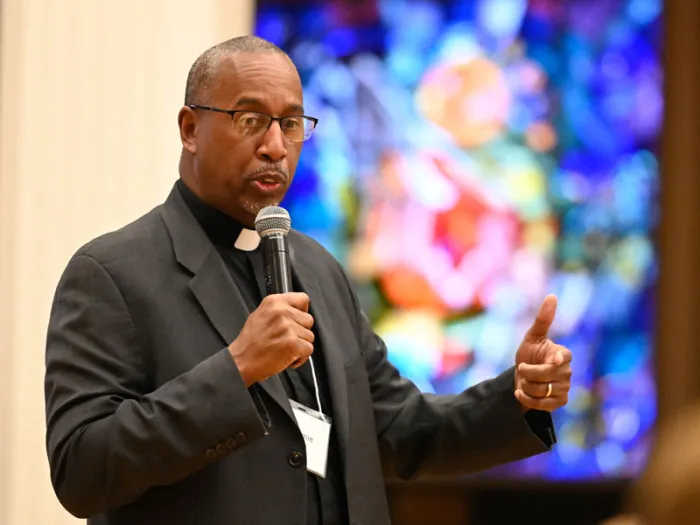
The Rev. Dr. Russell Meyer, pastor of St. John’s Lutheran Church in Jacksonville, Florida, and the executive director of the Florida Council of Churches, said he’s been going to Cuba as part of a Lutheran accompaniment team since 2011. Meyer traced the history going back to the Spanish-American War and then forward to Fidel Castro, when “it became clear the U.S. was not going to help Cuba out of its economic troubles,” Meyer said.
“The acute injustices of the 1950s led us to where we are,” Meyer said.
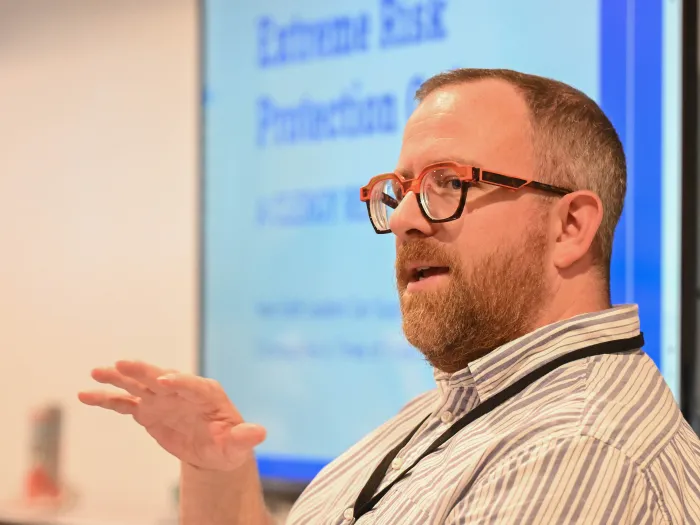
Galen Fitzkee, legislative associate with the Mennonite Central Committee in Washington, D.C., noted that Trump has threatened to “take” Cuba while Secretary of State Marco Rubio “has cast doubt on the viability of a diplomatic solution” and Secretary of War Pete Hegselth “was just in Guantanamo Bay saying that the U.S. military is ready for anything.”
“We don’t know what will come next,” Fitzkee said, “but it’s highly possible we’ll see further escalation between the U.S. and Cuba.”
We do know this, Fitzkee said:
- The U.S. embargo and related restrictions have long contributed to hardship in Cuba by limiting access to resources and weakening the economic conditions that make daily life possible.
- Many Cubans are struggling to meet basic needs, including reliable access to food, clean water, electricity, transportation and safe housing.
- Reduced fuel supplies have had immediate consequences, contributing to blackouts, limited water access, reduced mobility and disruptions to essential services.
Then Colleen Moore, Director of Peace with Justice at the General Board of Church and Society, led those on the call through a script they could use to lobby their elected officials on a pair of bills — the United States-Cuba Trade Act of 2026 and the Cuba War Powers Resolution.
Included in the sample script was this suggested language: “Hello, my name is … and I am a constituent from … I am calling to ask [legislator’s name] to support H.R. 7521, the United States-Cuba Trade Act of 2026, and H.J. Res. 153 to prevent unauthorized military action in Cuba.
“For more than six decades, the U.S. embargo of Cuba has driven a humanitarian crisis, with essential systems being pushed toward collapse. Furthermore, President Trump continues to threaten military action on Cuba and strengthen sanctions.
“As a person of faith, my concern for Cuba is based on my commitment for peace, compassion and the protection of human life, heeding the concerns of the most vulnerable in Cuba.
“Thank you for your time and for considering my request.”
If you call during the day and a staffer answers the phone, ask to speak to the foreign affairs staffer, Moore suggested.
She then contacted her own U.S. Representative — whom she reached by voicemail since it was after 5 p.m. — to demonstrate how easy the process can be.
Then Moore invited webinar participants to make their own calls. Participants offered feedback about how the process went for them. Even though it was around 6 p.m. Eastern Time, some reported getting through to staffers still in the office.
“I know it’s a tough moment right now on so many issues,” Moore told webinar participants. “I really appreciate your advocacy at this time.”
Gordon said webinar participants helped generate 3,000 messages to Congress through Monday’s action. The next two days, Office of Public Witness staff paid visits to congressional offices on Capitol Hill.
Make your voice heard on the two bills currently before Congress here.
You may freely reuse and distribute this article in its entirety for non-commercial purposes in any medium. Please include author attribution, photography credits, and a link to the original article. This work is licensed under a Creative Commons Attribution-NonCommercial-NoDeratives 4.0 International License.