On International Roma Day, Presbyterians are called to accompany one of Europe’s most marginalized peoples
Romani realities echo contemporary conversations about migration, belonging and identity
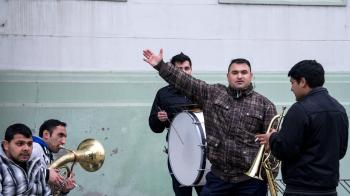
Every year on April 8, International Roma Day draws global attention to one of the world’s most marginalized peoples while celebrating the culture, resilience and survival of Roma communities across Europe and beyond. Marked on the Presbyterian Planning Calendar, the observance reflects the Presbyterian Church (U.S.A.)’s commitment to global solidarity and invites congregations to consider how the church accompanies marginalized and migrant communities both abroad and in the United States.
“The Roma people are the most marginalized people in Europe and perhaps in the world,” said Luciano Kovacs, a Global Ecumenical Liaison for the Middle East and Europe with Presbyterian Life & Witness. “They are stateless people, present in countries across the globe.”
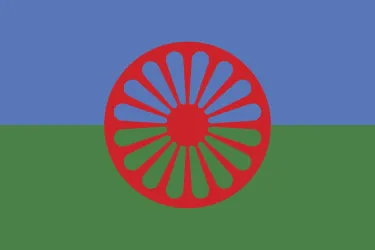
The day, also known as International Romani Day, commemorates the first World Romani Congress held April 7–12, 1971, near London, when Roma leaders from several countries gathered for the first time to assert shared identity, adopt a flag and anthem, and establish international advocacy. The day also calls attention to centuries of persecution. Roma people were enslaved for nearly 500 years in the Romanian principalities of Wallachia and Moldavia until 1856. During World War II, Nazi Germany and its allies targeted Roma communities, murdering hundreds of thousands in what many scholars recognize as the Romani Holocaust.
Today, Kovacs said, discrimination remains widespread. “Their tendency to maintain their language and cultural traditions make them seem alien in a world that does not tolerate otherness,” he said. “They face rampant discrimination in housing, employment and education.”
Many Roma people also lack passports or formal documentation, leaving them effectively nationless. According to Amanda Craft, who works on immigration issues for the PC(USA)’s Office of Public Witness, this reality echoes contemporary conversations about migration, belonging and identity. Craft and Global Ecumenical Liaisons Joseph Russ, the Rev. Cathy Chang and Cindy Corell are working to sponsor and accompany migrant and immigrant rights leaders in the Americas, Asia and Europe to the International Migration Review Forum in May at the United Nations, where the PC(USA) has special consultative status to address the overlapping patterns of discrimination and persecution present within global migration.
“International Roma Day is a good opportunity for PC(USA) congregations to reflect on marginalized groups in their own communities,” Kovacs said. “Since Presbyterians are interested in global solidarity, this is an opportunity.”
The Eastern Europe Partnership Network offers guidance and trips to connect with marginalized communities in Eastern Europe, which often includes partners working with the Roma. Last fall Ellen Smith, the former Regional Liaison for Central and Eastern Europe, led a peacemaking trip to Serbia and Bosnia. The delegation included members of the Presbyterian Church of the Cross in Omaha, Nebraska, and Beulaville Presbyterian Church in North Carolina.
The trip focused on peacemaking and historical memory in the region while strengthening relationships with partners of the PC(USA), including the Center for Youth Integration in Belgrade, Serbia, which received a grant in 2024 to provide “individualized support, education access, health referrals and psychosocial care, while advocating for children often invisible to state systems.” Kovacs is also scheduled to visit the Center for Youth Integration in July.
“We need to hear the voices of Eastern Europe, especially the Roma, and understand what they’ve lived through and what they’ve survived,” Smith said. “We have a lot to learn from them.”
Smith noted the persistent marginalization of Roma communities, especially during times of displacement and crisis. During the war in Ukraine, she closely followed the experiences of Roma families who fled to Moldova. “They were not being treated equally with other refugees coming from Ukraine,” Smith said. “They were treated as second-class citizens.”
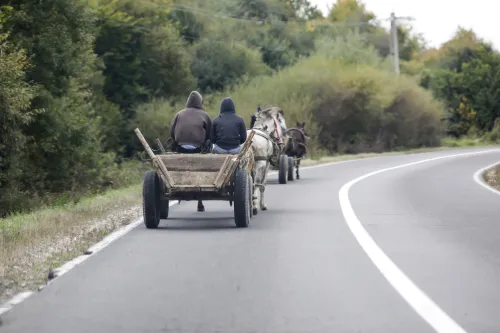
Smith drew attention to the work of Yelena Sirbu in Moldova, whose organization, Romni, advocates for the rights of the Roma, especially Roma women and children. Roma refugees, said Smith, “often face structural barriers that make navigating government systems nearly impossible.” She compared those realities to the experiences of migrants in the United States, particularly communities seeking safety while maintaining their cultural identity.
“They’ve come for safety, for the ability to thrive, that their children might thrive,” she said. “But they don’t necessarily want to assimilate."
For Kovacs, International Roma Day is not only about naming injustice but also about recognizing gifts. “It is important to emphasize this date on our calendar in order to promote awareness of the plight of Roma and the gifts of Roma culture,” he said. Smith agreed, emphasizing the relational heart of Presbyterians engaged in peacemaking. “We have a lot to learn from brothers and sisters in another part of the world,” she said. “We have a lot to learn from the Roma.”
Those interested in learning more about accompaniment in Eastern Europe, supporting Roma partners or participating in future trips are encouraged to connect with the Eastern Europe Partnership Network and can access its Eastern Europe Partnership Network Mission Toolkit or subscribe to its newsletter by emailing [email protected].
You may freely reuse and distribute this article in its entirety for non-commercial purposes in any medium. Please include author attribution, photography credits, and a link to the original article. This work is licensed under a Creative Commons Attribution-NonCommercial-NoDeratives 4.0 International License.