'He built better than he knew': the legacy of William Tennent and the mission to save his historic home
‘Founders & Faith’ banquet dinner to benefit the William Tennent House Association will be held on May 30
In the Fall 1993 edition of Presbyterian Heritage, the biannual print newsletter published by the Presbyterian Historical Society, readers were re-introduced to a colonial Presbyterian minister named William Tennent.
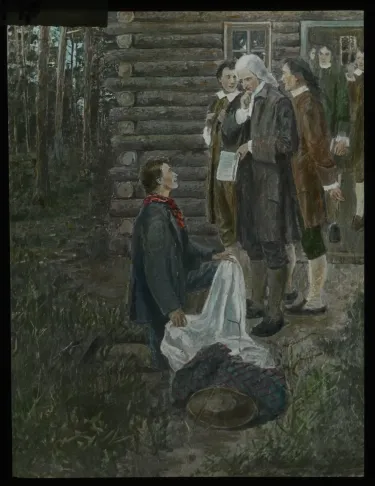
Tennent had been the topic of a dozen or so articles printed in The Journal of Presbyterian History in years past — take, for example, Henry Funk’s “The Influence of the Presbyterian Church in Early American History,” part two of which was published in October 1925 and dealt primarily with the Log College; or, perhaps, Anthony Blair’s “More Than a Log College: Clergy Education and the 18th Century Presbyterian Revivals,” from the Winter 2015 edition — so this biographical sketch was brief, running just around 200 words.
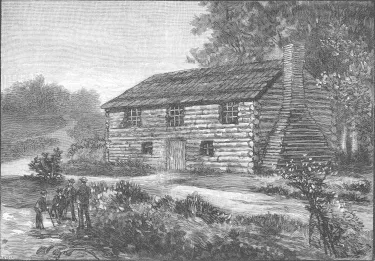
In it, readers learn that Tennent emigrated from Scotland in 1718, applying for admission into the Presbyterian Church immediately upon his arrival in the colonies. Two years later, he began his service as a minister, serving in various New York pastorates until 1727, when the congregation he served in Neshaminy, Pennsylvania, erected a church of their own. After meeting for years in a private home and other such places, Tennent settled into this freshly-built pulpit in Bucks County and began the the ambitious project of building a school for the training of young ministers — a theological academy of sorts. The result was the Log College at Neshaminy, a modest log structure set on a small plot of land that became a cornerstone pioneer institution in Presbyterian education.
"Although Log College closed upon William Tennent’s death in 1746, the spirit of that institution sparked the opening of other Presbyterian educational institutions like it," the "Heritage Highlight" section reads. Eighteen candidates graduated from Log College before it closed; when The College of New Jersey (now Princeton University) was chartered in 1746, four of its 12 trustees were Log College graduates.
On May 30, the William Tennent House Association will be hosting a banquet in celebration of the legacy of the man they are named after — the Rev. William Tennent, Sr., pastor of Neshaminy-Warwick Presbyterian Church and founder of what many consider the first college in Pennsylvania, the Log College at Neshaminy.
“This year not only celebrates the 250th anniversary of the birth of our country, but it also marks an incredible milestone for the Presbyterian faith, the Great Awakening, and the beloved community in which I live,” said Wendy Wirsch, the president of the organization.
This celebration of the legacy of William Tennent and the mark he left takes on additional layers as a celebration of America250, a commemoration of the 300th anniversary of the church he founded, and an opportunity to draw awareness to the mission of the organization that shares his name. The church itself, Neshaminy-Warwick Presbyterian — which Wirsch has attended since her youth — is hosting its own celebrations during the course of the year, and have allowed Wirsch to utilize its facilities for this event.
The William Tennent House Association is a 501(c)3 nonprofit organization committed to the mission of restoring and preserving the William Tennent House, which sits at 880 York Road in Warminster, Pennsylvania. In August 2011, the previous owners of the property targeted the house for demolition.
"With the help of God and local newspaper coverage, we were able to save the historic home from the wrecking ball just two weeks before the scheduled destruction ... If we hadn’t stepped up, this historic house would have been lost forever," Wirsch shares.
In 1735, Tennent moved to a 100-acre plantation in Warminster to be closer to the pulpit to which he’d been called. It was here, near his new home, that he built the Log College — it was here, in this home, that he welcomed George Whitfield to rest after hours of theological study and discussion.
On November 22, 1739, George Whitefield came to the churchyard at Neshaminy to preach to a crowd of 3,000 people. After several hours of ministry, Whitefield — whose friendship with Benjamin Franklin and impact during this period of religious upheaval is the focus of the recently released film “A Great Awakening” — retired to the home of Tennent. Of his visit with Tennent at his Log College, Whitefield wrote the following in his journal: “It is a Log-House, about Twenty Feet long, and near as many broad; and to me it seemed to resemble the Schools of the old Prophets.”
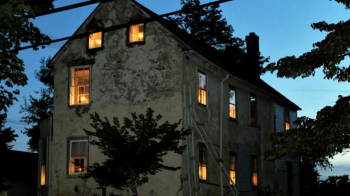
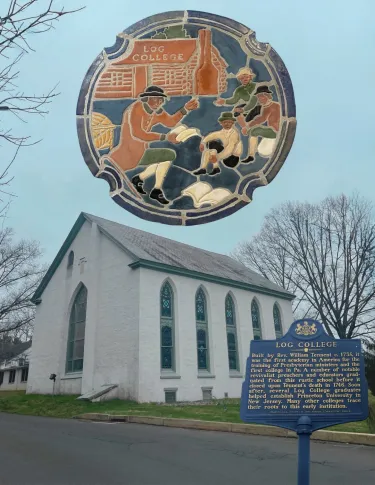
Though the site of the college is now buried beneath pavement, the log structure itself having been torn down decades ago, the house that Tennent once lived in remains. When driving north down York Road, PA Route 263, you’ll see a blue blur on the left side of the road. The historical marker, erected in 2008 by the Pennsylvania Historical and Museum Commission, marks the site of the Log College, and welcomes visitors to the William Tennent House, which sits just beyond it. The marker that preceded it had been dedicated in 1947.
The William Tennent House Association has access to the house and the acre it sits on — a remainder of the land that once belonged to Tennent is now owned by Christ’s Home, a ministry for children and senior citizens. As the stewards of his home and his memory, the WTHA is working hard to conserve the architectural, religious, and colonial history that is the palimpsest of Tennent’s Pennsylvania manor house. They've conducted assessments of the property with the help of various professionals, and have learned invaluable information about the structure of the building in doing so.
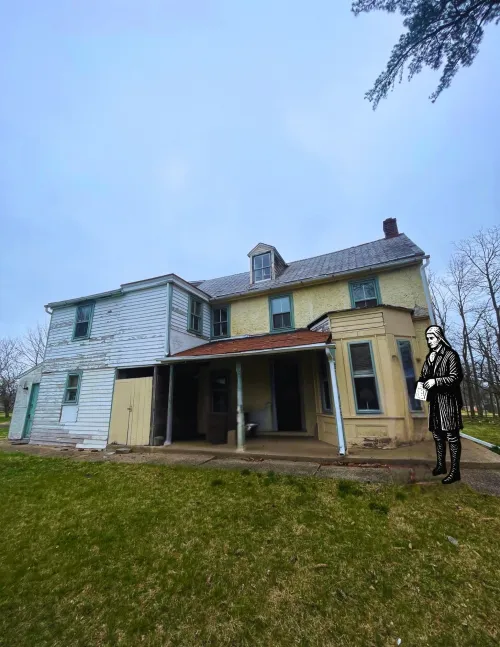
Although the home has been altered through the years, the Association has identified the original roof line of the home — the east and west stone walls date to when the Tennent family lived there. In the kitchen, they've discovered a beehive oven, a design typical in early colonial homes, built into the hearth. Attempts to take and test samples from the beams in the basement were halted once they'd realized they were carved from American chestnut — a tree that experienced a devastating blight beginning in the late 19th century that has since rendered the species functionally extinct. The WTHA is eager to continue their study of the property, and is hopeful that 2026 will bring them the opportunity to do so.
In advance of the event and America250, the William Tennent House Association is at work on a series of educational videos that will be published on their YouTube channel for general viewing. The goal is to paint a wider picture of William Tennent’s world. The first installment provides historical context around the Old Scots Burying Ground and John Boyd’s Tombstone, which is on display at the Presbyterian Historical Society.
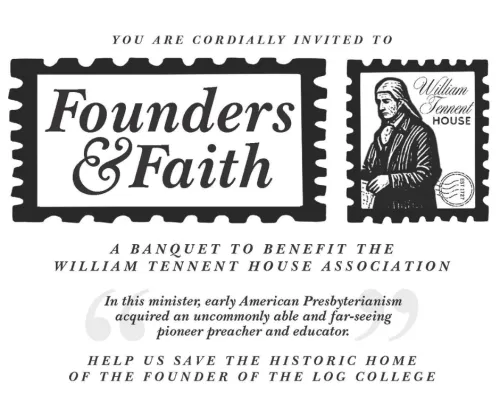
The Founders & Faith banquet, to be held on May 30, 2026, from 6 p.m. through 9 p.m. Eastern Time at the Neshaminy-Warwick Presbyterian Church, will be a night of refreshments, reflection, and revitalization. The event will feature special guest speaker Dr. Timothy Tennent, a direct descendent of William Tennent, who will tell the story of his ancestor and illustrate how William's vision for theological education changed the world. Artifacts on loan from the Presbyterian Historical Society will be on display for guests perusal, and Silent Auction items will be available to browse and bid on. All proceedings will go toward the restoration of the William Tennent House and the continued preservation of his legacy.
The impact of Tennent and his rustic log university is undeniable — now, in 2026, it is time to revitalize the efforts to preserve his legacy. See how you can get involved in the William Tennent House Association mission at this website, and register to celebrate with them at the Founders & Faith banquet on May 30.
You may freely reuse and distribute this article in its entirety for non-commercial purposes in any medium. Please include author attribution, photography credits, and a link to the original article. This work is licensed under a Creative Commons Attribution-NonCommercial-NoDeratives 4.0 International License.