Unity is a calling, not a structure
A Unification Commission member learned that Presbyterianism ‘gives us a remarkable framework’ for unifying
Serving on the Unification Commission as a pastor has been both a privilege and a humbling experience. When the Presbyterian Church (U.S.A.) created this body through action of the 225th General Assembly in 2022, it entrusted a small group of ruling elders and teaching elders with a significant task: to address structural divisions within the denomination and to imagine a more unified way of organizing our common life. The charge was technical in many respects — dealing with governance, budgets, and institutional alignment — but beneath those practical matters I believe lay a deeper question: What does unity look like in a church that values shared authority, theological diversity and local freedom?
No doubt it has been one of the most stretching and sanctifying experiences in my 46 years of ministry. And it has also been one of the most clarifying. For all our denominational conversations about polity, theology and institutional structure, the work of unity ultimately exposes something deeper: our assumptions about the body of Christ, our tolerance for difference and our willingness to trust the Spirit in people we do not fully understand.
The Commission’s work began with an awareness that the PC(USA) has long struggled with structural fragmentation within both the former Office of the General Assembly and the former Presbyterian Mission Agency. Over time, agencies, boards and offices developed distinct cultures, governance patterns and priorities. Each emerged with good intentions and meaningful missions. Yet as the decades passed, the overall system sometimes appeared less like a coordinated body and more like a collection of well-meaning but loosely connected parts.
Presbyterians, of course, are not strangers to complexity. Our polity reflects centuries of theological reflection about the balance between order and freedom. We believe that Christ alone is head of the church and that authority in the church is exercised collectively rather than individually. Committees, councils and commissions are simply the tools we use to embody that conviction.
Still, tools sometimes need reshaping.
As a pastor, I came to the table shaped by the weekly realities of congregational life. I know what it is to preach to people who disagree with one another — and sometimes with me. I know the quiet ache of members who feel unheard and the fatigue of leaders trying to hold a community together amid competing convictions. Those pastoral instincts proved both helpful and humbling in the Commission’s work: helpful, because they grounded me in the human stakes behind our deliberations; humbling, because I realized how often I, too, prefer clarity over complexity, agreement over tension.
The Unification Commission was asked to explore ways to a clearer structure which could strengthen collaboration among two national agencies and help the church better pursue its mission. This required careful listening — to staff members who carry out the church’s ministries every day, to leaders across presbyteries and synods, and to fellow commissioners who brought their own hopes and concerns to the table.
I believe what became clear through our conversations is that structure alone cannot create unity. Organizational charts may change; lines of accountability may be redrawn; reporting relationships may be simplified. These steps can help. Genuine unity arises not from administrative design but from shared purpose.
One of the most significant lessons I learned is that unity is not the same as uniformity. That may sound obvious, but it is remarkably difficult to live out. In practice, we are often more comfortable drawing lines than building bridges. We want to know who is “in” and who is “out,” what is acceptable and what is not. Yet the Reformed tradition, at its best, calls us to something richer: a community bound not by identical perspectives, but by a shared commitment to Christ and a covenantal life together.
In fact, I firmly believe the church’s unity should begin in the gospel itself. In the New Testament, unity is not described as uniformity but as a gift of the Spirit. The Apostle Paul reminds the church that there are many members but one body. That biblical vision has always guided Presbyterian governance, even when our institutional arrangements have struggled to reflect it fully.
Needless to say, that kind of unity requires courage — the courage to speak honestly and the courage to listen generously. It requires us to risk being misunderstood and to extend grace when others fall short. It asks us to hold our convictions deeply, but not defensively, trusting that truth is not threatened by conversation. In a polarized culture, this may be one of the most countercultural witnesses the Church can offer.
I believe our Commission’s discussions often circled back to that theological grounding of unity. We asked ourselves repeatedly: How can structures serve mission rather than compete with it? How can governance support collaboration rather than unintentionally reinforcing silos? And perhaps most importantly, how can we ensure that the national structures of the church remain accountable to the congregations and councils they are meant to serve?
These were not easy conversations. People care deeply about the ministries they lead and the institutions they serve. Any conversation about change can feel personal, even when the intention is to strengthen the whole church. Yet one of the most encouraging aspects of the Commission’s work was the spirit of respect that generally marked our dialogue. Commissioners came from different theological perspectives and ministry contexts, but there was a shared desire to seek what would best serve the church’s future.
The Commission also revealed how much our structures both help and hinder this work. Presbyterian polity is a gift. It creates space for shared discernment, for accountability and for connection across congregations and regions. But it can also become a shield behind which we avoid the harder work of relationship. No polity, however well designed, can substitute for the spiritual discipline of loving one another — especially when that love is tested.
The Presbyterian tradition gives us a remarkable framework for this work. Our councils — sessions, presbyteries, synods and the General Assembly — are designed to ensure that no single voice dominates and that the wisdom of the whole body can be heard. When these councils function well, they become spaces where discernment happens collectively rather than hierarchically.
But like any system, Presbyterian polity depends on the spirit with which it is practiced. Structures cannot substitute for humility, patience and a willingness to listen.
As the Unification Commission is concluding its work and the broader church reflects on its recommendations, I hope we will remember that institutional reform is only one part of the larger calling. The deeper task is spiritual: Learning again how to be a church that trusts one another enough to share authority, to speak honestly and to pursue Christ’s mission together.
Unity, after all, is not something the church manufactures. It is something the church receives — and then faithfully tends.
As I return to my pastoral context, I carry both a deeper realism and a deeper hope. Realism, because I have seen how difficult this work is, and how easily we fall into patterns of division. Hope, because I have also seen what is possible when we remain at the table, when we refuse to give up on one another, and when we trust that God’s purposes are larger than our disagreements.
If the church is to bear faithful witness in the years ahead, we will need more than well-crafted statements or structural adjustments. We will need a renewed commitment to the practices that make unity possible: listening, repentance, patience and love. These are not strategies, but spiritual disciplines. They are the quiet, daily work of being the body of Christ.
Serving on the Unification Commission did not resolve all my questions about the future of our denomination. But it did deepen my conviction that unity is worth the effort — not because it is easy or efficient, but because it reflects the heart of the gospel itself. In Christ, we are called into a communion that transcends our differences — not by erasing them, but by holding them within a greater love.
That is the work before us. It is not glamorous. It is not quick. But it is holy.
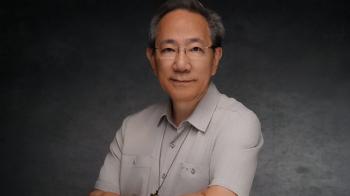
The Rev. Bill Teng is a member of the Unification Commission.
You may freely reuse and distribute this article in its entirety for non-commercial purposes in any medium. Please include author attribution, photography credits, and a link to the original article. This work is licensed under a Creative Commons Attribution-NonCommercial-NoDeratives 4.0 International License.