Working for the common good
The Rev. Dr. Jermaine McKinley, co-chair of Pittsburgh Presbytery’s SDOP Ministry Team, has a good word for Wednesday Chapel

LOUISVILLE — The Rev. Dr. Jermaine McKinley, the co-chair of the Self-Development of People Ministry Team for Pittsburgh Presbytery, spoke to PC(USA) staff Wednesday as part of the weekly online Chapel Service about SDOP Sunday, which was celebrated Feb. 8. Learn more about SDOP’s “People Investing in People” toolkit here. The “Working for the Common Good” meditation by McKinley is included in the resource.
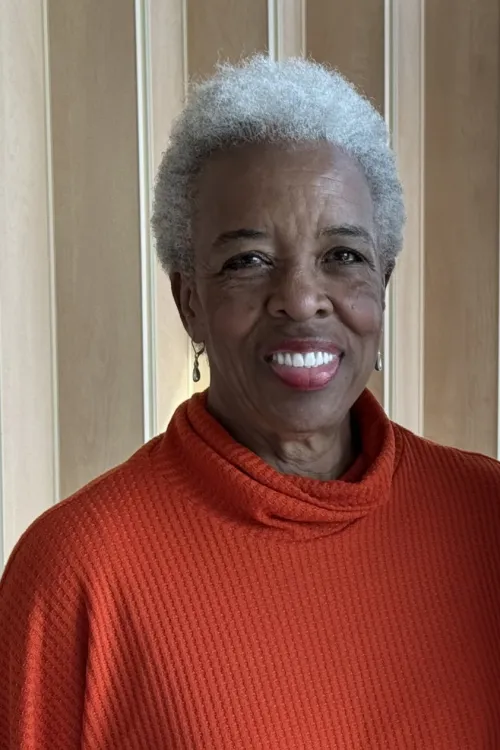
McKinley based her Wednesday meditation on 1 Cor. 1:10 and 1 Peter 4:10. She told those worshiping online, “One should never give a preacher the opportunity to speak” because “they’re going to engage in what is referred to as ‘the foolishness of preaching,’” which McKinley called “the interconnectedness of humanity.”
“God intends for all of us to work for the common good,” McKinley said. People “thrive best when we all maintain an environment of respect and love.”
The gifts we’re given by God enable us to contribute to the common good, McKinley said. “When I look at the world, I believe our beloved world would work a whole lot better if we acknowledged that all we have or ever hope to have is good and that God gave it to us. We should be generously sharing it.”
As one committed to working to empower others, “I firmly believe in looking at what we have and working on what we can do to make [things] better,” McKinley said. Asked a few years ago to serve on Pittsburgh Presbytery’s SDOP team, “I thought, ‘That’s what God is calling us to do!’ God calls us to use our skills, grace and talent.”

McKinley acknowledged her own gifts as a baker and a cook, but not so much as someone who grows the ingredients that bakers and chefs need to work their magic. God gives us gifts “to share equitably,” McKinley said. “We each have a need, and we would be better off if we understood we are not to selfishly hoard” our gifts. “We all ought to be doing something to contributed to the common good.”
As an advocate for empowerment, “I love the Self-Development of People,” McKinley said. At Pittsburgh Presbytery, “we work and we coach groups to help them understand all the voices that need to be heard. We understand that some haven’t had the education and skills that others have, but they do have the skills, grace and talent” needed to establish and grow a business.
That got McKinley to thinking of “Face” or “Faceman,” the part Dirk Benedict played on “The A-Team.”
When the need arose, Face, a police detective, would go into a business setting “and work things out,” McKinley said. All of us have our gift, and “I appreciate what can be done to improve socio-economic conditions for everyone” when we use our gifts.
“We are called to love one another as God loves us. I want to invite you to read these two passages” found in 1 Corinthians and 1 Peter, McKinley said. “If you’re a preacher, go ahead and engage in that foolishness of preaching. Preach on the difference SDOP is making.”
McKinley also suggested those in worship read the many articles that are found in the Sunday yearbook and toolkit. “God has prepared something that will touch your mind, your heart and your spirit,” McKinley said. “We as the people of God — we as humanity — are called to live a life of unity, caring for and seeing one another. To God be the glory! Amen.”
You may freely reuse and distribute this article in its entirety for non-commercial purposes in any medium. Please include author attribution, photography credits, and a link to the original article. This work is licensed under a Creative Commons Attribution-NonCommercial-NoDeratives 4.0 International License.