Discerning God’s will together
At last week’s Moderators Conference, those who moderate PC(USA) mid council gatherings are given some tools to take home with them
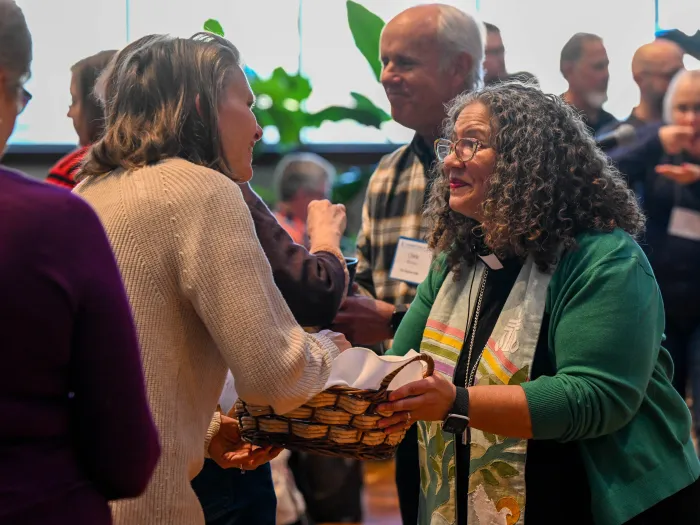
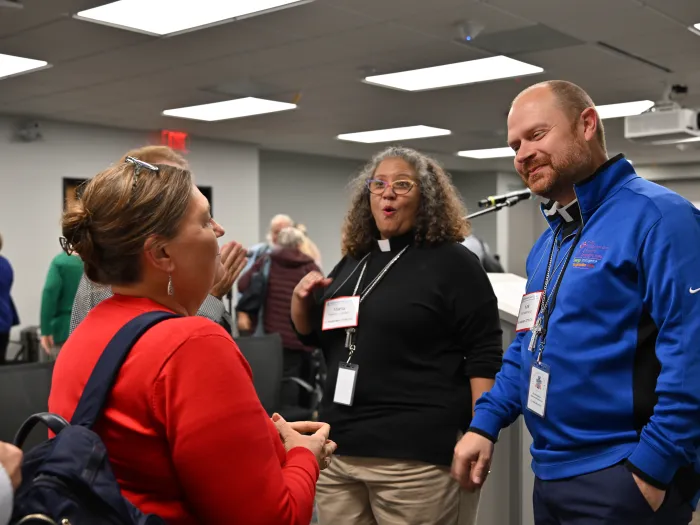
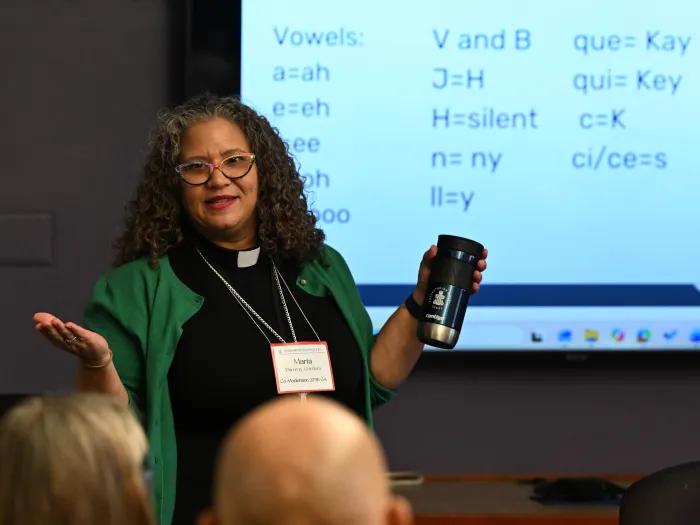
LOUISVILLE — During last week’s Moderators Conference held at the Presbyterian Center and online, the Rev. Jihyun Oh and the Rev. Dr. David Gambrell shared ideas and offered their support to mid council moderators from around the country.
“I was thinking of something that gets said often in the PC(USA): we love committees. We are Presbyterian because we love being decent and in order,” said Oh, Stated Clerk of the General Assembly and Executive Director of Presbyterian Life & Witness. It’s not just for the sake of being decent and in order, she said. “We do that to hear God’s voice. We love committees because we believe it is not single human beings who most clearly hear God’s voice. It’s only when we’re discerning in community that we begin to see what God’s about in the world and how we’re called to do that work.”
“You moderators have been called to help the body in that discernment,” she said, by “listening for and watching for God’s movement.”
Moderators are called to moderate “some of the impulses of this moment, when we act on incomplete information,” she said, “to remind us there may be more there and to invite folks to be curious about what they don’t know, to make a better decision.”
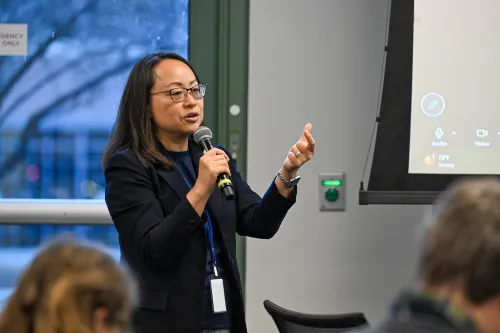
Oh said she hopes some of what moderators take home will help them “bring order, but not too much order.”
“Some amount of chaos might be good,” she said. “It’s the place where God is doing a new thing.”
“As moderators, you give up your ability to have opinions and be part of the process,” Oh said. “Thank you for saying yes to the call of the Spirit at this time.”
Later on Friday, Oh and others talked about the organization of PL&W and how each area functions. PL&W’s purpose, crafted through discernment, is to be called as a partner to “convene, connect, equip and empower the whole church as disciples journeying toward God’s wholeness, in the PC(USA) and beyond.”
“We are an agency of the PC(USA). The church is the one million members of the PC(USA),” Oh said. “When we’re all doing the work together, that’s how we’re the connectional church.” The people of PL&W “execute the policies and decisions of the General Assembly, and we are accountable for that work.”
Oh defined wholeness as peace, justice, flourishing and Creation “that is not groaning or crying out, but whole. It’s being rightly related to people and the things that we have, our resources. It’s restoring and repairing relationships.”
“Presbyterian Life & Witness is here to help presbyteries and congregations — the whole church — to live out that call in the world,” Oh said. It’s an aspirational purpose “because we know we will fail along the way,” she said. “But we’re headed forward together.”
The Rev. Sarah Moore-Nokes, who helped plan and carry out the Moderators Conference, outlined PL&W’s priorities:
- Thriving mid councils
- Disciple formation and leader development
- Life of the denomination, including “how we order ourselves and how we are in partnership with others”
- Restorative justice and witness
- Unifying. “While we have unified, the work of unifying will go on for a very long time,” Moore-Nokes said.
Worship responsibilities for mid council leaders
Gambrell, the Associate for Worship in the Office of Faith & Order, talked to moderators about how they can plan and help lead worship at mid council gatherings.
Gambrell said he has three rules for worship: start with Scripture, remember the body, and give glory to God.
Gambrell said that moderators do well to pay close attention to the language used in worship by using expansive language for the triune God and inclusive language for the people of God.
The Directory for Worship says that worship leaders should represent the diversity of the presbytery; be equipped with spiritual gifts, skills and training; and be informed and equipped to lead.
Gambrell discussed models of worship that moderators can consider using.
One is the Service for the Lord’s Day found in the Book of Common Worship (2018 edition).
A second is Daily Prayer, where the body can sing a Psalm, hear a Scripture read, share signs of peace and offer prayers of thanksgiving and intercession.
A third model is called “Worshipful Work,” during which elements of worship are woven into the meeting agenda.
Other orders and elements of worship from the Book of Common Worship include Commissioning to Service (pages 516-522), Thanksgiving for Faithful Service (pages 526-527), Justice and Reconciliation (pages 591-632) and Healing and Wholeness (pages 731-765).
You may freely reuse and distribute this article in its entirety for non-commercial purposes in any medium. Please include author attribution, photography credits, and a link to the original article. This work is licensed under a Creative Commons Attribution-NonCommercial-NoDeratives 4.0 International License.