Moderators Conference workshop offers up a warm look at Puerto Rico, which will host the 228th General Assembly
Presenters are the Rev. Marta Pumroy-Cordero and the Rev. Edwin González-Castillo
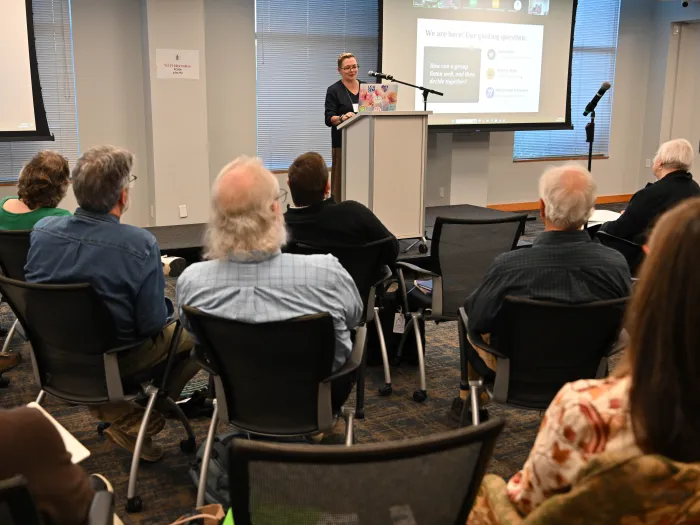
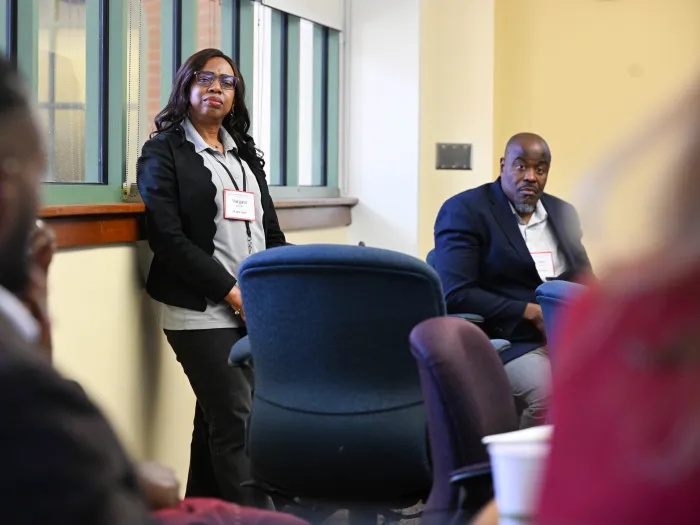
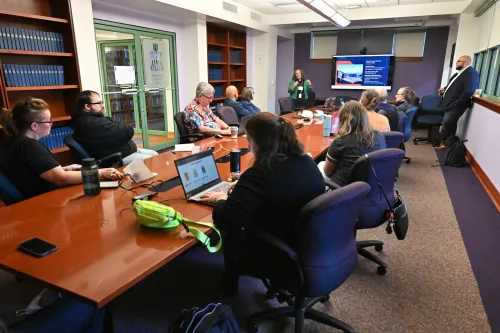
LOUISVILLE — During a workshop at last week’s Moderators Conference, it was the happy task of the Rev. Marta Pumroy-Cordero and the Rev. Edwin González-Castillo to explore Puerto Rico, which will host the 228th General Assembly in 2028, through language, history and culture.
Pumroy-Cordero, Co-Moderator of the 227th General Assembly (2026), calls herself an “Iowayrican” because she was born in the Hawkeye state but her family has roots in Puerto Rico. González-Castillo, director of Presbyterian Disaster Assistance, is the son of a Dominican woman and was born and educated in Puerto Rico.
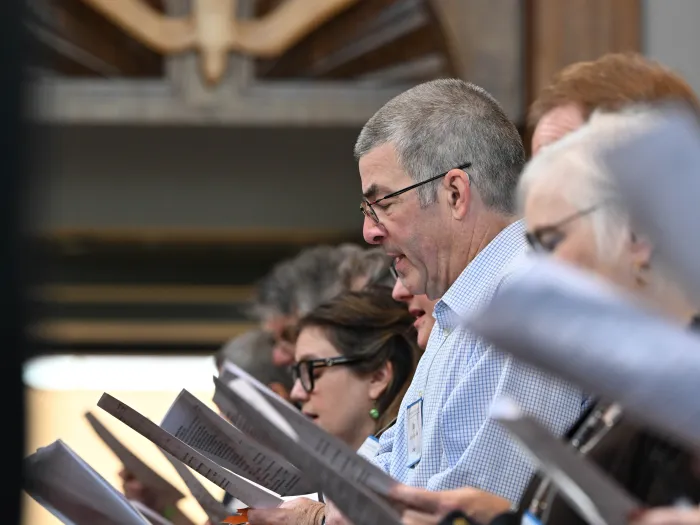
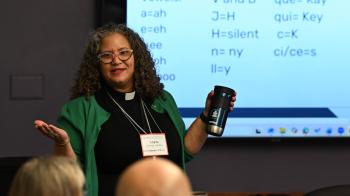
Pumroy-Cordero spent 20 years teaching Spanish 1 before becoming border ministry coordinator for the Tres Rios Border Foundation in Tres Rios Presbytery. She led workshop attendees through a pronunciation guide and then put them through their paces by having them read aloud a portion of the Book of Order in Spanish. “You’re doing great!” she told participants.
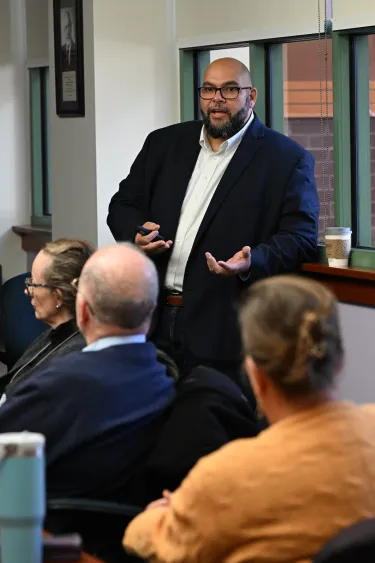
It’s one thing to know the language, but it’s another thing to understand it, according to González-Castillo. Idioms in Puerto Rico include “This affair is a fried plantain!” (It’s a mess), “They are dreaming with little pregnant birds” (It’s impossible) and “To me, it matters one Angolan cucumber” (I couldn’t care less).
“Those phrases contain culture,” González-Castillo said.
According to Pumroy-Cordero, Puerto Rican Spanish “is a layer cake,” with contributions from Taíno, the first people of Borikén, such as canoa and iguana; African rhythms and food, including Bomba; Spanish with its Andalusian and Canarian roots, with the term for bus, guagua, as an example; and English, with many terms turned into Puerto Rican words.
In fact, “hurricane” is a Taíno word, PDA’s director pointed out. “Every time the world names a storm, it speaks a little Borikén,” González-Castillo said. Also borrowed from Taíno are hammock, canoe, savanna, guava, potato and barbecue. Terms from Africa that made it to Puerto Rico include banana, yam, okra, gumbo, goober and jumbo.
“These words survive,” said Pumroy-Cordero, “because the people who spoke them survived.”
After a brief look at the history of the last century or more in Puerto Rico, González-Castillo said that “one way we push back is through literature,” such as Abelardo Diaz Alfaro’s “Santa Claus Comes to La Cuchilla.” In the story, a young teacher, “fresh from the States,” González-Castillo said, replaces the magi with Santa Claus, who bursts into a rural classroom in Puerto Rico shouting “Merry Christmas” in English. Everyone runs, thinking it’s the devil “speaking Americano.”
Pumroy-Cordero reported the findings of a survey that indicate more than two-thirds of people who speak at least two languages said they feel different when they switch languages.
“The quiet voice in English may be the bold voice in Spanish,” she said. “When people can speak only in their second language, we may be meeting only half of who they are.”
The two recommended that the mid-council moderators who participated in the workshop take these learnings home with them:
- Listen for the Spanish underneath — When someone speaks in their second language, their meaning is richer than their words.
- Know the history — A language debate in Puerto Rico is never about grammar. It’s about dignity.
- Honor the place — Regionalismo is a gift. Ask, “How do you say it where you’re from?” and then listen.
“On the road to the 228th General Assembly, we’re invited not just to visit Puerto Rico,” Pumroy-Cordero said, “but to listen to it.”
You may freely reuse and distribute this article in its entirety for non-commercial purposes in any medium. Please include author attribution, photography credits, and a link to the original article. This work is licensed under a Creative Commons Attribution-NonCommercial-NoDeratives 4.0 International License.