Righteousness, relationships and resources
SDOP staffers offer a workshop on poverty during the Moderators Conference

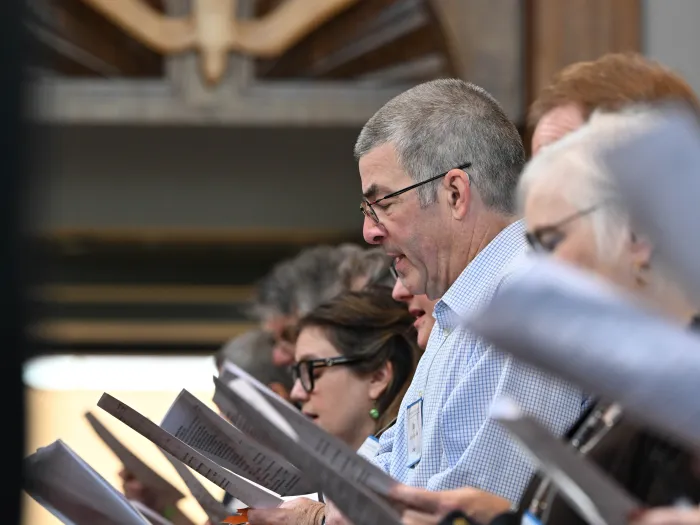
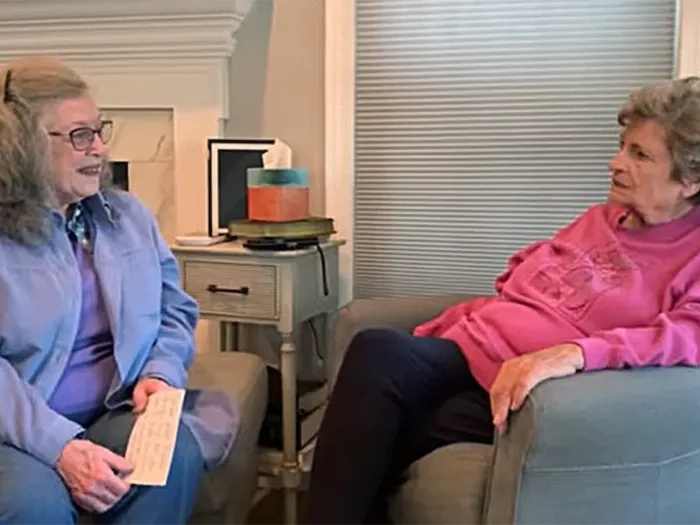
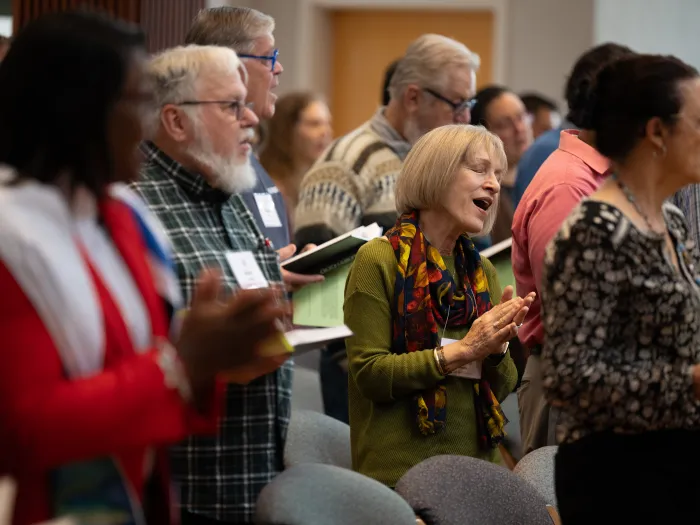
LOUISVILLE — During a workshop at last week’s Moderators Conference, the Rev. Dr. Alonzo Johnson and Margaret Mwale clearly took pride in describing the empowering work of the Presbyterian Committee on the Self-Development of People, commonly known as SDOP.
Johnson, SDOP’s coordinator, traced the work of awarding grants and accompanying grassroots groups back to 1970. “People know what they need,” Johnson said, citing the example of We the People of Detroit, which informs and empowers people in the Motor City on civil rights and issues around land, water and education. Together with partners including Wayne State University, “they have been educating others in the community, and now we call them ‘Water Warriors,’” Johnson said. “It’s an example of people power.”
Mwale, SDOP’s Associate for Community Development and Constituent Relations, asked the moderators in the conference room at the Presbyterian Center in Louisville, Kentucky, to think about the challenges faced in eradicating poverty and why they think poverty exists.
“Some of our churches are not talking about these things,” Johnson said. “We need to have these conversations so that we know the work that we need to do.”
Mwale noted that people are poor for many reasons, including the lack of fair and equitable practices, sustainable employment, affordable housing, decent and affordable healthcare, climate stability, reputable financial products and quality education, training and skills. “Just meeting people’s basic needs is hard,” she said, but “churches can find a way to be more involved.”
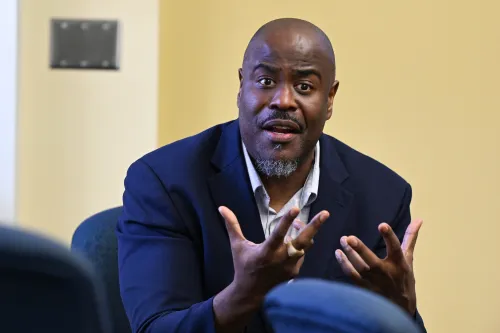
In his book “Poverty, by America,” Matthew Desmond defines systemic poverty as “poverty that is not simply the result of individual failure or bad luck, but instead is perpetuated by laws, policies, practices and systems that economically exploit people who are poor,” according to Johnson.
Mwale noted that in 2025, the federal poverty line for two people was $19,720 and $30,000 for a family of four. “Those might work if things are going smoothly,” she said, “but life happens, and it can be hard to keep doing.”
For further reading, Johnson recommended Elizabeth Hinson-Hasty’s “The Problem of Wealth: A Christian Response to a Culture of Affluence.” Hinson-Hasty teaches at Union Presbyterian Seminary.
Johnson identified what he called the 3 Rs of doing the work of solidarity, anti-poverty and community-building, “which comes from conversations with the communities we work with:
- Righteousness, which Old Testament scholar Dr. Walter Brueggemann equated with relational justice. “It involves putting substance into claims of shalom, which is about moving others toward well-being and social equity,” Johnson said. “If you’re not about justice, you can’t walk with us.”
- Relationships, including advice from Mwale to “go to the communities you desire to engage with” to learn the local culture, learn more about the community’s issues and “intentionally seek out locals to partner with in leading the relationship-building.” She added that we’re “not seeking to partner in a paternalistic manner,” but instead working to “center the solutions that they themselves have come up with.”
- Resources can include doing the kind of asset mapping developed by Luther Snow of the Alban Institute. “Often, the news of the day teaches us that we live in scarcity rather than abundance,” Johnson said. “This is an opportunity to examine the ways we are blessed and the ways we can bless others.”
Presbyterian Life & Witness and other agencies of the PC(USA), as well as synods, can also be important assets for presbyteries and congregations, Johnson said. “People may be asking you questions about how to connect,” he said. “You can be a bridge to connect churches to the people doing the work.”
Presbyterian News Service will continue reporting on the annual Moderators Conference through Wednesday.
You may freely reuse and distribute this article in its entirety for non-commercial purposes in any medium. Please include author attribution, photography credits, and a link to the original article. This work is licensed under a Creative Commons Attribution-NonCommercial-NoDeratives 4.0 International License.