Workshop unpacks post-pandemic finances and attendance data for churches
Insights include church growth patterns, online trends and the impact of technology on giving

BALTIMORE — Bigger churches are getting bigger and smaller churches are getting smaller, recent research shows.
That and other post-pandemic trends were highlighted last month during a workshop presentation at the Stewardship Kaleidoscope conference in Baltimore.
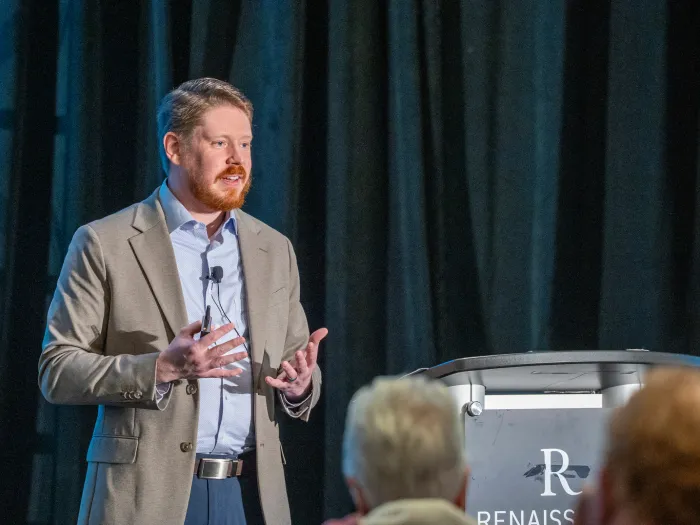
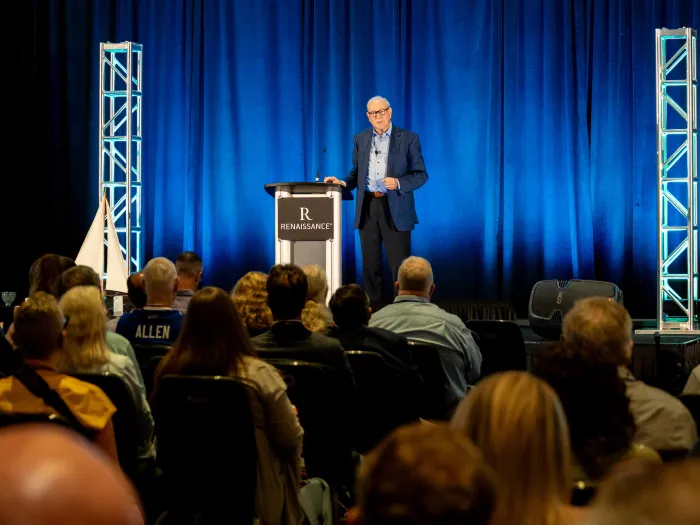
Erica Dollhopf, Associate Director of Research at the Lake Institute on Faith and Giving, part of the Indianapolis-based Lilly Family School of Philanthropy, provided an overview of significant research, which included an early look at the findings from in Wave II of the National Study of Congregations’ Economic Practices (NSCEP). That study focused on the same congregations since 2018. Her workshop was “Making Sense of Congregational Finances” at Stewardship Kaleidoscope on September 21. The annual conference is presented by the Presbyterian Church (U.S.A.) and the Evangelical Lutheran Church in America.
With membership in mainline congregations continuing to decline, giving to religion is also declining. Those aren’t the only numbers telling the story, however. A few of many insights included:
- About 50% of U.S. households donate to charity, and about 29% donate to religious organizations (Lilly Family School of Philanthropy’s Generosity for Life Panel Study).
- “The median annual religious giving is $1,000,” Dollhopf said.
“Have any of you served on your stewardship committee? I don’t know if this has happened in your churches, but in many churches, it’s very common to get pledges that are $1,200 for the whole year,” she said. “A lot of people like to give $100 a month.”
- A 2025 Faith Communities Today study found median worship attendance actually going up. That’s in-person attendance, which of course was very low in 2020 at the beginning of the pandemic.

This comes with caveats, Dollhopf said. “The primary one is that we’re seeing larger churches are getting larger, and smaller churches are getting smaller. So what’s actually behind this data is probably that more people are going from small churches to large churches.
“In-person worship attendance is getting bigger, but unfortunately some of that is at the cost of small churches,” she said, and most mainline Protestant churches are small. “It’s actually more of a reshuffling where people are changing the type of congregation they’re attending.”
- Congregations typically spend most of their money on staff salary and benefits. However, buildings, maintenance and insurance costs are increasing, “This may be reflected in rising capital campaign goals,” Dollhopf said.
More money for buildings and operations means less for personnel and programming.
“One of the areas where we’re seeing the sharpest increases is insurance,” she said. This is true especially in flood-prone areas.
- Despite approximately 75-80% of congregations offering online worship, only about 7% of people overall said they attended primarily or exclusively online. (Data from Exploring the Pandemic Impact on Congregations (EPIC) Attender Study.) Those 7% tend to be less generous givers than those attending in person, but Dollhopf dug a little deeper.
One of the things she found is that people attending online tend to earn less money than their in-person counterparts. Their reasons for attending online usually have nothing to do with wanting to hang out in pajamas on a Sunday morning. In most cases, they have caregiving responsibilities or their own health challenges. Sometimes it’s a job conflict or lack of transportation.
“Maybe we need to think about how to do stewardship campaigns differently for our friends who are attending online,” Dollhopf said.
When it comes to how congregations receive money, the offering box increased while passing the plate decreased.
“A lot of congregations stopped passing the plate during the pandemic and some never started again,” she said.
As recently as 2018, QR codes were not widely used. Now they are commonplace means of payment in restaurants and, increasingly, churches.
“I think this shows us that we need to reflect on what’s good for now and have an eye on the future, but know things might change again,” Dollhopf said. She added that much depends on a congregation’s size, location and religious tradition.
PC(USA) leaders can find, and mine, their own data for any congregation. They can also find and use a community profile builder tool at the Association of Religion Data Archives. This can not only tell them more about the religious and demographic landscape in any geographic area, but inspire new questions.
“One question I love is: Are there congregations we can collaborate with to address a need within our community?” Dollhopf said. “I’ve seen a lot of vitality when congregations can say: We don’t have to do everything together, but maybe we can collaborate on this ministry.”
Editor’s note: The Presbyterian Foundation offers the Church Financial Health Assessment for church leaders, a free tool that helps congregations compare their financial health to that of other churches of their size. You can find that here
You may freely reuse and distribute this article in its entirety for non-commercial purposes in any medium. Please include author attribution, photography credits, and a link to the original article. This work is licensed under a Creative Commons Attribution-NonCommercial-NoDeratives 4.0 International License.