Peace webinar offers perspectives on US aggression in Venezuela
People of faith urged to discuss conflict that has affected 'real people'

LOUISVILLE — A recent webinar by the Presbyterian Peace Fellowship offered perspectives on the U.S. military action in Venezuela and ways to help people of faith discuss and respond to the aggression.
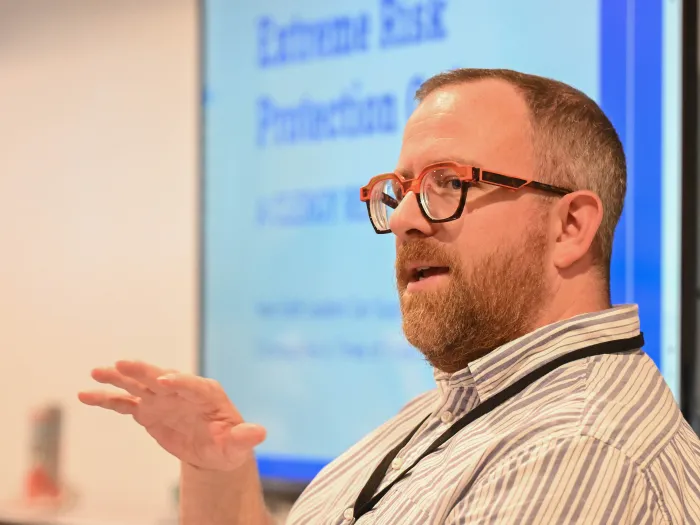
“Talking about the United States involvement/recent war on Venezuela is a really good place to start talking about how we can disentangle ourselves from the malignancy of empire,” said the Rev. Ben Daniel, pastor of Montclair Presbyterian Church in Oakland, California.
Daniel was joined by a handful of other speakers, including Ricardo Corzo Moreno of Caracas, Venezuela, who was at home in early January when the U.S. swooped in to capture President Nicolas Maduro (and wife Cilia Flores), who has pleaded not guilty to drug and weapons charges in New York.
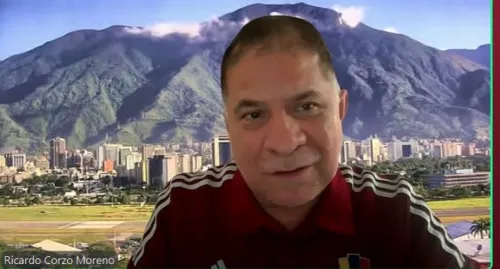
“I'm speaking right now, from my small apartment,” said Moreno, who attends Iglesia Principe de Paz of the Synod of the Presbyterian Church of Venezuela. “All the buildings around were trembling, windows falling to the floor, senior citizens who live alone, my neighbors, screaming.”
To minimize the impact on his 8-year-old daughter, Moreno turned up “The Lion King” to full volume “to protect her from what's going around,” he said.
His story brought home the fact that Venezuelan officials and military were not the only ones impacted by the United States operation, which was aimed not only at deposing Maduro but taking control of Venezuela’s oil.
“It’s people, real people, who are affected,” said Moreno, who lived in Los Angeles from 1991 to 2015. He has held various positions in the Presbyterian Church (U.S.A.), including commissioned ruling elder with San Gabriel Presbytery in the Spanish language ministry of Pasadena Presbyterian Church.
During the webinar, Moreno noted that he personally knows of two people who died as a result of the U.S. military action. He also said that a facility housing pharmaceuticals and equipment for people with kidney problems was hit. Some schools also were impacted, too, and his church temporarily moved online, he said.
There are "close to 500 homes and apartments that were damaged by the bombs and missiles,” he said in an email this week. “According to the Venezuelan government, 115 people were killed, and over 150 were injured.”
However, on a more positive note, his daughter has been able to return to school after some repairs were made. “The Education Ministry decided to reopen the elementary school and the high school,” he said in correspondence. “They were able to clean and fix the areas that were damaged. The missiles and bombs landed very close to the school. … Many parents are not sending their kids.”
Moreno was part of a webinar called “Faith Perspectives from Venezuela: A Conversation with Peace Activists, Pastors, and People Connected to the Region." Speakers educated viewers about the effects and potential impacts of the U.S. attack, which the Presbyterian Church of Venezuela has called “a disastrous violation of Venezuela’s sovereignty.” (The Rev. Jihyun Oh, Stated Clerk of the General Assembly of the PC(USA) and the Executive Director of the Unified Agency, also has released a statement.)
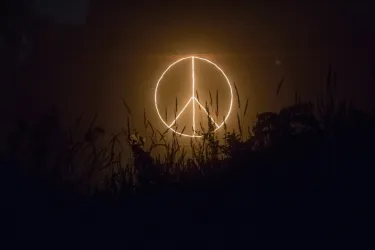
In addition to sharing stories and thoughts being offered during the webinar, participants offered resource suggestions to help people who want to talk about Venezuela and related topics, such as colonialism, at church and beyond.
The Rev. Bruce Gillette, an organizer of the webinar, recommended “How to Preach Peace (Without Being Tuned Out),” written by Richard G. Watts and updated by Mark Koenig. Gillette also recommended utilizing hymns, such as those written by his wife, the Rev. Carolyn Winfrey Gillette, and other options.
“I think including it in the pastoral prayer can be very helpful, lifting up specific individuals that are going to be impacted by this, whether it's a mission worker (or someone else) … and have a card for them that the members of the congregation sign on Sunday saying you were remembered in the prayers of the people,” said Gillette, a Presbyterian pastor and co-moderator of the Joint Justice Team for Cayuga, Syracuse and Susquehanna Valley Presbyteries. “On Sunday after church, consider having an offering of letters. This is something that Bread for the World pioneered 30 years ago.”
Other speakers at the webinar included the Rev. Sarah Henken, a former regional liaison for the Andean region who lives in Barranquilla, Colombia, and who previously spent time in Venezuela, where she got to know the Presbyterian Church of Venezuela. She condemned the U.S. attack.
“This was 100% not OK to think that you can just decide for another country what to do and then blatantly be doing it for your own, like, personal economic benefit,” she said. “In no way was this okay, but a lot of people want to be able to justify it.”
She also noted that “I was frightened after hearing the news of the (U.S.) attack” and seeing how the U.S. government has been “pushing the limits and crossing the line continuously” and wondering if they might decide to take similar steps in Colombia.

Fellow guest the Rev. Dr. Neddy Astudillo, a Venezuelan eco-theologian and Presbyterian pastor living in the United States, noted that perspectives vary, depending on the population (Latino churches, Anglo churches, people in exile, people in Venezuela). “There is a lot of pain, frustration, fear, hunger, hunger for justice, that need to be respected and held with compassion,” said Astudillo, a U.S. citizen who lived in Venezuela until age 24.
She offered these things to consider:
- Most Venezuelan people want a prosperous Venezuela but there is debate about how to get there.
- Maduro took repressive measures to stay in power as president.
- Being in solidarity with Venezuelan people should include approximately 600,000 in the U.S. who recently lost their temporary protected status and are living in fear daily of being deported and separated from their families, jobs, careers and properties. “Let's defend immigrants rights while they are here in this country.”
- A lot of Venezuelans who celebrate U.S. military actions do so because they are tired of international diplomacy efforts that have brought no fruit.
- She worried about the potential impact of the presence of U.S. companies on things like food security and whether people will have to buy U.S. products. If so, who will produce these products, who will make sure that people get paid fair wages, who will provide medical insurance? Where will the waste from products flow? Who will be responsible for building waste management facilities?
- She urged U.S. citizens to get familiar with the history of economic intervention and U.S. sanctions in Venezuela. She also mentioned leaving behind the era of colonialism and empire building.
- If Trump is trying to turn Venezuela into “a country of mere consumers,” then “a faithful response should consider divesting from these oil companies — boycotting oil," she said, adding that the military intervention in Venezuela touches on "the limits of the planet.”
- A faithful response also should include “searching for a just transition, not just an energy transition, but where the sovereignty of the countries and lands and people and government is respected and when we all seek a better life and a sustainable future.”
Bill Galvin, counseling director for the Center on Conscience & War, discussed various issues surrounding military service and the U.S. draft.
He noted that people who are conscientious objectors — those who because of ethical, moral or religious beliefs believe it’s wrong to participate in war — cannot be drafted and forced to go into the military.
However, “it's not so easy as just saying, ‘Hey, I don't believe in war,’” said Galvin, who encouraged pastors to talk about such issues with young people in their churches.
He also suggested that people keep track of their engagement and write up a statement of what they believe. That's because "if the draft did come back, people would have a very short period of time to actually submit an application and go before a draft board," he said. "You need to show through things you have done with your life and through other folks who can testify about your integrity that this is an important part of who you are, so that you can prevent yourself from being forced into a war that you don't believe in.”
You may freely reuse and distribute this article in its entirety for non-commercial purposes in any medium. Please include author attribution, photography credits, and a link to the original article. This work is licensed under a Creative Commons Attribution-NonCommercial-NoDeratives 4.0 International License.