Dear Lovers of Food and Justice, I hope this letter finds you well!
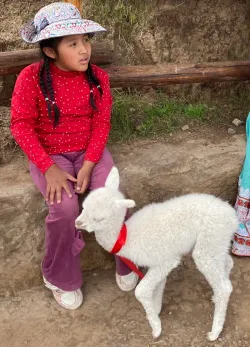
On the edge of the Colca Canyon in Peru, I met a girl, her grandmother, and their alpaca named “Lily.” Near Arequipa and in the mountains of the altiplano, alpacas are multitudinous. I’ve read they number about four million, and nine of ten of all the world’s alpaca live in Peru.
Alpaca have partnered with humans for millennia. They are sometimes referred to as “walking gold” because of their value to Peruvians, for exquisitely soft wool, leather, transport of goods (more so in the past), fertile manure, and protein.
After meeting Lily, I hesitated to order a potential parent of Lily from the menu, but finally I did and thanked the gods. Alpaca is the most delicious meat I’ve ever had – and healthy too.
Alpacas are deeply important to Peruvians because they provide a sustainable source of food, fertility, leather, wool, and income for communities living high in the rugged Andes. They’ve been part of Peruvian life for thousands of years and the Incas revered them. Even today alpacas remain a symbol of resilience, tradition, and the enduring spirit of the Andes.
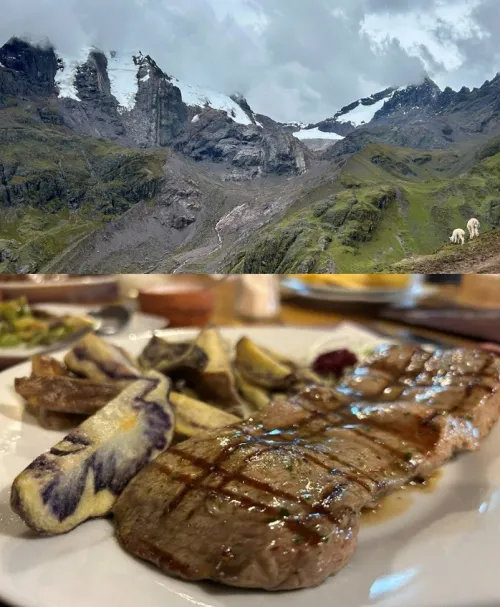
Peru’s foodways hold both beauty and brutality side by side.
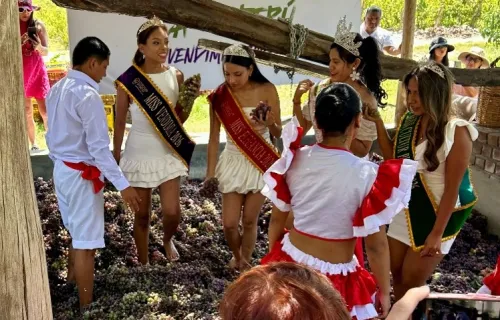
On the way south to Arequipa, our bus stopped at a grape plantation that had at one time housed hundreds of enslaved humans taken from their homes in Africa. Lima had been a major port and hub for the South American slave trade, and enslaved people helped build the agricultural, mining and overall economy of Peru. The history of slavery is hidden away like the tunnels built under the plantation house, presumably used as a place of punishment and to hide enslaved persons to avoid taxation. Now making their money from the sale of pisco brandy and hosting buses of tourist, the sun was out and spirits were high. Some fellow riders joined in the barefoot grape crushing, but I kept my sandals on. I hope the dirt between toes is sanitized during the distilling process.
Salt Mines of Maras, Peru
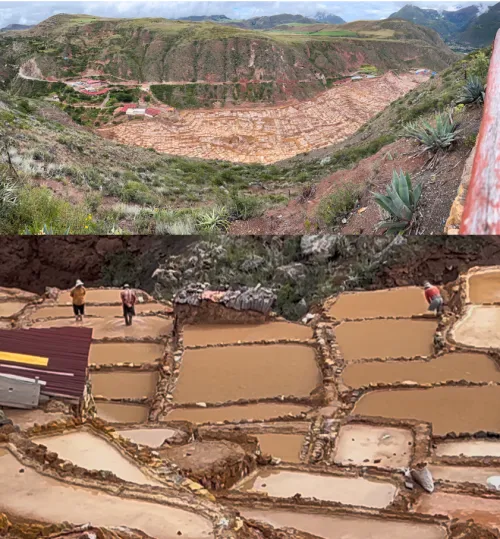
The salt mines of Maras were one of the more fascinating places I visited in Peru. Thousands of shallow pools were carved into the side of a steep mountain valley, all in shades of white, gold, and rust. From a distance, they looked like a giant patchwork quilt draped across the valley.
I learned that the families have been harvesting salt there for centuries, using methods that predate the Inca civilization. Super salty water flows from a spring higher up the mountain and slowly fills each little terrace. Each family cares for a handful of pools like tiny gardens. As the water evaporates in the intense Andean sun, crystals of salt are left behind. This unique mountain industry has been sustaining families for centuries.
A Tad More about the Centro Bartolomé: Solidarity Economy
These issues of extraction and economic survival came up again in conversations with folks at Centro Bartolomé de las Casas (CBC). The vision being cultivated by this non-governmental organization in Peru reminds me of the economy described by Jesus Christ in the Gospels.
CBC leaders call this the “solidarity economy” — an alternative to economic systems built on extraction, endless consumption, commodification, and cutthroat competition. Instead, it centers the common good: reciprocity, fairness, ethical trade, shared responsibility, and care for the earth. Rather than leaving people’s basic needs entirely to the market, a solidarity economy focuses on meeting needs collectively and building more accessible forms of exchange, especially for communities pushed to the margins. At its heart is a simple but powerful idea: the economy should help create dignified lives for people while also respecting ecosystems and the more-than-human world.
Things I Love: Art and Andean Condors
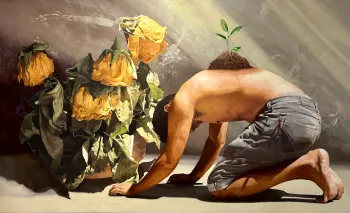
During my few days in Lima, where I had the pleasure of meeting up with Rev. Jed Koball, PCUSA’s Global Ecumenical Liaison for Latin America and the Caribbean, I stopped by a museum dedicated to Jade Rivera, a Peruvian artist I had not heard of. Jade is a fabulous muralist, painter, and visual poet who defies categories. Born in 1983, he started painting when he was seven and is almost entirely self-taught. This oil painting called Renacimiento (“Rebirth”) really struck me, as did so many of his magical realist murals and paintings. You can find more of his works starting here.
The other thing Peru reminded me was how much I love birds – from iridescent hummingbirds to the largest bird of prey in the world, the Andean condor. I shared a photo of one in silhouette last week and here are a couple sailing the thermals of Colca Canyon.
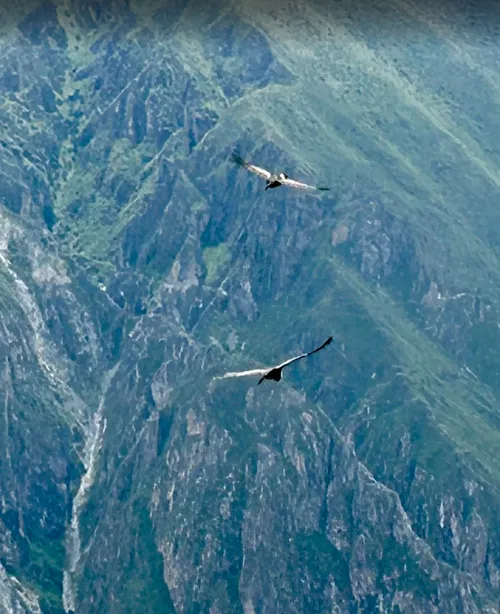
Besides their enormity – nearly 11 feet of wingspan and up to 33 pounds – the Andean condor can live 70 years and has unique breeding characteristics. Monogamous, these condors mate for life and reproduce by laying a single egg typically every other year. Their nests are simple and reused, but they are often hidden in caves or protected from land animals on the sides of steep cliffs. This couple repeatedly visited a distant spot on the edge of the canyon cliff, which I assumed was the nest. They appeared to go out hunting and return to the spot presumably to feed a newborn or fledgling offspring. Their beauty and size make one squeal with awe as they fly past.
Garden Update
Sweet potatoes are my favorite vegetable to grow! Last month we ate the final tuber from last year’s crop, and each spring I grow new slips (sprouts) to start the new crop.
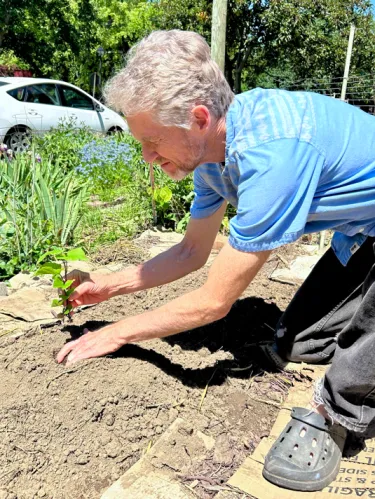
Photo: Haeja Kang
Once the soil warms up, I bury the slips into small mounds and protect them from rabbits and squirrels with handmade cages.
Refugee farmers in Louisville have shown me how to harvest a portion of the leaves and use them in stir-fry and soups. Sweet potato leaves are delicious and nutritious. And speaking of nutritious…
Pro foraging tip: Lamb’s quarters, considered a weed by most people, grow prolifically and are a super food, rich in calcium, vitamin A and vitamin C. They taste like spinach and cost nothing!
Happy gardening and see you next week,
andrew
P.S. Ah! One exciting bit of news before I go… Remember that anti-corporate capture bill I mentioned in my first letter? Well, it passed and now awaits the governor’s signature! This is the first law in the nation declaring that corporations are “artificial persons” with no right to spend money in elections. Senate Bill 2471 is a bold challenge to Citizens United, which has helped funnel billionaire money into politics ever since 2010.
P.P.S. And finally, a fitting poem for the month, from Samuel Cobb (1675–1713):
May Time
Sweet is the fragrance in the air,
The cool and laughing breeze;
The gardens now are wondrous fair
With blossoms on the trees.
The hills and valleys now are green
And all the world is gay;
And nestlings carol loud and clear
To welcome you, sweet May.
Learn more and donate to the Hunger Program via our website at pcusa.org/hunger.
You may freely reuse and distribute this article in its entirety for non-commercial purposes in any medium. Please include author attribution, photography credits, and a link to the original article. This work is licensed under a Creative Commons Attribution-NonCommercial-NoDeratives 4.0 International License.