오늘의 선교 연감
Mission Yearbook: Faithful Resistance to ICE’ panel discussion draws hundreds
Nearly 400 people joined the recent “Faithful Resistance to ICE” discussion among three Presbyterian clergy who’ve cared for their immigrant siblings in Minneapolis and Chicago by standing against actions taken by Immigration and Customs Enforcement officers.
The PC(USA)’s Office of Public Witness hosted these pastors for a 90-minute webinar:
- The Rev. Margaret Fox, associate pastor for adult ministries at Westminster Presbyterian Church in Minneapolis
- The Rev. Quincy Worthington, the pastor of Highland Park Presbyterian Church near Chicago
- The Rev. David Black, senior pastor of First Presbyterian Church of Chicago.
Elinor Hiller, an OPW intern, asked questions of the panelists, starting with one about recent actions they and their churches have taken.

First Presbyterian Church of Chicago began soon after President Trump’s second inauguration, Black said, by organizing a hundred-person working group to support vulnerable neighbors. His own involvement at the Broadview Detention Center began in August, and he was struck on the head with pepper balls the following month. “I’m so proud to stand shoulder to shoulder with Quincy and so many other clergy,” Black said. “It has been extraordinary to witness, and it’s given me a lot of hope.”
Fox, who preached an extraordinary sermon the day after Alex Pretti was killed, also emphasized the importance of relying on longstanding ministry partners. Because it expanded its building two years ago and constructed underground parking. Westminster Presbyterian Church was able to host an interfaith service in late January with just 48 hours’ notice.
“I got involved specifically because of David’s hard work rallying clergy,” Worthington said. “I started going to Broadview at his invitation and saw excessive violence going on against people practicing their First Amendment rights.“
“It’s hard to think Jesus wouldn’t have something to say about that,” he said. “It has been about coalition work and figuring out how we can support [neighbors] at the congregational level. We have tried to match people with their gifts in order to serve the kingdom.”
Fox said she sees protest “as an act of witness. There is something to being visibly present as clergy. It’s a reminder there is another way of being in the world, as a connector or anchor, especially in heated moments.” Ministry “is something we are all called to. It’s not just for those ordained as teaching elders.” In Minneapolis, “the movement has been a leader-full movement of people of faith and people of no faith.”
Her first act with Operation Metro Surge was to serve tea as people emerged from an Islamic center following prayer. “It was hospitality and love, and to receive that back from our neighbors mattered a great deal,” Fox said. “Showing up in an embodied way really matters right now.”
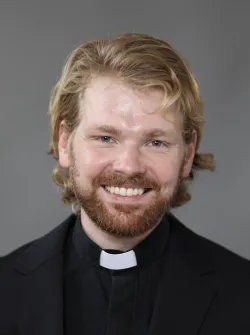
Black said it’s meaningful for activists to see the moral tradition that clergy represent. Wearing a clergy collar in spaces of activism “signifies my obedience to a larger system of democratic authority.”
“When I show up in this way, people know there are people holding me accountable,” Black said. “It helps to reinforce trust when I walk into situations.”
“I am a big bearded white guy covered in tattoos who has cauliflower ears, and I’m not a Proud Boy,” Worthington said. “The clergy shirt isn’t magic, but it communicates things.”
“It’s important that people see the church of Jesus standing where Jesus would be standing,” Worthington said.
Asked about what role the church ought to play in moments of injustice, Fox said she appreciated a sermon preached around Martin Luther King Jr. day by the Rev. Anna Kendig Flores of the Presbytery of the Twin Cities Area. The sermon had three touchpoints: being embodied, cultivating compassion and imagination, and moving not too fast and not too slow.
While Worthington said he usually sees the world “in Technicolor,” some things are binary. One is “we view people either as precious children of God or we don’t.”
“Our wants and desires and dreams for our lives need to be laid at the foot of the Cross” in order to follow Christ, he said. “I try to take that call to discipleship seriously, and when I do that, I find it nearly impossible to remain silent in the face of such dehumanizing practices.”
Mike Ferguson, Editor, Presbyterian News Service (Click here to read original PNS Story)
Let us join in prayer for:
Heather von Marko, 1001 NWC Apprentice, 1001 New Worshiping Communities, Presbyterian Life & Witness
Rachel Doll, 1001 NWC Apprentice, 1001 New Worshiping Communities, Presbyterian Life & Witness
Let us pray:
Dear Lord, ruler of all nations, make our woeful hearts sing. Empower us to be faithful witnesses to the truth of the gospel. Give us the grace to bear one another as we encounter a world that seems to be slipping away from the vision of the kingdom you have promised us. Amen.