Shared values between folks in the Twin Cities and Ukrainians
Historian Timothy Snyder packs Westminster Presbyterian Church for his ‘A Blueprint for Freedom’ talk

LOUISVILLE — Dr. Timothy Snyder, whose insightful and often brief books include “On Freedom” and “On Tyranny,” delivered an hour-long “Blueprint for Freedom” talk last week as part of the Westminster Town Hall Forum at Westminster Presbyterian Church in Minneapolis, Minnesota. Watch Snyder’s address here. He’s introduced at the 32:45 mark.
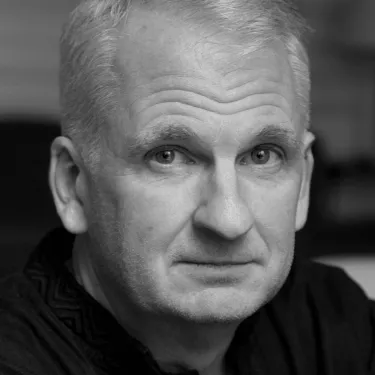
Snyder is the Temerty Chair in Modern European History at the University of Toronto. He got those who packed the sanctuary cheering when he compared Ukraine’s brave defense against the sustained Russian attack with the response people in the Minneapolis area made to Operation Metro Surge.
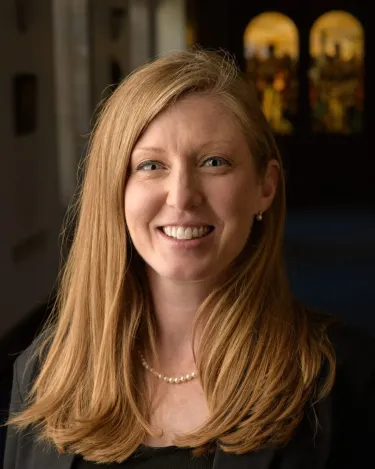
“Other people do the work, suffer and take risk, and we just move on with our lives,” Snyder said in response to a question by the Rev. Dr. Jessica Patchett, Westminster Presbyterian Church’s senior pastor. In the United States, most of that work over the past 150 years has been done by African Americans and women, according to Snyder.
“The rest of us say, ‘it’s a democracy,’ and we take it for granted. In today’s world, Ukraine is a very strong example of this,” Snyder said. For nearly five years, Ukraine has been fighting “the largest and most terrible war in the world since 1945” with “incredible resourcefulness but also with incredible grief and suffering.”
“The fact that they are doing so, in my view, has bought the rest of us a lot of time,” Snyder said. “Had they not resisted and had they lost that war right away, not only the democracies in Europe but the idea of democracies around the world would be under much greater strain than it is now. We have an enormous and growing debt to Ukraine.”
“The ethical thing is, they are showing that people can take enormous risks, and others are taking them too,” he said. “The Ukrainian state has been much more functional than people thought. … There are hundreds of little organizations — groups of friends or groups of people who trust one another because of previous experience — who are organizing support for soldiers on the front. Without civil society, that couldn’t happen.”
“I am really struck by how similar some of these things are to the Minneapolis-St. Paul area,” he said to applause. “The response in both cases was surprising to the people who were doing the invading. In both cases, the response involved horizontal self-organization that was possible because of, in major part, relationships of trust that had arisen in previous moments of stress.”
“Something else is fundamentally true about both cases: The reason you were invaded was because your version of politics kind of works,” he said, and again those in the sanctuary applauded. “It works to have buses that run and to have big parks. It works to integrate various native and immigrant communities. … They aren’t easy, but they work.”
Ukraine “had to be invaded because it was working,” he said. “They showed you could have democracy in a post-Soviet country, that people could go to elections and have freedom of speech. That’s why Ukraine had to be invaded — not because there was anything wrong with it, but because it was basically working. I have been struck by these fundamental similarities.”
“If somebody resists, it gives everybody else a chance,” Snyder said. “We would be living in a very different world if Ukraine had not resisted. We would also be living in a very different country if this area had not organized and resisted.”
Snyder said he keeps pairs of qualities — cowardice and courage, greed and generosity — at the tip of his tongue.
“Getting across empire and into something that is anti-imperial takes work. You have to engage with the descendants of the people you enslaved and the descendants of those whose land you stole,” he said. In addition, the only answer to the levels of greed that many of the nation’s billionaires are exhibiting is government, “the right kind of government.”
“Only the state can tax and regulate and break companies up,” Snyder said. “In the interest of freedom and democracy and getting past empire, you have to have a state which has the upper hand on the big companies and on the billionaires. Only a government animated by some idea of freedom can fix it.”
Snyder traced freedom of speech back to the Greek playwright Euripides. It was valuable then, and it’s valuable today “because it’s physically dangerous to criticize the powerful,” he said. “If we’re seriously concerned about freedom of speech, we start with the people whose voices are the quietest — who are at the most risk, because again, freedom of speech is about the weak being able to criticize the strong.”
“Government has to protect freedom of speech beginning with the most vulnerable and ending with the least vulnerable, and the [U.S.] Supreme Court has that exactly backwards,” Snyder said. “The way they define free speech is essentially wealthy people who can afford to bring cases to us, and their money must be an expression.”
“You have to act to prepare people to express themselves, and that means provide them with facts, science, and, above all, local journalism,” Snyder said. “If people are going to be free speakers, they have to learn the basic things about the world around them.”
Watch recordings of previous Westminster Town Hall Forums here.
You may freely reuse and distribute this article in its entirety for non-commercial purposes in any medium. Please include author attribution, photography credits, and a link to the original article. This work is licensed under a Creative Commons Attribution-NonCommercial-NoDeratives 4.0 International License.