Young activists discuss how the church can support them in advocacy work
'Trust us. Let us do the work and do the work with us,' says panelist
DECATUR, Georgia. — From humanitarian concerns in Cuba and the ongoing war in Gaza to LGBTQIA+ rights, healthcare access and support for small businesses, young adults gathered at Columbia Theological Seminary on Oct. 24 to discuss the justice issues shaping their generation and the role faith plays in motivating their advocacy.
Watch young adults speak about the advocacy issues they care about most.
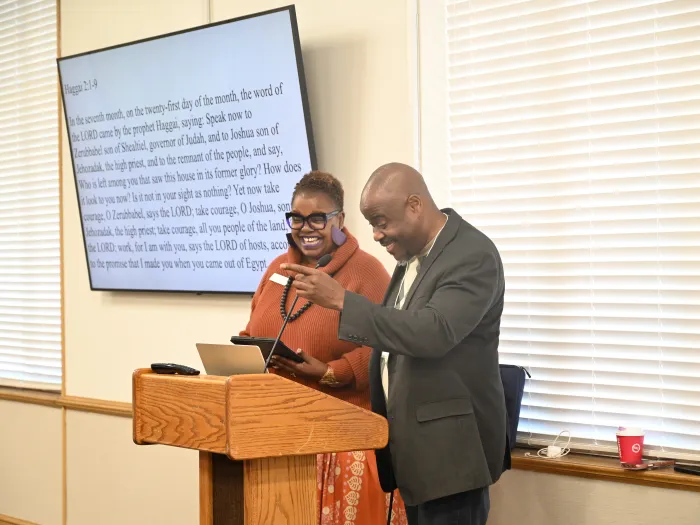
The panel discussion, held as part of the Jesus and Justice Young Adult Advocacy Conference sponsored by the Presbyterian Church (U.S.A.)’s Office of Public Witness, featured six young adults speaking candidly about the intersection of faith, activism and church leadership before an audience of roughly 30 conference participants.
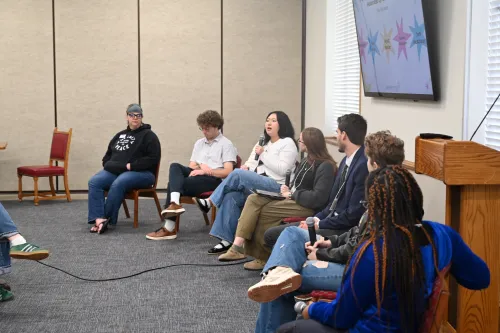
Moderated by Olivia Phelps, a Young Adult Volunteer with the Office of Public Witness, the conversation highlighted both the diversity of issues that matter to young adults and the common conviction that Christian faith demands engagement with the world beyond church walls.
"For me, faith asks me to dream beyond the constraints of what we think is politically viable," said Madeline So, a Young Adult Volunteer with the Presbyterian Ministry at the United Nations. “It allows me to speak for what’s true and what Jesus said.”
So, who has worked on issues including Israel-Palestine, the Korean Peninsula and Cuba, later reflected on how her Korean American identity informs her advocacy. "Every single colonized person in this world has a similar story of being torn apart," she said, connecting her family’s experience to struggles for peace and self-determination around the globe.
For Wyatt Betler, a student from West Virginia who has worked with the Office of Public Witness on humanitarian issues in Cuba and Israel-Palestine, advocacy is rooted in faith’s call to uplift marginalized voices. “I believe that focusing on issues that are near your heart and giving a voice to those who don’t have a voice is the most true form of faith that you can have,” Betler said.
He shared a particularly moving experience accompanying a Cuban Presbyterian minister to meetings in Washington, where the pastor described severe shortages affecting families in Cuba. “Hearing the people who are experiencing the crisis every single day, and to hear their voice and hear them beg and cry and say, ‘Please, we need help,’ I think that was one of the most moving moments of my fellowship,” Betler said.
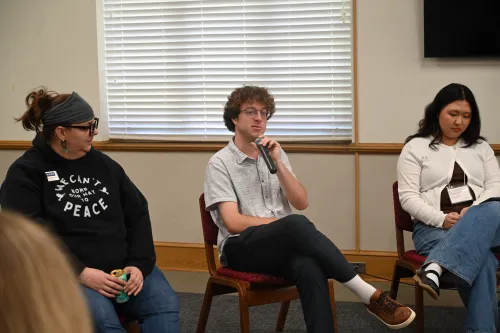
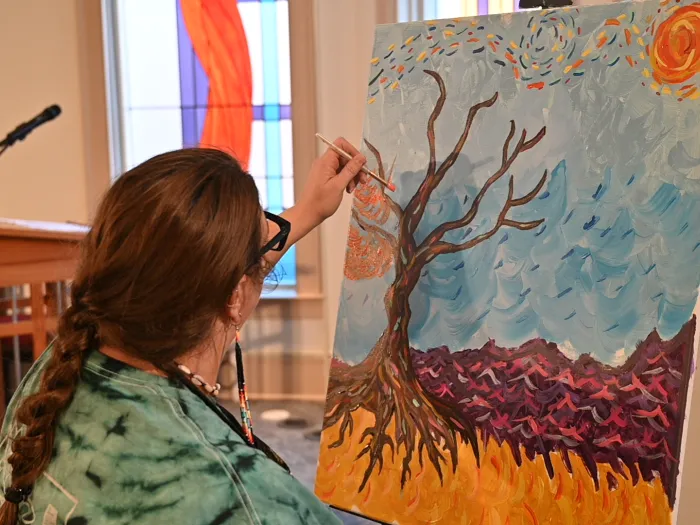
Lauren Christian, a Columbia Theological Seminary student, worship intern and artist, grounded her understanding of advocacy in the doctrine of the Imago Dei. “How do I see the holy and divine in others?” Christian asked. “How do I acknowledge and live my life in such a way that provides human dignity and acknowledges the fact that you bear the image of God as well?”
Others described how advocacy emerges from lived experience. Jeff McAllister, an Iowa State University student, spoke about participating in protests supporting LGBTQIA+ rights. One of their protest signs read, “My church is more affirming than my government.” They said public demonstrations provide opportunities to challenge assumptions about faith communities.
“In a world of people weaponizing Christianity as hatred, we, with our faith, are using that as a reason to go and do advocacy and justice work,” McAllister said.
Sam Putt, who served as a Presbyterian Ministry at the United Nations summer fellow, connected international concerns to Christian responsibility. Referencing a sticker that read “Jesus is Palestinian,” Putt said Christians are called to recognize Christ’s presence in all people. “One of the ways we can do that is through seeing Jesus in every single person, no matter where they came from,” he said.
Meanwhile, Kaciney Patterson, a local young adult who described herself as a “recently baptized member” of Hillside Presbyterian Church in Atlanta, emphasized advocacy through community care, particularly helping people navigate access to health care and other resources. Patterson also stressed the importance of encouraging young people to participate in church life and ministry.
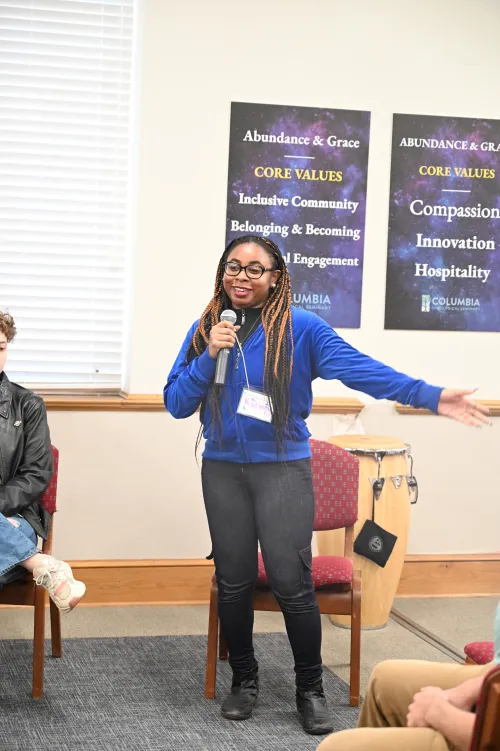
Throughout the discussion, panelists argued that young adults bring urgency, honesty and a willingness to confront difficult issues. “We’re sick and tired of being sick and tired,” Putt said. “We’re showing up. We’ve got this drive.”
The panel’s liveliest exchange came when the Rev. Dr. Kris Schondelmeyer, one of the Moderators of the 227th General Assembly (2026), asked how the church might bridge a growing divide between young people whom he said are “often grieving the way things are, and older generations grieving the way things used to be.”
In response, audience member Daniel Durr, a young adult from Hillside Presbyterian Church in Atlanta, encouraged intentional conversation across generations. “Planting seeds, knowing that you have that mutual respect,” Durr said. “An older person and a younger generation coming together and having that conversation ... can fill in that gap.”
As the conversation turned toward what congregations can do to support young adults, panelists repeatedly returned to themes of trust, opportunity and shared leadership.
“I’ve been so blessed to be uplifted and to be heard and to be believed and trusted,” So said.
McAllister urged churches to meet young adults where they are, including through nontraditional gatherings and community-building opportunities outside Sunday worship.
Christian distilled the message into a direct challenge for church leaders: “Trust us. Let us do the work. Yeah, do the work with us.”
Betler echoed that appeal in the panel's closing moments. “Give us the opportunity and the resources because we have the drive, we have the motivation,” he said. “We don’t know a lot of times where to start.”
The call resonated across the panel: Young adults are ready to lead, they said. What they need now are opportunities, support and a church willing to walk alongside them.
-
 What justice issue should the PC(USA) be more engaged in? — Wyatt
-
 What justice issue should the church be more engaged in? — Daniel
-
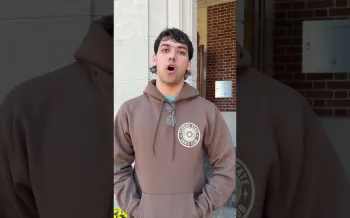 What justice issue should the church be more engaged in? — Joshua
-
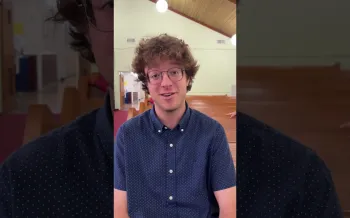 What justice issue should the church be more engaged in? — Sam
-
What justice issue should the PC(USA) be more engaged in? — Wyatt
-
What justice issue should the church be more engaged in? — Daniel
-
What justice issue should the church be more engaged in? — Joshua
-
What justice issue should the church be more engaged in? — Sam
You may freely reuse and distribute this article in its entirety for non-commercial purposes in any medium. Please include author attribution, photography credits, and a link to the original article. This work is licensed under a Creative Commons Attribution-NonCommercial-NoDeratives 4.0 International License.