COP31 closes with no outcome document
Still, we’re called to continue to fight for God’s holy and radical justice here on Earth
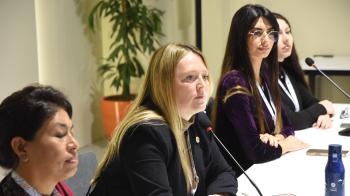
Anyone who has attended a United Nations Climate Change Conference (COP) will tell you it’s an overwhelming experience. The venue is abuzz from before the sun rises until after it sets with a schedule bursting with negotiations meetings, side events, coordination meetings and networking opportunities. The corridors ring with excited and anxious chatter. How could any event that welcomes more than 100,000 people, including high-level officials, corporate representatives, local activists and more, hailing from every corner of the globe, be anything less than overwhelming?
Critics of COPs often call the conference “irrelevant.” Especially in recent years, COP has been known for featuring a lot more talk than action. Parties spend countless hours tediously negotiating language in the texts for mechanisms, roadmaps and action plans that often have no international legal binding. When roadmaps and plans are agreed upon, they often lack the funding mechanisms and pledges needed for implementation.
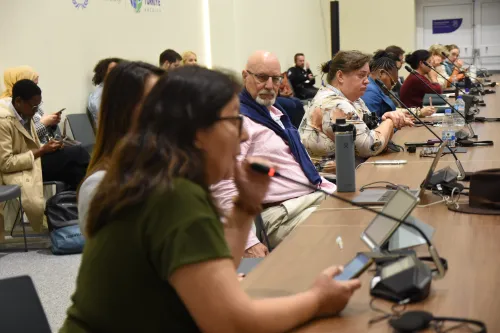
It is also important to acknowledge that delegates spend a lot of resources, including natural, financial and time, to attend the conference. COP31 concluded on Sunday, Nov. 22 — two full days after it was scheduled to end — without adopting an outcome document. Parties were unable to reach consensus on the role of fossil fuels in the climate crisis and the need for an immediate transition away from global fossil fuel dependence. This is only the third COP, following COP6 in The Hague and COP15 in Copenhagen, to end without adopting an official outcome.
However, when we think of COP as overwhelming, there is an obvious parallel: the climate crisis is unimaginably overwhelming. 2026 is expected to be one of the hottest years in history and has also recorded the highest global mean sea level. In August, Nepal experienced catastrophic flooding, killing more than 1,400 people and affecting more than 84,000, and summer heatwaves in Europe caused more than 30,000 deaths. In September, a United Nations Environmental Program report found that crossing the 1.5 degree Celsius global warming threshold is now inevitable. These facts and tragedies form just a small part of the overwhelming amount of evidence we currently hold about the dangers and urgency of the climate crisis.
When faced with an overwhelming situation, the easy response is to retreat into inaction — to resign to the idea that the problems at hand are too big and any energy spent attempting to fix them would simply be wasted. However, as people of faith, we believe that enormous and staggering problems are not an excuse for inaction. Rather, we believe in an omnipotent God who not only surpasses human understanding and ability but calls and empowers us to fight for God’s holy and radical justice here on Earth. Instead of resigning to inaction when confronting overwhelming circumstances, we can reimagine our overwhelm as a call to action and a way to live out God’s love.
Though COP and the UN are often criticized for being ineffective and slow-moving in the face of urgent needs, multilateral organizations and cooperation are a critical tool for combatting global crises. One of the most powerful qualities of the UN is that it holds a unique role as a global convening space. Parties who would otherwise have no reason or desire to engage in dialogue come together to discuss contentious but important topics, such as the climate crisis. Though the UN is certainly imperfect, it serves as a critical forum where governments, civil society members (including people of faith), intergovernmental organizations and the private sector can come together to imagine a better world and how to create one.
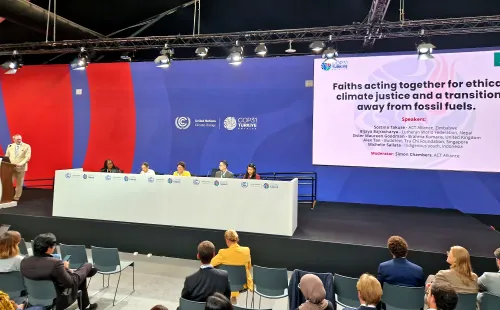
At COP31 this month in Antalya, Türkiye, we saw bold action from member states, demanding that the official COP outcome document outline steps to accelerate the global transition away from fossil fuels. When participants felt that this COP was not doing enough to confront the crisis at hand, thousands of people joined together to participate in a peaceful demonstration, highlighting the inadequacies of the conference, the need for polluting countries to pay their fair share in climate finance, and the intersections between climate justice and decolonization, labor justice, and human rights. Although the outcome was far from ideal, these brave individuals and member states provide reason for hope.
Although multilateral organizations and negotiations are an important tool in the fight against climate change, you don’t have to attend COP to champion climate justice. You can write to your elected officials, asking them to vote for legislation that protects the planet rather than harms it. The PC(USA)’s Office of Public Witness releases Action Alerts that provide guidelines and templates to write to your legislators.
You can also look into ways to reduce your carbon footprint, such as walking or using public transportation instead of a private vehicle, switching to more energy efficient appliances in your home and limiting heating and cooling use, and eating more plant-based foods. Presbyterians are also encouraged to look into having their church certified as an Earth Care Congregation.
Finally, as people of faith, we believe in the power of prayer in combatting even the most overwhelming of challenges. Pray for our elected leaders, the negotiators at international forums like COP, and those who are most impacted by the adverse effects of climate change, including Indigenous communities, people from developing nations, women, children and migrants.
Climate change is overwhelming and global progress and commitments are often lacking and disappointing. Still, this cannot be an excuse for inaction. In the words of Ugandan climate activist Vanessa Nakate, “Your actions matter. No action or voice is too small to make a difference.”
Clare Balsan is Advocacy Associate for the Presbyterian Ministry at the United Nations.
You may freely reuse and distribute this article in its entirety for non-commercial purposes in any medium. Please include author attribution, photography credits, and a link to the original article. This work is licensed under a Creative Commons Attribution-NonCommercial-NoDeratives 4.0 International License.