The dichotomy of COP
Are we in this together?
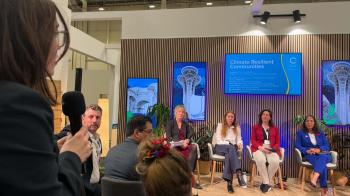
ANTALYA, Türkiye — Wednesday and Thursday of COP will see the opening of the World Leaders Climate Action Summit, which brings heads of state, other government leaders and international organization heads to translate climate pledges into real-economy action.
According to summit reports, 72 heads of state or other government leaders are expected to participate, though British Prime Minister Andy Burnham will be the only leader from a G7 country scheduled to address the Summit. These governments, as well as the many big names that are missing, will take to the dais under the pressure of a year of intense climate related disasters, including unprecedented heatwaves in Europe, deadly floods in Nepal and devastating wildfires in Indonesia.
The United States and China are the planet’s biggest economies and top producers of planet warming emissions, making their presence at climate talks crucial to the process. However, the U.S. hasn’t attended a Conference of the Parties under the current administration and in 2026 the U.S. pulled out of the UN Framework Convention for Climate Change and the Paris Climate Accords. China will be represented by Vice President Han Zheng. These missing leaders seem to be indicative of an overall dichotomy present at COPs generally: COP31 is happening in a time of increased scientific warnings paired with seemingly decreasing international political will.
Speaking at a press conference on the opening day of the forum in Antalya, Türkiye, Pacific Climate Envoy for Oceans, Inia Seruiratu, acknowledged the work of local city and state governments implementing the Paris Agreement, but said he hoped that the federal government's position on climate would change, and that the United States holds a “huge responsibility.” Seruiratu went on to say that “it is important to all of us. We are all in this together. It affects all of us.”
Urgency and action?
Urgency is a word that seems to have been used throughout many recent COPs, but it may be felt in Türkiye more than ever. In September 2026, the UN’s Intergovernmental Panel on Climate Change (IPCC) report officially acknowledged that the world is set to overshoot the 1.5°C warming limit within the next few years. Limiting global warming to 1.5°C remains a cornerstone of the Paris Agreement, yet under current policies and alternative near-term trajectories, exceeding that 1.5°C is now widely deemed unavoidable.
One key takeaway from this report is that mitigation and adaptation must advance together in a scientifically responsible way. In his remarks to COP31, IPCC Chair Jim Skea stressed that “Climate action without climate science is like a ship without a rudder. Robust evidence and comprehensive findings such as those provided by IPCC can steer effective climate action … IPCC’s findings, especially those on response options, stand the test of time and are as implementable today as they were yesterday and will be tomorrow.”
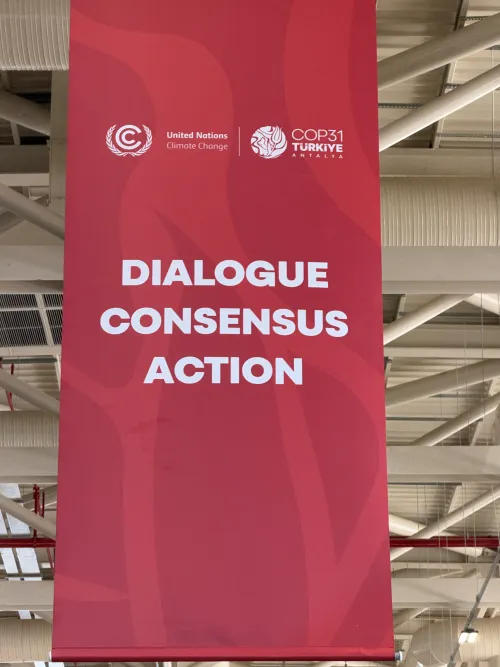
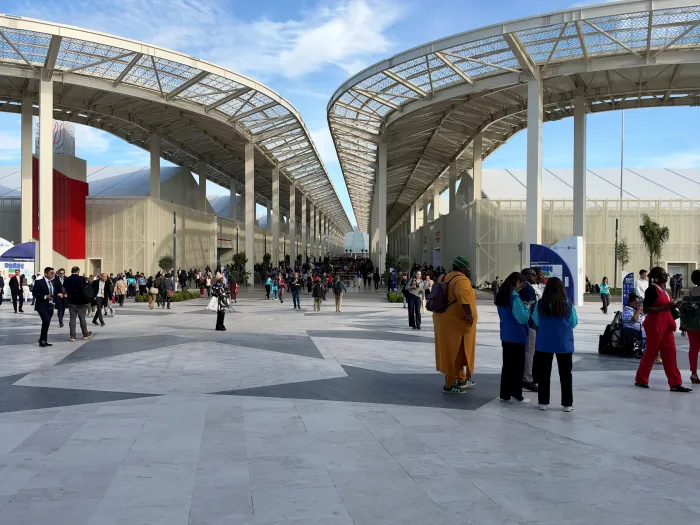
Signage in the COP31 venue communicates the aims of this COP “to advance dialogue, strengthen consensus, and accelerate climate action on a global scale.” Many sentiments around COP31 seem to lean more toward cautious realism rather than broad optimism. The shared Australia and Türkiye presidency has launched the COP31 Global Electrification Pledge (the "35 by 35" initiative), aiming to raise electricity's share of global final energy consumption from roughly 23% today to 35% by 2035. This is seen by some as having potential, but not unless there is a clear mandate for clean and renewable power sources versus fossil-fuel-derived electricity. Even in the face of this proposed pledge, activists and campaign groups like 350.org point out that both Australia and Türkiye are among the industrialized nations with no deadline to stop burning coal. Australia alone accounts for 56% of all new coal export projects planned worldwide.
Does COP matter?
Each year the effectiveness of COP is widely critiqued. Many argue that while it is a crucial forum for furthering international diplomacy and creating landmark agreements, the translation of consensus into real-world action that matches the urgency at hand is woefully lacking.
Another critique regards those whose voices are, or are not, being heard. While the number of participants at COPs has increased over the years, that increase can partially be attributed to the presence of the fossil fuel industry. The Guardian reported that more than 1,600 fossil fuel lobbyists attended COP30 in Belém, Brazil, representing roughly 1 in 25 participants and outnumbering every national delegation except that of the host country. Simultaneously, indigenous women leaders and delegates have released frameworks demanding direct, accessible funding for front-line environmental protection. Indigenous groups have also sought a more active voice in financing for the forests they protect.
While politics and diplomacy may lean toward agreements that fall short of what science says is required, there are still wins. UN climate talks have helped avoid the most catastrophic global warming including a reduced projected end-of-century global warming from roughly 4°C to between 2.6°C and 2.8°C. Though this is still well above the Paris Agreement's primary goal to limit warming to 1.5°C, it’s well below the initial projection of roughly 4°C.
As climate scientist Katharine Hayhoe reminds us, talking is one of our most powerful tools to combat climate change. Whether that’s as individual or a country, she says, “the world changes when people speak up, organize and demand change. That’s how we change the world: when we use our voices and work together to turn what matters to us into action.”
If you’d like help finding the words to talk about this in your own context, the Presbyterian Hunger Program offers resources to help churches do this. Another one worth checking out is Hayhoe’s Talking Climate Collaborative‘s “Start a Conversation” tool here.
Jessica Maudlin is Associate for Sustainable Living and Earth Care Concerns in the Presbyterian Hunger Program. Read her initial report on COP31 here.
You may freely reuse and distribute this article in its entirety for non-commercial purposes in any medium. Please include author attribution, photography credits, and a link to the original article. This work is licensed under a Creative Commons Attribution-NonCommercial-NoDeratives 4.0 International License.