
Dear Lovers of Food and Justice,
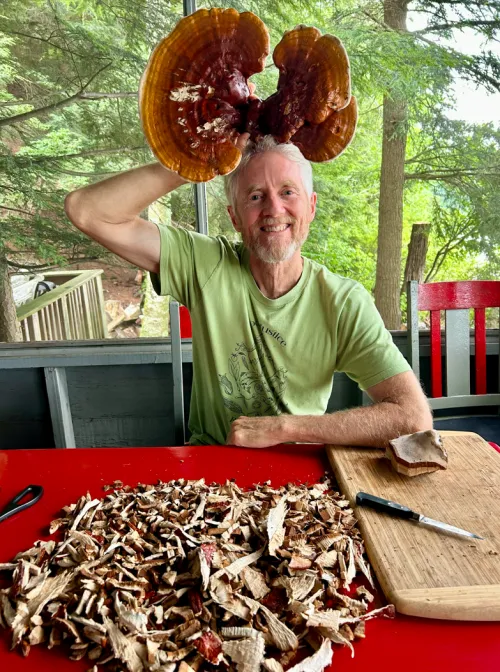
Don't you love human creativity? From music and poetry to painting—and now self-cleaning, living fabric adapted from fungus – our capacity to imagine never stops surprising me.
Yes, you heard that right. Chinese scientists have figured out how to make self-cleaning fabric from one of the world's more bizarre fungi—the same one I mix with Lion's Mane and Reishi in my morning mushroom brew. Cordyceps (Ophiocordyps sinensis) grows from the bodies of caterpillars on the Tibetan Plateau and throughout the Himalayas.
This fabric's ability to respond to damage gives fresh weight, at least for me, to the idea that all living things possess some form of sentience—or responsiveness to their environment—a worldview known as biopsychism. It's especially fascinating because I'm currently reading Michael Pollan's latest book, A World Appears: A Journey Into Consciousness, which explores consciousness in plants, microorganisms, and even nonliving matter.
The finished material is made from fungal pellets softened with glycol. When damaged, adding fresh fungal pellets allows it to literally grow new self-cleaning material.
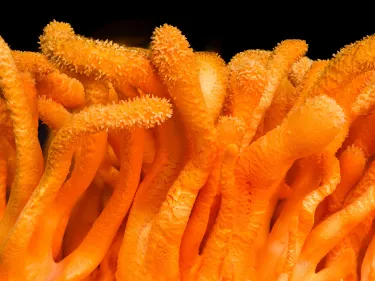
Researchers can even introduce engineered yeast into the fungal matrix to add color. Incorporating hyphae from Aspergillus niger, a melanin-rich fungus, also gives the fabric UV protection.
You won’t find it yet at your local Banana Republic, but the amazing possibilities of living fabric have come into view. [source]
And speaking of bananas, I’m excited about what’s happening in Hawai’i to bring back traditional foodways that overcome the dependencies of industrial agriculture.
Abundant Moloka’i
If you’ve been to Hawai’i, you know how beautiful it is. Our 50th state, which we usurped from the native population, is a gorgeous archipelago of 137 volcanic islands that rose above the skin of the Pacific Ocean ages ago. Settled by Polynesian voyagers roughly 1,000 years ago. Today, six of the main islands are inhabited, and Molokaʻi is one of the least visited – unless you happen to live there. 😊
After the terrible Maui wildfires in 2023, we in the Hunger Program were searching for ways to respond. Although they aren't on Maui, I discovered an inspiring organization on neighboring Molokaʻi: ʻĀina Momona. The Presbyterian Hunger Program, along with Self-Development of People and Presbyterian Disaster Assistance, has supported ʻĀina Momona, as well as two organizations on Maui and one advocacy group working across the islands.
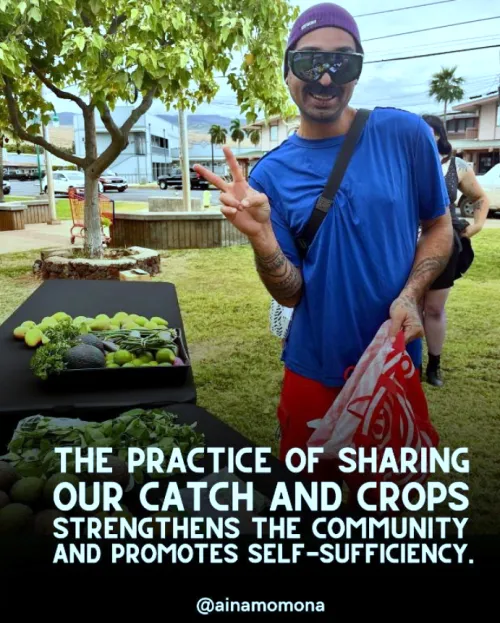
ʻĀina Momona is working toward food sovereignty by adapting traditional practices to modern realities; they are restoring native ecosystems, reducing erosion on steep hillsides, and strengthening food security by reviving traditional agroecological practices. Growing native fruit trees to stabilize the slopes and provide food is a core practice and they’ve planted over 70 food-producing trees including ʻulu (breadfruit), bananas, lemons, papayas, and soursop, as well as kalo (taro) – the tuber used to make their staple, poi.
ʻĀina Momona proudly hosts biweekly barter and trade events called, “Ko Koā Uka, Ko Koā Kai” where people of the uplands share their crops, and those from the seaside share their catch. ʻĀina Momona brings crops from their farm to trade with other community members, who also bring their home-grown and homemade products to barter and trade with.
Food security is increased (critical, since they currently rely on imports), and they are strengthening Moloka’i’s local economy with fresh, healthy, locally grown and caught sustenance.
Local businesses participate as well. OnoOno Sherbert trades its locally made sherbet for fresh produce, which becomes ingredients for future batches. Another family business, Ono Foods, exchanges gift cards to its food truck for locally raised produce and meats. Musicians perform throughout the event, creating space for neighbors to reconnect while celebrating the abundance of their island.
Together they're building a more resilient, locally rooted economy. That's food sovereignty—and mutual aid—in action.
From Moloka’i, let’s head northwest to the place where Nikolai Ivanovich Vavilov lived and discovered remarkable ways some plants practice mimicry to ensure their survival.
One Thing I Love
To be clear, I don’t love the fact that Stalin sent the Soviet agronomist, Nikolai Ivanovich Vavilov, to the gulag for not supporting the pseudo-scientific views of Stalin’s agricultural minister. Tragically, Vavilov died of starvation.
What I do love is a remarkable discovery Vavilov made in the early 1900s. He discovered a strange phenomenon: weeds adapt over time by mimicking the cultivated crops where they are growing.
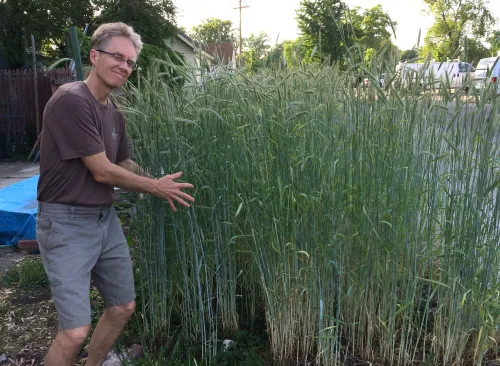
Take rye. Thousands of years ago, it wasn't a food crop at all – it was just a scraggly weed growing in wheat fields. Farmers pulled it out by hand and the rye that survived evolved gradually to look more and more like wheat. Eventually, it became such a convincing and nutritious replica that people began cultivating rye as a food crop, too.
Scientists call this Vavilovian mimicry, to honor the man who discovered it, and rye isn't the only example. The evolution of oats followed a similar path. Barnyard grass evolved to resemble young rice plants, while common vetch changed its seeds to look so much like lentils that threshing machines couldn't separate them. Even today's herbicide-resistant weeds may be playing the same game, evolving to mimic crop plants at the biochemical level. Nature is remarkably good at learning how to fool us. [The Light Eaters, p. 190]
The ways plants use mimicry are astonishing and hint at just how sophisticated they may be. Next week I'll share the story of the Chilean rainforest vine Boquila, whose remarkable adaptive abilities have puzzled scientists for years.
Garden Update
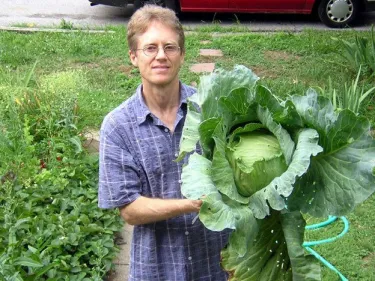
Well, I was excited to grow cauliflower this spring, but it was an utter failure. The bugs devoured the leaves, and not a single head ever formed!
Instead, I'm sharing a photo Haeja took 19 years ago of an impressively rotund cabbage from our garden. My new mantra is, "Make Brassicas Great Again!"
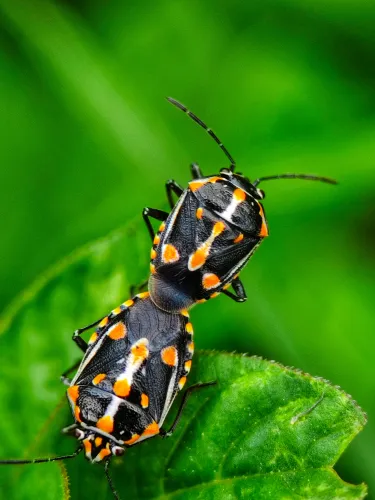
The one silver lining is that Harlequin cabbage bugs seem to love the cauliflower so much they've mostly ignored everything else—even the green amaranth has escaped relatively unscathed.
Nature keeps reminding me that resilience isn't about everything going according to plan. It's about adapting. One crop fails, another finds room to thrive, and the garden keeps adapting.
I'd love to hear how your gardens are doing this summer. If the blog comments aren't cooperating, send me an email – [email protected] – photos are always welcome!
Be well – and maybe try being a little more like a tree this week.
“Be like a tree. Stay grounded. Connect with your roots. Turn over a new leaf. Bend before you break. Enjoy your unique natural beauty. Keep growing.”
~ Joanne Raptis
Warmly,
andrew
Learn more and donate to the Hunger Program via our website at pcusa.org/hunger.
You may freely reuse and distribute this article in its entirety for non-commercial purposes in any medium. Please include author attribution, photography credits, and a link to the original article. This work is licensed under a Creative Commons Attribution-NonCommercial-NoDeratives 4.0 International License.