
Voices of Jubilee accompanies incarcerated youth with hope
Virginia ministry builds lasting relationships through worship, mentorship and advocacy
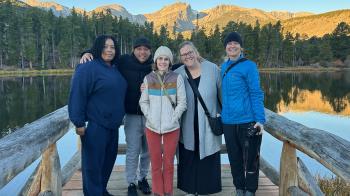
Every Sunday and Wednesday, leaders and volunteers from Voices of Jubilee enter places many people never see: juvenile detention centers and youth correctional facilities. Their mission is simple but demanding: They show up, build relationships and walk alongside young people long after the system has moved on.
Voices of Jubilee traces its roots to the fall of 2018, when youth at Bon Air Juvenile Correctional Center invited the Revs. Lauren Ramseur and Ashley Mejias to help launch a gospel choir. What began as a music ministry soon evolved into a worshiping community centered on accompaniment, mentorship and advocacy.
The ministry's growth received a significant boost in 2020, when the Presbytery of the James formally recognized Voices of Jubilee as a PC(USA) 1001 New Worshiping Community and committed to supporting its ongoing work. Today, Voices of Jubilee partners with congregations across central Virginia. Churches support the ministry through short-term volunteer service, donations and service projects that connect faith communities with incarcerated youth and their families.
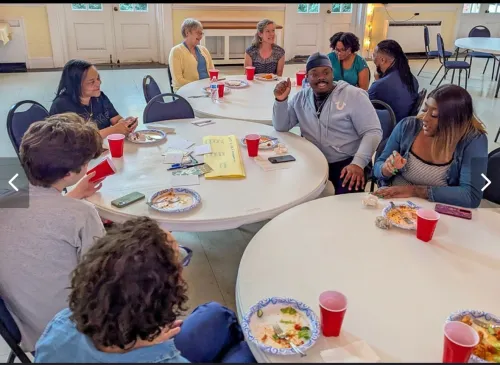
“Our primary work is accompaniment,” said Ramseur, co-pastor and co-founder of the Richmond-based ministry. Voices of Jubilee visits youth at Chesterfield Juvenile Detention Center and Bon Air Juvenile Correctional Center, Virginia’s only long-term juvenile correctional facility. The ministry also supports youth serving longer sentences through letter writing, books, commissary assistance and in-person visits.
For Ramseur, the work is rooted in the transformative power of human connection. “Over and over again, I see this not only in myself but in other people. It’s that love of another human that changes your own trajectory when you’re able to really meet someone face to face,” she said.
Co-founder Mejias came to the ministry after spending time in correctional chaplaincy settings. While she valued that work, she became convinced that a different approach was needed. “When I met Lauren, she said, ‘Why don’t you think about how to be an interruption instead of being in the system?’ And that has stayed with me,” Mejias said.
Committed and experienced volunteers are essential to that ministry of accompaniment. Some bring firsthand experience with the justice system, offering perspectives that resonate deeply with incarcerated youth. Quadaire Patterson, who experienced incarceration himself, now volunteers with Voices of Jubilee and mentors young people facing similar circumstances.
“It’s important for me to get out in front of these kids and show them that, regardless of what you’ve done in the past, that you could do better,” Patterson said. “As long as you take control of your present, you can control your future.”
Ramseur said volunteers with lived experience bring a credibility that ministry leaders alone cannot provide. “I don’t know what it’s like to grow up in the inner city in poverty, in the midst of gun violence, but they do,” she said. “They know what it’s like to be locked up at 15. Most of all, they embody the resurrection and hope for the kids in a way that only they can do.”
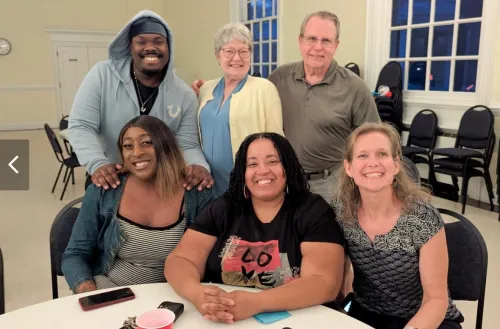
That commitment continues long after incarceration ends. Volunteer Iesha Williams described a ministry that remains present through court appearances, family challenges and the difficult transition home. “I’m there through all of it,” Williams said. “I’m coming to your court dates; I’m trying to connect you with family members because you might not be able to afford a phone call. I’m calling your lawyer if I need to.” When young people return home, she helps connect them with jobs, probation resources and practical support. “I’m treating you as if a family member or even one of my own children.”
In recent years, Voices of Jubilee has expanded its reentry work, providing deep, long-term support to young adults returning from prison, including assistance with housing and basic necessities.
The ministry also seeks to place its work within a broader historical narrative. Ramseur understands the ministry of Voices of Jubilee as abolition work. To understand the connection between the history of slavery to present-day systems of incarceration, Ramseur and Mejias took the team on a tour of the trail of Enslaved Africans led by a local non-profit the Elegba Folklore Society to trace the history of the slave trade in Richmond and understand its connection to mass incarceration.
One focal point is Bon Air Juvenile Correctional Center itself. The site traces its history to the Kilbourne plantation built by Robert Murchie in 1823 where in the 1840 census there were five children between the ages of 1 and 24 recorded to be enslaved there. The land was later called Kilbourne Farm, where the Virginia Home and Industrial School for Girls opened in 1910. Historians describe the institution as a reformatory that functioned largely as a juvenile prison, and over time it evolved into what is now Bon Air Juvenile Correctional Center.
For Voices of Jubilee, that physical landscape helps ground a larger story about the relationship between slavery, institutional confinement and the incarceration of young people. “We’re working with them to add this next level of tracing it to mass incarceration,” Ramseur said. “These plantations sometimes were then bought by the state, ended up becoming basically like children’s work camps ... and then now they’ve become prisons for children. We say they’ve been prisons for children all along.”
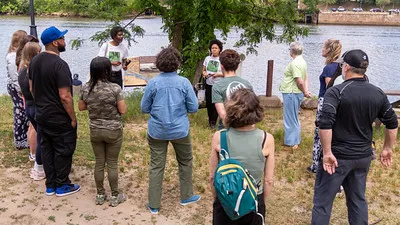
Ramseur said understanding that history is essential to understanding the youth and families the ministry serves. “It’s really important, you know, grounding our work in the historical truth and understanding the context in which we work, and educating our volunteers,” she said. “Again, reframing the narrative so we really understand what we’re dealing with.”
For Williams, the ministry’s vision extends beyond individual transformation. “My prayer was that we could fully be free,” she said. “That is my hope that one day we will live in a world with no prisons and where we could all be fully free.”
In the meantime, Voices of Jubilee continues its work one relationship at a time, reminding incarcerated youth that they are seen, valued and never alone.
Click here for more videos of 1001 New Worshiping Communities.1001 New Worshiping Community leaders can register for 2026's national gathering here.
You may freely reuse and distribute this article in its entirety for non-commercial purposes in any medium. Please include author attribution, photography credits, and a link to the original article. This work is licensed under a Creative Commons Attribution-NonCommercial-NoDeratives 4.0 International License.


