Dear Lovers of Food and Justice,
“Trees are sanctuaries. Whoever knows how to speak to them, whoever knows how to listen to them, can learn the truth. They do not preach learning and precepts, they preach, undeterred by particulars, the ancient law of life.” — Hermann Hesse
Trees—and indeed the entire more-than-human world—are a sanctuary. The subtle dynamics of life play out in myriad, glorious ways. Take the humble mycelium.
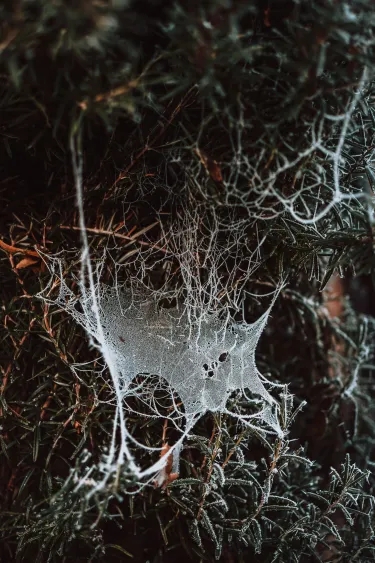
Mycelial networks are made up of minute hair-like hyphae, which inhabit the soil like stars speckle the galaxy. The hyphae in a single teaspoon of soil, laid end-to-end, would stretch anywhere from 100 to 1,000 yards. Their ultra-skinniness – 1/25th the thickness of a human hair – is their superpower.
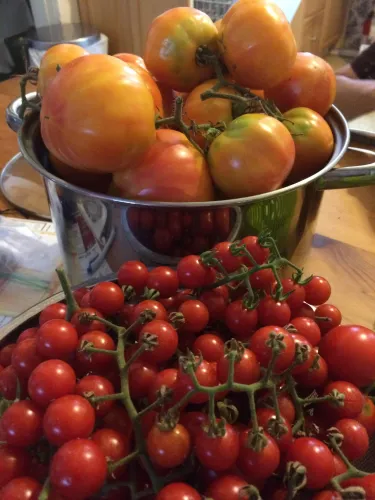
Mycorrhizal fungi weave themselves into the millions of tiny root hairs on my tomato plants, helping them draw water from the smallest pores in the soil. But that’s just the beginning!
Mycorrhizae also help my tomato plant mine phosphorus (up to 80% of its intake) and its enzymes break down nutrients like nitrogen, zinc, iron, calcium, magnesium, manganese, sulfur, and other trace minerals to make them usable.
Fungi also improve the soil structure and increase the plant’s tolerance to environmental stressors like heavy metals, salinity, and toxins.
Unlike my tomato’s magical ability to convert sunlight to food, the fungi cannot perform photosynthesis and receive their reward in sugar provided by the plant. Glucose, sugars, and carbohydrates – and proteins and fats, too.
Garden Update: Hügelkultur
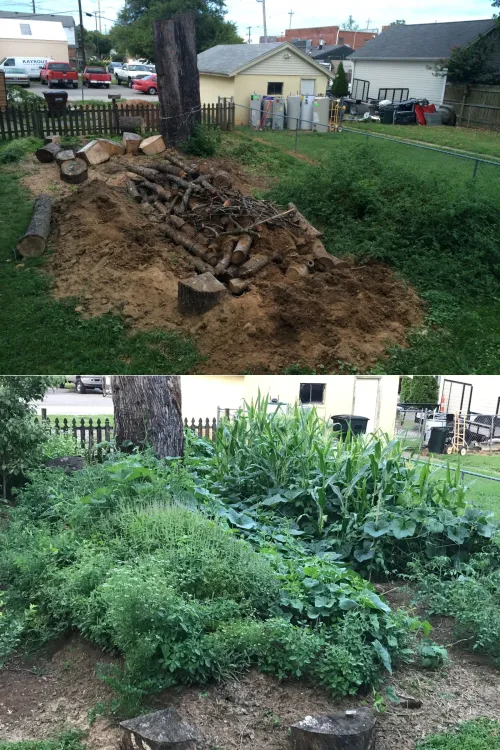
Knowing how important fungi are to healthy soil, I wanted to give them every opportunity to thrive in my own garden. So, when we had to take down a dying 90-year-old Silver Maple, I started digging up my backyard. The largest ditch was 25 feet long and five feet deep.
Much of the tree ended up buried underground and piled up into a 5-foot-tall mound covered with soil—a hügelkultur (literally, "mound culture"). This permaculture technique improves soil fertility, water retention, and soil temperature while benefiting plants grown on or near it. Fungi feast on the wood, and years later I can see the fungal networks when I dig my hands into the soil! Not to mention all the carbon I sequestered rather than releasing it into the atmosphere.
While my backyard hügelkultur is a small example of working with nature, others are doing similar work on a much larger scale.
Things I love: reviving culture, language, and the land
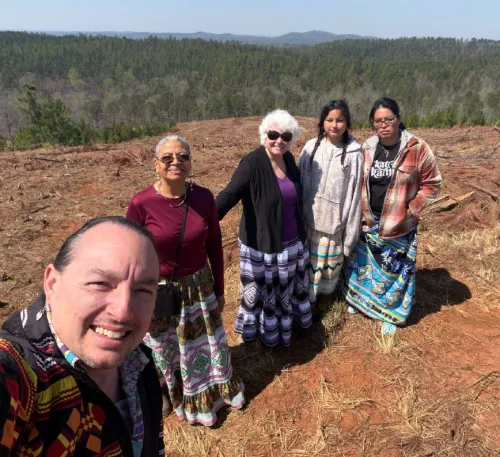
One of my favorite examples is Ekvn-Yefolecv, a Maskoke eco-village in Alabama, a group the Presbyterian Hunger Program has had the honor of funding.
Ekvn-Yefolecv has a double meaning: returning to the Earth and returning to our homelands. And that is exactly what they are doing.
Since settling there in 2018, the number of Maskoke residents has hovered around sixteen as they continue building homes and infrastructure that will welcome more people back to their ancestral land in the years ahead.
Ekvn-Yefolecv is an intentional community where income is shared, and each resident is provided with food, a place to live, and a very modest monthly stipend.
Caring for creation is central to their mission. In recognition of their work restoring ecosystems and sequestering carbon, Ekvn-Yefolecv has received a Presbyterian Tree Fund grant from PHP for three consecutive years.
Ekvn-Yefolecv has been hard at work preparing new silvopasture areas that will help capture carbon, improve the land’s natural water cycle, and provide forage for bison and several endangered heritage livestock breeds, including American Guinea hogs and San Clemente Island goats.
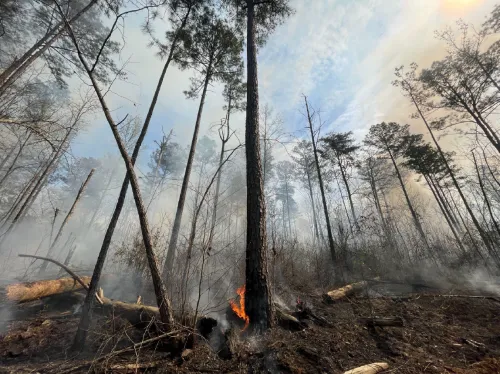
Over the past year, the community successfully conducted prescribed burns on more than 1,200 acres and mulched nearly 400 acres of former loblolly pine plantation. These lands had been clear-cut by a timber company before coming into Ekvn-Yefolecv’s care.
The work is helping restore the Southeast’s native grasslands—an increasingly rare ecosystem that plays an important role in storing carbon and supporting biodiversity.
Building healthy soil and organic matter is a key part of this effort, laying the foundation for future plantings of fruit and nut trees and helping ensure they can thrive for generations to come, which brings us back to Hesse's idea that trees "preach the ancient law of life."
From the fungal threads beneath a tomato plant to the restoration of thousands of acres of grassland, the same lesson keeps appearing: life flourishes through collaborative relationships.
May you and I learn how to speak to trees and listen to the truth preached by them!
Be well and see you next week,
andrew
P.S. Good news about plant medicine!
I could spend pages talking about the many ways researchers and clinicians are uncovering the therapeutic potential of psilocybin—from helping people quit smoking to treating PTSD—but today I wanted to share some encouraging news about MDMA-assisted therapy.
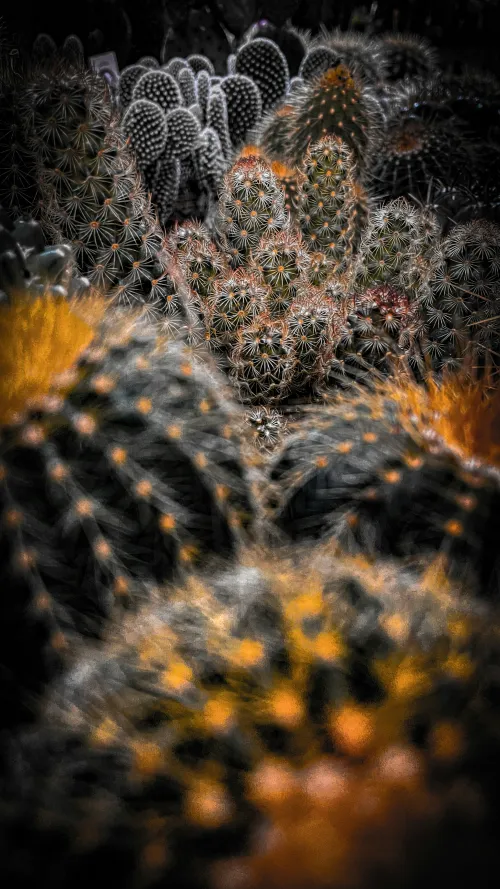
While MDMA is a synthetic compound, its development emerged from a long scientific exploration of psychoactive substances that includes plant medicines such as peyote and San Pedro cactus, whose active ingredient, mescaline, is a chemical cousin of MDMA.
The most recent Phase 3 clinical trial using MDMA was led by researchers at UC San Francisco. The participants received MDMA once a month for 3 months and it included pre- and post-dosing talk therapy sessions. More than 90% of the participants had comorbid major depressive disorder and/or PTSD.
After the trial more than 70% no longer met the criteria for PTSD diagnosis, compared with 48% for the placebo group. The MDMA-assisted therapy also significantly decreased symptoms of depression.
“It was remarkable to see how the PTSD and depression scores plummeted after the treatment,” said Jennifer Mitchell, PhD, lead author of the study and a professor in the departments of Neurology and Psychiatry and Behavioral Sciences at UCSF.
(Psychedelics as Medicine, from the American Psychological Association, and the study is here in Nature Medicine)
Learn more and donate to the Hunger Program via our website at pcusa.org/hunger.
You may freely reuse and distribute this article in its entirety for non-commercial purposes in any medium. Please include author attribution, photography credits, and a link to the original article. This work is licensed under a Creative Commons Attribution-NonCommercial-NoDeratives 4.0 International License.