Dear Lovers of Food and Justice,
I hope you’re finding moments of nourishment these days — good conversations, rich soil, satisfying meals, and maybe even a little wonder.
Each of us moves through the world like a small, creaturely planet, orbiting the people and things we love, searching for belonging, meaning, joy, and connection where we can find them. On this journey, we find that change is the only constant. So for me, the secret sauce is learning how to remain grounded — to cultivate enough inner peace to stay centered in a fractured and fast-moving world without losing tenderness for others or ourselves.
And sometimes, oddly enough, grounding arrives through the simplest things: digging in the garden, a shared meal, or a dish that carries generations of culture within it. One of the great joys of my study leave in Peru was discovering foods that felt both entirely new and strangely familiar. Which brings me to a terribly important question: what’s your favorite stuffed food?
There are so many worthy contenders: calzones, dolma, ravioli, empanadas, knishes, jalapeño poppers, stuffed cabbage rolls — even cream-filled donuts. I certainly wasn’t expecting one of my favorites to come from the Andes.
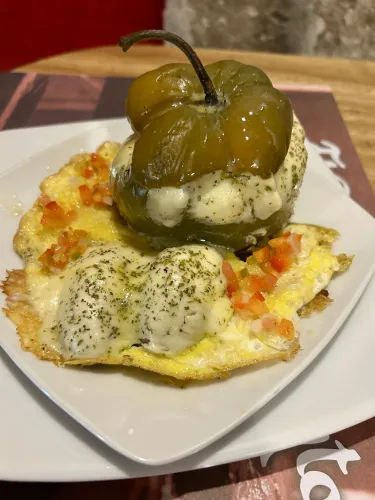
In Arequipa, Peru, you find Rocoto Relleno on almost every menu. Rocoto peppers are thick, juicy, and seriously HOT, which makes them perfect for stuffing with meat, garlic, eggs, raisins, and cheese. Mine was made with alpaca instead of beef, though vegetarian versions are common too.
And those creamy yellow lumps in front? Andean potatoes covered in a rich cheese-and-egg sauce.
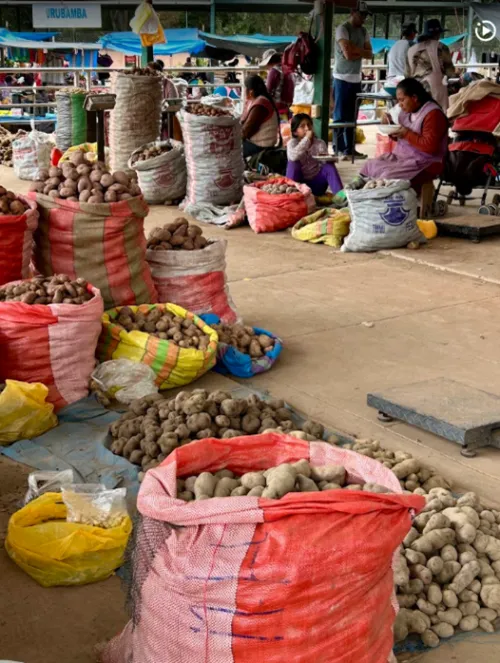
Potatoes were first cultivated in the Andes thousands of years ago, in what is now southern Peru and northwestern Bolivia. Today there are roughly 5,000 potato varieties in the world, and about 3,000 of them are Andean.
At the producers’ market in Urubamba, I saw dozens of potato varieties, along with papas secas and chuño — dried potatoes that sustained Inca armies and generations of Peruvians over millennia.
Peru even has a Potato Park, stewarded by Indigenous Quechua communities, dedicated to protecting native food systems, biodiversity, and traditional knowledge. It’s a beautiful reminder that preserving seeds, culture, and land are all part of the same work.
Potatoes are grounding food. Which got me thinking about another kind of grounding altogether: gravity.
Things I love: mysteries like gravity
What is gravity, anyway?
We understand what it does, but not fully what it is. Einstein helped us imagine gravity not as an invisible rope pulling objects together, but as the bending of spacetime itself.
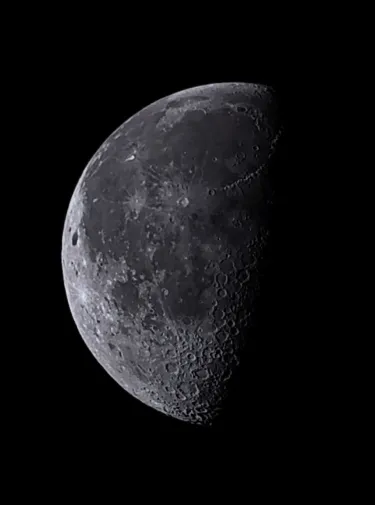
Picture space and time as a vast stretchy sheet. A massive object like Earth creates a kind of valley in that sheet. The Moon keeps “falling” toward Earth, but its sideways motion keeps it circling instead of crashing into us.
And the Earth, in turn, is falling around the Sun. The Sun is orbiting within the Milky Way. Even our galaxy and Andromeda are slowly circling one another in a dance that may eventually become a spectacular collision billions of years from now.
I love mysteries — things we may be able to describe but which we cannot fully explain.
Garden Update
With nearly a week of daily rain, planting the rest of my seedlings and sweet potato slips has been delayed. The cilantro, rosemary, thyme, and beans, however, seem to be thriving in all the moisture.
Be well and see you next week,
andrew
P.S. Something else I’m pondering…
Equanimity is a quality I’ve spent years trying to cultivate: calmness, steadiness, inner balance. But I sometimes wonder whether concern for injustice makes equanimity impossible.
Jesus remains one of my great models here. He healed, confronted harmful systems, and defended the vulnerable — yet usually without losing his center. (The temple incident notwithstanding.)
So how do we cultivate inner peace without becoming detached from suffering? How do we remain grounded without becoming passive?
Mere human beings cannot fully comprehend the deeper causes or meaning behind suffering. That recognition can reduce the impulse to resist reality and try to control things. From that grounded acceptance, a steadier form of compassion becomes possible: one that acts to reduce suffering without being consumed by rage, despair, or the illusion that we can fix everything. And yet, while discerning right action is difficult, our efforts to lessen suffering, I believe, are among the noblest human endeavors.
I’d love to hear your thoughts.
P.P.S. Michael Pollan has a new book out! A World Appears: A Journey into Consciousness. Pollan describes it as “a panoptic exploration of consciousness—what it is, who has it, and why—and a meditation on the essence of our humanity.” I can’t wait (but I have to since I’m #24 on the library wait list.
***
Learn more and donate to the Hunger Program via our website at pcusa.org/hunger.
You may freely reuse and distribute this article in its entirety for non-commercial purposes in any medium. Please include author attribution, photography credits, and a link to the original article. This work is licensed under a Creative Commons Attribution-NonCommercial-NoDeratives 4.0 International License.