Modern-day persistent widows
The Rev. Ashley DeTar Birt, a PC(USA) pastor, uses a centuries-old parable to speak to today’s injustices

LOUISVILLE — Who are today’s widows?
Relying on Luke 18:1-8, Jesus’ parable of the widow and the unjust judge, the Rev. Ashley DeTar Birt, who preached during Wednesday’s Chapel Service, gave online worshipers enough background on this persistent widow to help them identify who might be her modern-day equivalents.
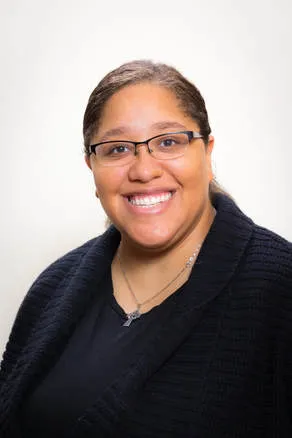
DeTar Birt helped PC(USA) staffers celebrate Women’s History Month with her engaging preaching. She is co-director of the Center for Jubilee Practice, program manager for New York Unitarian Universalist Justice and a member of the PC(USA)’s Advocacy Committee for LGBTQIA+ Equity, known as ACQ+E.
The Bible “is a very complex book,” with content that can “be a source of conflict,” she said. Nothing against the Bible, which she noted is “full of amazing wisdom and inspiring stories” that “teach us about God and faith in ourselves and show us what Christ is calling us to do as we seek to follow him in our daily lives.”
The Bible can indeed be a complicated text — except when it comes to widows, she said, “one of the few things [the Bible] is consistently clear on. Over and over again, throughout both the Old and New Testament, Scripture commands that we look out for the widows.” The only other group that comes up as often is children, she said, citing Exodus 22:22, James 1:27, Psalm 68:5 and Deuteronomy 14:28:29 for further reading.
Jesus even warns here and here against the scribes who walk around in long robes but devour widows’ houses, she pointed out. “It is clear that special assistance must be given to the widows,” she said, “that something about those societies left widows vulnerable and powerless.”
She said the lesson for today is this: “In a society that leaves certain people vulnerable and powerless, it is our responsibility to act until that society has changed."
Jesus’ parable pits a “vulnerable and supposedly defenseless woman who was just trying to get justice” opposite a judge “who we know lacks respect for everyone, even God,” DeTar Birt said. The widow asks for justice daily and is denied each time.
Eventually her steady efforts prevail, and the judge relents.
“She wins! Hooray! Her persistence pays off,” DeTar Birt said. “This is a great story about the importance of never giving up and keeping the faith — right?”
“I want to focus on what’s not in this parable. This is a text about a widow, and as we have previously established, if there’s one group of people to help, it’s the widows,” she said.
“So where are the helpers? Who was there to assist this woman? In this woman’s time of need, why was she fighting this judge all alone?”
Scripture talks bout two types of widows, she said — the named and the unnamed.
“The named widows in Scripture have a husband who died, but still have access to some resources,” such as Ruth, who has a family to go back to but chooses not to, and Naomi, who ends up with Ruth, “who ends up taking care of her when [Ruth] is with Boaz.”
Unnamed widows are the ones who have no one — no power and no finances, she noted, and if they are of child-bearing age and either had no children or were unable to have children, “they feel extra shame.” These women and their children, if they have children, “were routinely ignored by the men of their time, and thus God had a particular concern for them.”
Because of all this, “protecting and caring for widows was considered a faithful act,” she said, while “harming them was considered worthy of punishment.”

“That’s what makes today’s parable all the more shocking,” she said. This unnamed widow “manages on her own to defeat the odds and convince this corrupt judge to do what’s right.” It’s a “testimony to her inner strength and righteousness that even though she had so little, she was still able to do this.”
We might conclude that if a poor widow can do it, so can we. “Or, we could look at this situation, one that was probably realistic for the time, and recognize that even if the widow did win this fight all by herself, she shouldn’t have had to,” DeTar Birt said. “Just because she found the strength doesn’t mean it was right for her to have needed it in the first place.”
“We can do better,” she said. So what should we do?
We can start by asking ourselves, who are the widows of today?
“We’re in Women’s History Month,” she said. “Let’s focus specifically on women.”
Transgender Day of Visibility is March 31. “So many of our trans siblings,” especially trans women of color, “are left nearly invisible, vilified and vulnerable,” she said.
Immigrants and refugee women “fear for their lives while our government ruthlessly kidnaps them and their families,” she said. “All this is happening while families and communities are being torn apart.”
“We have spent most of last year and this year hearing about horrific sexual violence committed against women and girls,” she said, and yet “most of the attention has been on abusers rather than the feelings and needs of survivors.”
“There are too many widows, and none of them should have to fight alone,” DeTar Birt said. “Standing with them, supporting them, fighting alongside them — this is how we honor and celebrate them.”
The world this widow lived in “is not so far from the world we are currently living in,” she said, “and if certain forces have their way, it will be the world we live in.”
We don’t have to just let that happen. “We are Christians … and more so, we are Presbyterians. We have Presbyterian Women. We are the ones who send people to the United Nations’ Commission on the Status of Women. We have approved overtures celebrating queer and trans people” and “our Book of Order declares that in Christ, by the power of the Spirit, God unites persons through baptism, regardless of race, ethnicity, age, sex, gender identity, sexual orientation, disability, geography or theological conviction.”
“This is who we are, and this is who we are called to be,” she said. “God calls us — generally and specifically us — to be there alongside the widows of today, doing everything we can to make it so they don’t have to fight for justice anymore.”
“And so, friends, let us go out and do whatever we can, whatever we must, to fulfill God’s call. This we know is not complicated. Amen.”
You may freely reuse and distribute this article in its entirety for non-commercial purposes in any medium. Please include author attribution, photography credits, and a link to the original article. This work is licensed under a Creative Commons Attribution-NonCommercial-NoDeratives 4.0 International License.