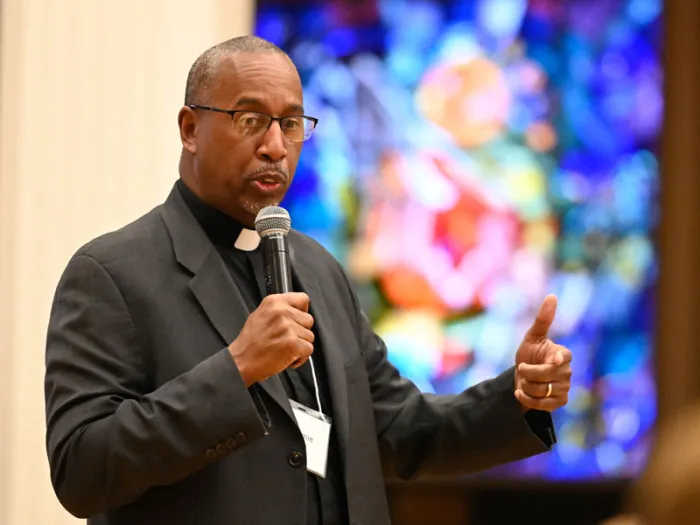
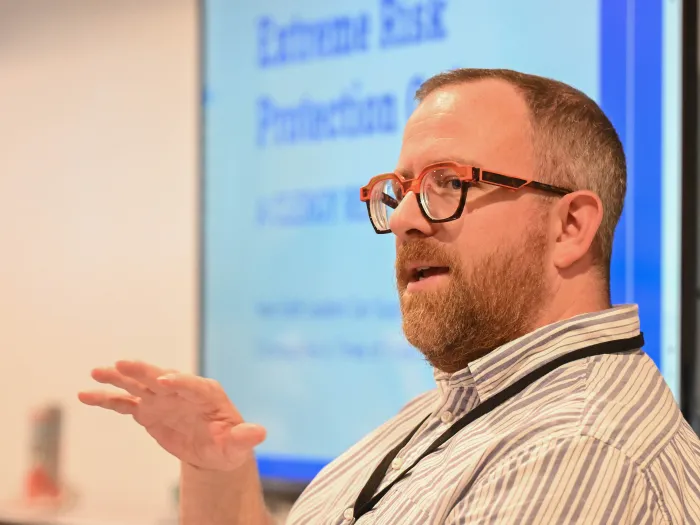
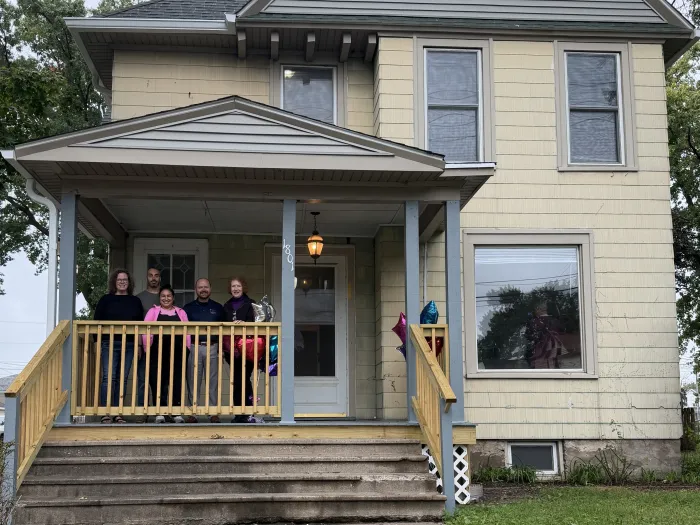
Hundreds of people, Presbyterians included, rally outside the High Court Wednesday for temporary protective status
The U.S. Supreme Court is expected to hand down its ruling this summer

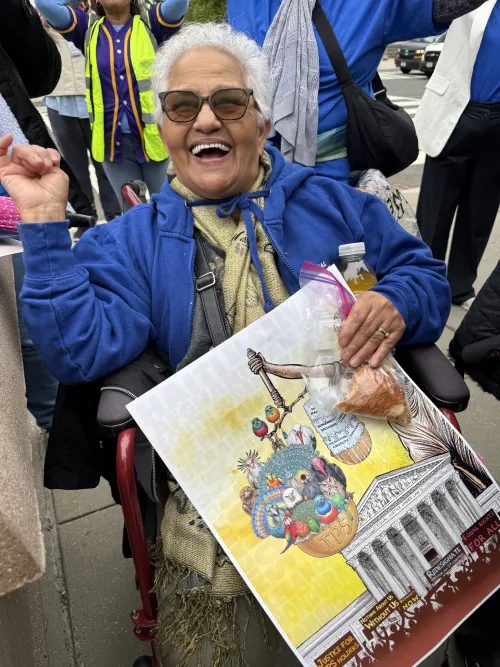
WASHINGTON, D.C. — Hundreds of people gathered in front of the U.S. Supreme Court on Wednesday morning. Festive music, waving flags and exuberant greetings belied the weightiness of the appeal being argued inside.
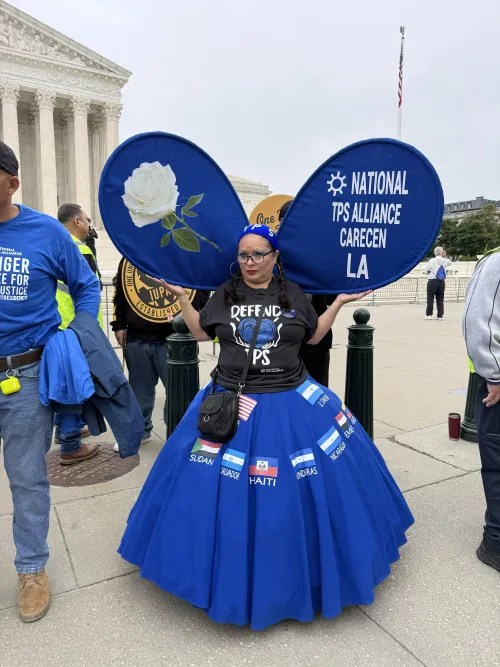
The justices heard from plaintiff’s attorneys sharing the many positive contributions of well-vetted and hard-working immigrants from Haiti and Syria living under temporary protected status in communities across the country. D. John Sauer, the U.S. Solicitor General, argued for the government that the immigrants’ home countries have stabilized enough for their return.
In the meantime, 1.3 million TPS-holders from 17 counties remain on edge. The court is expected to announce its decision by early-to-mid-summer. Should TPS-holders lose protected status, public health physician Dr. Bernadette Fouché, said, communities across the U.S. where immigrants live and work will feel the loss.
“These are no strangers to America,” she said. “They are the nurse who held your mother’s hand in the last hour. They are the teacher who learned your child’s name on the first day of school. They are the pastor, the farm worker.”
“We understand how painful this continues to be for our people,” Guerline Jozef told the crowd. She is co-founder of Haitian Bridge Alliance. “We hear you. We see you. We are here with you and for you.”
Haitian Bridge Alliance is one of many advocacy and accompaniment groups hosting Wednesday’s rally.
Two cases before the justices hold the fate of those in the country with temporary protected status. While Wednesday’s case specifically was whether the Trump administration illegally terminated TPS for people from Haiti (300,000) and Syria (6,000), the fate of TPS-holders from 15 other countries likely will be impacted by the decision.
Ginny Atwood, a member of Warner Memorial Presbyterian Church in Kensington, Maryland, attended the rally to support immigrants in this time of great uncertainty.
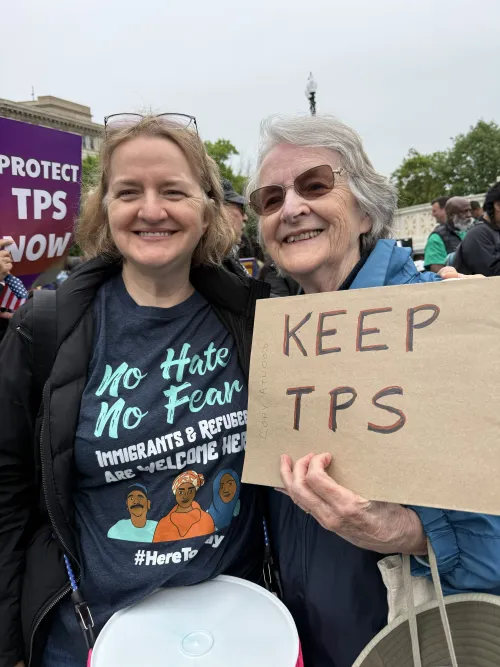
“We are here because we care about people, about how they’re treated,” Atwood said.
Though she has not been to Haiti, through her church she supports Beyond Borders, a nonprofit that supports families so they are able to care for their children in Haiti.
President George H.W. Bush signed TPS into law in late 1990 as part of an overhaul of the Immigration Act. It provides protection from deportation, work authorization and other benefits to those needing refuge from natural disaster, armed conflict and other “extraordinary and temporary” conditions in their home countries.
The Rev. Viles Dorsainvil, a Moravian pastor who heads up the Haitian Community Center in Springfield, Ohio, was in the courtroom on Wednesday. Afterward, he said he hopes conversations about TPS will lead to a positive and lasting change in immigration policy.
“We are here because we know what is at stake,” Dorsainvil said. “We know the fear of an uncertain future. The question before the court is not only a legal one, but a moral one. We urge a decision that reflects our values. I will continue to stand and advocate for a permanent and dignified solution for all those who call this country home.”
Springfield is the rural community in which more than 15,000 Haitian families have settled. The city was thrust into the national spotlight when the president and vice-president spread the falsehood that Haitian people there eat pets.
Those eligible for TPS undergo criminal background checks and must already by living in the U.S.
When conditions in those countries improved so that the immigrants could return home, that nation’s status would end. But in the three decades since TPS became law, conflicts around the world have deepened. Disasters — natural and human-caused – are slower to resolve. And for many TPS-holders, the continuing peril in their countries have meant long extensions of the status.
More families have settled in communities, raised children, started businesses and become valued employees.
Haitians were offered TPS after Haiti’s catastrophic earthquake in January 2010. People from Syria first were offered TPS in March 2012 as civil war there escalated. The status for both countries has been redesignated and extended several times.
Attorneys for the Haitian and Syrian plaintiffs argued that then-Homeland Security Secretary Kristi Noem improperly terminated TPS for both countries. Both countries remain too dangerous for those who would be deported, attorneys said. Gang violence and political instability have crippled parts of Haiti including the capital city.
A year after the Assad regime fell in Syria, more than 90 percent of the people live in dire poverty, infrastructure is fragile and many people are internally displaced.
Fouché pointed out the incongruity in the State Department naming Haiti and Syria as places too dangerous for Americans to travel, yet safe enough for immigrants to return.
“It is manufacturing fiction dressed in the work of law. It is the manufacture of illegality, the deliberate construction of a lie until the deportation order becomes a coffin,” she said.
The Rev. Christina Cosby, Representative for Domestic and Environmental Policy Concerns in the Presbyterian Office of Public Witness, said the rallying cries heard from in front of the Supreme Court are valuable.
“The presence of those gathered outside the Court reminds us that these decisions are not abstract — they shape the lives of families seeking safety and belonging,” she said. “Their witness reflects what our denomination has long supported: protecting human dignity and standing with those most vulnerable.”
The other countries designated with TPS are Afghanistan, Cameroon, Venezuela, South Sudan, Sudan, Nepal, Honduras, Nicaragua, Myanmar, Ethiopia, Yemen, Somalia, El Salvador, Ukraine and Venezuela.
Cindy Corell is a U.S.-based Global Ecumenical Liaison.
You may freely reuse and distribute this article in its entirety for non-commercial purposes in any medium. Please include author attribution, photography credits, and a link to the original article. This work is licensed under a Creative Commons Attribution-NonCommercial-NoDeratives 4.0 International License.